

Key Takeaways
Start With How You Actually Want to Use the Space
The most common reason outdoor spaces go unused is that they were designed around aesthetics rather than behavior. Before selecting a single plant or paving stone, ask yourself honestly: Do you want to cook outside? Eat with family? Read quietly? Grow vegetables? Host gatherings?
Each use case shapes the layout differently. A dedicated dining area needs level, stable ground and proximity to the kitchen. A reading nook benefits from shade and enclosure. A kitchen garden needs sun, water access, and easy harvesting reach. Writing down your primary uses — even just two or three — gives every subsequent decision a filter.
If your household has multiple users with different needs, sketch out a rough priority list together. A garden that serves one person's vision completely but frustrates everyone else will go underused. This planning conversation is free, and it saves significant effort downstream.
Write Down Your Top Three Uses First
Before sketching any layout, list the three activities you'd most want to do in your outdoor space. Refer back to this list whenever a design decision feels uncertain — it acts as a practical tie-breaker and keeps the plan grounded in real behavior rather than aspirational imagery.
Mapping Your Yard: Sun, Shade, and Flow
Spend at least one full day observing your yard at different hours — morning, midday, and late afternoon. Note where sunlight lands, where shade falls, and how long each condition lasts. Most edible plants need six or more hours of direct sun; seating areas are often most comfortable with afternoon shade.
Also trace how people naturally move through the space. Where do feet already wear paths? Where does water pool after rain? These patterns reveal where pathways, drains, or planted buffers make practical sense rather than just decorative ones.
6+ hrs
Daily direct sun most edibles require
A widely referenced guideline from cooperative extension programs across the US for productive vegetable and herb gardens.
3 ft
Minimum recommended primary pathway width
Landscape design guidance generally suggests at least 36 inches for primary garden paths to allow comfortable, side-by-side movement.
~30%
Water savings with hydrozoning vs. uniform irrigation
Grouping plants by water need can reduce irrigation demand compared to uniform watering schedules, according to water-efficiency extension resources.
If you're weighing whether to grow edibles, this sun-mapping step will inform whether in-ground beds, raised beds, or containers make the most sense for your conditions. Our guide on raised beds vs. in-ground planting covers those trade-offs in depth.
Choosing a Layout That Works
A functional outdoor layout uses distinct zones rather than one undifferentiated area. Even in a modest backyard, separating a seating zone from a planting zone from a utility zone (compost, tool storage, hose reel) makes the space feel intentional and reduces visual clutter.
Hard surfaces — patios, decks, gravel areas — anchor seating and dining zones and define them clearly against planted beds. Pathways between zones should be wide enough to walk comfortably (at least 3 feet for a primary path) and made from materials that handle your local weather without becoming slippery or eroding.
Check Local Codes Before Building Structures
Permanent outdoor structures — including pergolas anchored to the ground, fences above a certain height, decks attached to the house, and garden sheds — often require a building permit under local zoning codes. Requirements vary significantly by municipality. Contact your local planning or building department before construction begins to avoid fines, forced removal, or complications when selling your home.
If you're considering adding a structure such as a pergola, shed, or garden room, note that many jurisdictions require permits for permanent structures above a certain size. Our article on adding a garden room or outbuilding walks through the key planning considerations before you build.
Before finalizing any hardscape layout, use garden hoses or spray paint to mark zones on the ground and live with them for a few days. Walking through the marked space reveals awkward transitions and traffic flow problems that drawings miss entirely.
Visualizing at full scale before committing to materials saves costly corrections and helps all household members evaluate the plan in practical terms.
Choose your seating location first, then design the plantings around it — not the reverse. The seating anchor defines sightlines, shade needs, and privacy requirements that should drive planting decisions.
Practitioners consistently find that gardens designed around how people sit and look outward feel more cohesive and get used more often than those designed around plant arrangements alone.
Selecting Plants That Suit the Space
Plants chosen for your actual conditions — soil type, sun exposure, rainfall, and USDA hardiness zone — require far less intervention than plants placed optimistically. Native and regionally adapted species tend to be more resilient, support local pollinators, and need less supplemental water once established.
Group plants by water needs (a practice called hydrozoning) so irrigation is efficient and you're not overwatering drought-tolerant plants to sustain thirsty ones nearby. See our overview of drought-tolerant landscaping approaches for strategies that reduce water use without sacrificing lushness.
For edible areas, consider companion planting to make the most of limited bed space while naturally discouraging pests. Before the growing season begins, use a structured garden prep checklist to test soil and clear beds efficiently.
“The best garden is not the most elaborate one — it's the one that fits seamlessly into how its owners actually live. Usability is the metric that matters most.”
— Extension Horticulture Program, Land-grant university cooperative extension service
Comfort Features That Encourage Daily Use
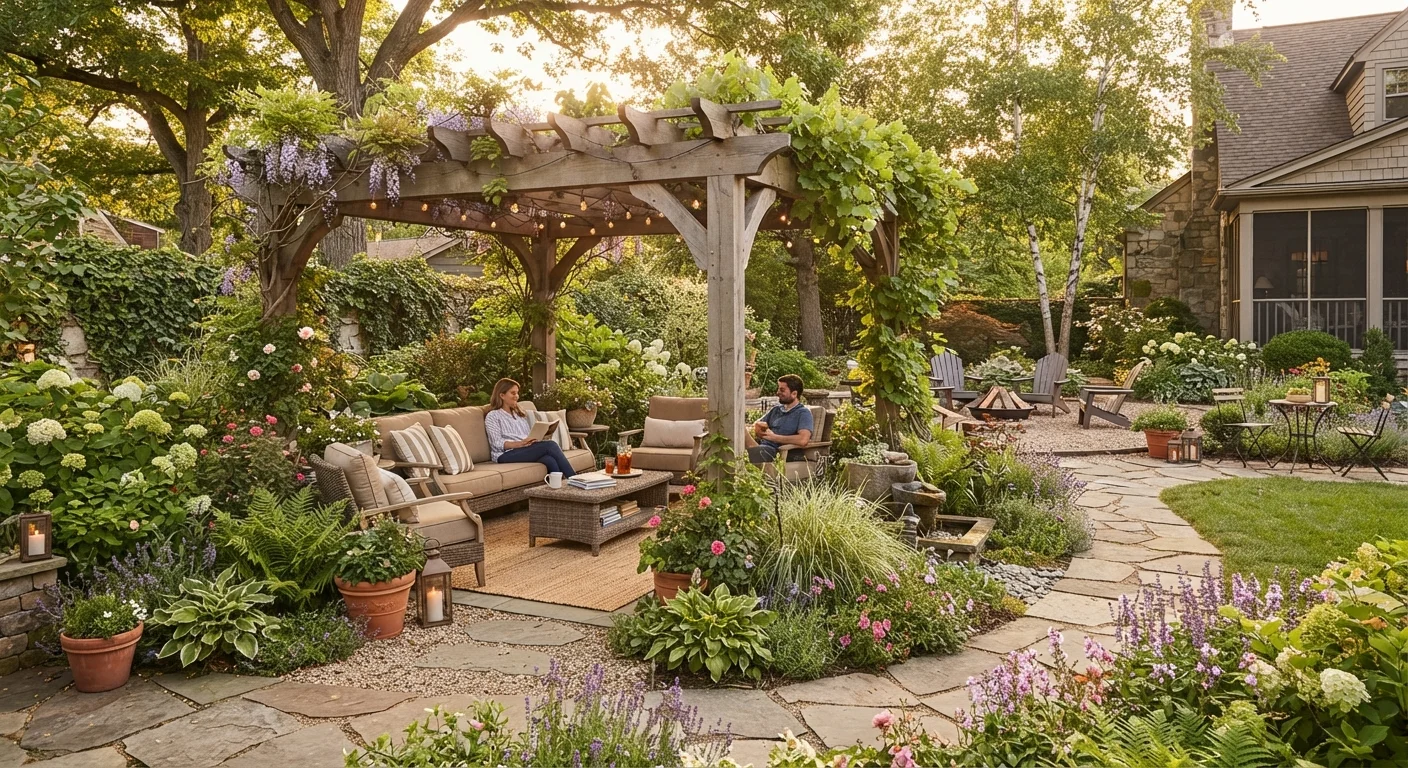
The difference between a garden you visit once a week and one you sit in every day is usually comfort infrastructure. Shade — from a tree, pergola, sail shade, or tall plantings — makes midday and afternoon use realistic in most US climates. Without it, even attractive spaces sit empty during peak outdoor hours.
Seating that stays outside year-round needs to be weather-resistant and genuinely comfortable. Outdoor rugs, side tables, and ambient lighting (string lights, solar path lights, or low-voltage fixtures) extend usability into evening hours and make the space feel finished. Small water features — even a simple birdbath or container fountain — add ambient sound that masks street noise and attracts wildlife.
Electrical and Gas Work Requires a Licensed Professional
Outdoor lighting wired to your home's electrical system, gas line connections for outdoor kitchens or fire features, and any work involving your home's structure must be performed by a licensed contractor. Unpermitted electrical or gas work poses serious safety risks and can affect your homeowner's insurance coverage. Always verify local permit requirements before beginning any utility-related outdoor project.
For those working with a balcony or small patio rather than a full yard, container gardening on balconies and small patios offers targeted guidance on making compact spaces productive and enjoyable.
Keeping It Manageable Long-Term
An outdoor space that demands constant, intensive upkeep is one that gets neglected. Design for the maintenance level you can realistically sustain — not the level you intend to sustain. Perennial plantings, mulched beds, and automatic drip irrigation reduce weekly labor substantially compared to annual-heavy designs with bare soil.
Soil health is foundational to a low-effort garden. Incorporating compost regularly improves drainage, nutrient availability, and moisture retention. Our guide on composting at home explains how to set up a system that converts kitchen and garden waste into a consistent soil amendment.
For an ongoing task reference, our seasonal garden maintenance guide breaks down pruning, planting windows, and winterizing by month. And if you're weighing whether a traditional lawn is worth keeping in your layout, our balanced look at lawn grass in the modern garden may help clarify that decision.
A garden you actually use is built around honest self-knowledge — your time, your climate, and how you genuinely want to spend time outdoors. Start small, prioritize comfort and usability, and let the space evolve from there.
Small Spaces Can Still Be Fully Functional
You don't need a large backyard to create a worthwhile outdoor living area. A 10-by-10-foot patio with good seating, a few container plants, and overhead shade can function as a daily-use retreat. Scale decisions to your actual space rather than an idealized one, and the result will feel more satisfying and be easier to maintain.