

Key Takeaways
Electrical Starting System
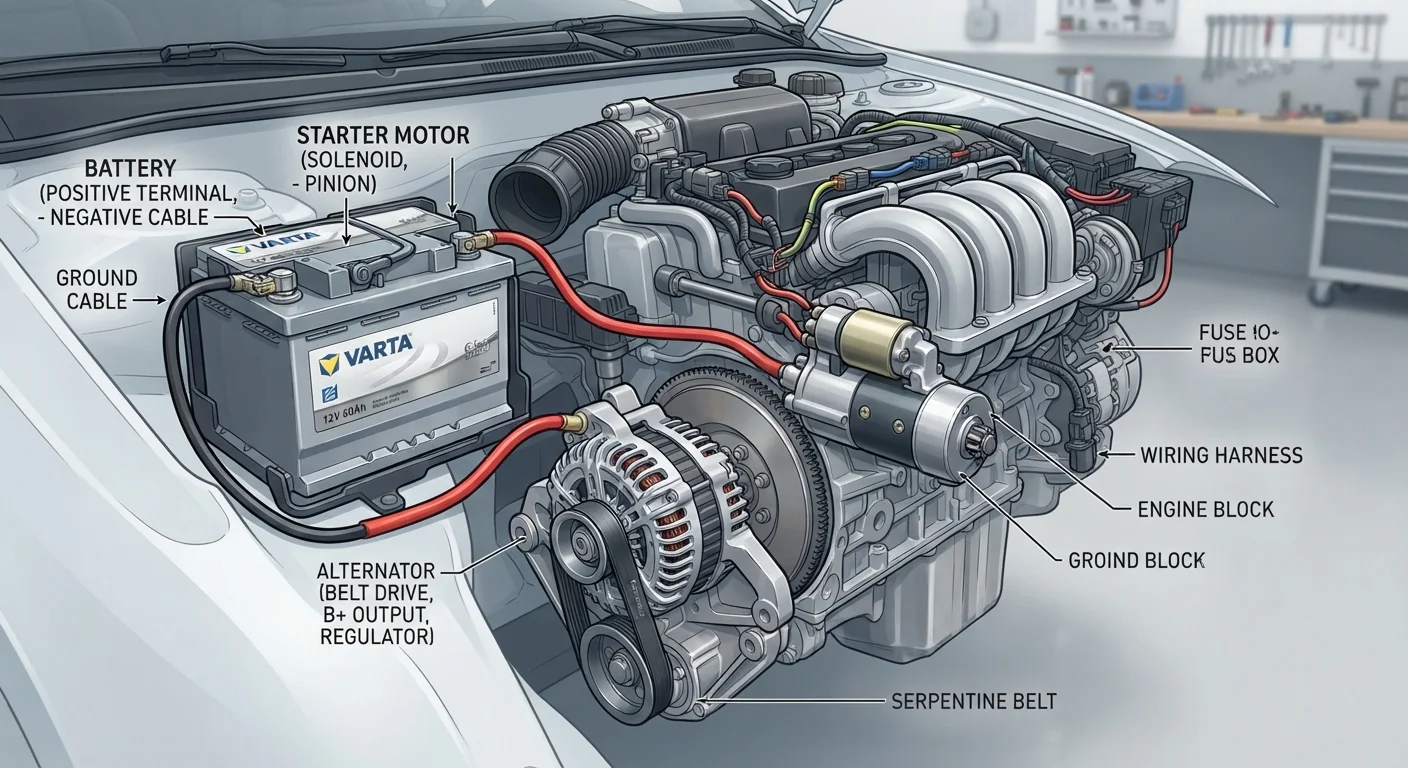
A car's electrical starting system is the trio of components — battery, alternator, and starter — that work together to start your engine and keep it running. The battery stores electrical energy, the starter uses that energy to crank the engine, and the alternator recharges the battery while the engine runs. When any one of these parts fails, your car may not start or may stall unexpectedly.
The starting system operates on a 12-volt DC circuit in most passenger vehicles; hybrids and EVs use high-voltage architectures that differ significantly from this conventional setup.
The Battery: Your Car's Energy Reserve
Think of the car battery as a rechargeable reservoir of electrical energy. Its primary job is to deliver a large surge of power to the starter motor the moment you turn the key or press the start button. It also powers essential electronics — the clock, alarm, and control modules — when the engine is off.
Most standard passenger vehicles use a 12-volt lead-acid battery. Under normal driving conditions, a battery typically lasts three to five years, though extreme temperatures, frequent short trips, and high electrical demand can shorten that lifespan. If you notice slow cranking or the engine hesitates before turning over, having the battery tested is a sensible first step. Many auto parts stores and workshops offer this service at no charge.
Test Before You Replace
Before assuming a dead battery needs replacement, ask a mechanic or auto parts store to perform a load test. A battery can show a surface charge that reads normal on a basic voltmeter but collapses under the load of starting the engine. Testing takes only a few minutes and ensures you're replacing the right component.
The Alternator: Keeping the System Charged
Once the engine is running, the alternator takes over from the battery as the main power source. It's a generator driven by a belt connected to the engine's crankshaft, and it converts mechanical energy into electrical energy. This current recharges the battery and powers all the vehicle's electrical systems — from headlights to the infotainment screen — while the engine is running.
A healthy alternator produces roughly 13.5 to 14.5 volts to maintain the battery's charge. When an alternator begins to fail, it can no longer sustain this output. Drivers may notice flickering dashboard lights, dimming headlights, or a battery-shaped warning light. Because alternator failure mimics battery failure in early stages, professional testing is important before replacing parts unnecessarily.
3–5 years
Typical car battery lifespan
According to AAA, most conventional 12-volt car batteries last between three and five years depending on climate and usage patterns.
80,000–150,000 mi
Typical alternator service life
Industry estimates suggest most OEM alternators last between 80,000 and 150,000 miles, varying by vehicle type and electrical demands.
13.5–14.5 V
Healthy alternator output range
A functioning alternator should maintain this voltage range at the battery terminals while the engine is running at idle and above.
The Starter Motor: Turning the Engine Over
The starter motor is a compact but powerful electric motor that physically cranks the engine to initiate combustion. When you turn the ignition, the battery sends current through a relay called the solenoid, which engages a small gear (called the pinion) into the engine's flywheel ring gear. This spins the engine fast enough for fuel and air to combust — typically in under a second.
Starter problems are often the most dramatic: a loud click with no engine crank, a grinding sound, or complete silence are classic symptoms. Starters can fail gradually due to worn brushes or heat damage, or abruptly. Because starter replacement involves working underneath the vehicle near the exhaust system and electrical connections, this repair is best left to a qualified mechanic.
When Symptoms Overlap
Battery, alternator, and starter problems can produce similar symptoms, making self-diagnosis unreliable. For example, a discharged battery may prevent the starter from cranking even if the starter is perfectly healthy. A professional diagnostic test — not just a visual inspection — is the most reliable way to confirm which component has failed before spending money on parts.
How the Three Components Work Together
These three components function as an interdependent system. At ignition, the battery powers the starter, which cranks the engine into combustion. Once running, the alternator recharges the battery and sustains all electrical loads. If one component underperforms, the others are put under additional stress — a weak battery forces the starter to work harder, and a failing alternator leaves the battery perpetually undercharged.
When a starting problem occurs, the goal is to isolate which component is responsible. A voltage drop test, load test, and parasitic draw test are standard diagnostic procedures mechanics use to identify the fault accurately. Understanding how the system works helps you describe symptoms clearly at the workshop and ask the right questions — such as whether the component was tested before it was replaced.
“Most no-start problems can be traced back to just three components. Understanding which one is actually at fault before authorizing a repair saves drivers both time and money.”
— ASE-Certified Master Technician, Automotive diagnostics specialist with over 20 years of workshop experience