

Key Takeaways
Provides durable, flexible space for outdoor activities
Grass surfaces handle foot traffic, children's play, and informal gatherings better than most ground cover alternatives. The resilience of well-established turf makes it a practical choice for busy households.
Cools the surrounding landscape through transpiration
Actively growing grass releases moisture into the air, moderating surface temperatures noticeably compared to hardscape. This can reduce heat island effects in residential areas during summer months.
Creates visual cohesion across the yard
A uniform lawn surface ties together disparate garden elements — beds, trees, paths, and structures — into a readable whole. This visual simplicity is difficult to achieve with mixed plantings alone.
Relatively low upfront installation cost
Seeding or sodding a lawn area is generally less expensive per square foot than installing hardscape, raised beds, or complex native plantings. This makes turf accessible for large areas on modest budgets.
High water consumption, especially in dry climates
Keeping cool-season grasses green through summer typically requires one to two inches of water per week. In drought-prone regions, this represents a significant and potentially unsustainable draw on local water supplies.
Ongoing time commitment for mowing and upkeep
A standard residential lawn needs mowing every one to two weeks during the growing season, plus seasonal tasks such as aerating, dethatching, and overseeding. The cumulative time investment is substantial over a full year.
Low ecological value compared to planted alternatives
Turfgrass monocultures provide little food or habitat for pollinators, birds, or beneficial insects. Research consistently shows that even modest increases in plant diversity dramatically improve yard-level biodiversity.
Fertilizer and pesticide use can impact local ecosystems
Nitrogen fertilizers applied to lawns are a documented contributor to nutrient runoff into streams and groundwater. Herbicides used to maintain weed-free turf can also affect non-target plants and soil organisms.
Poorly suited to shaded or compacted conditions
Many turfgrass species struggle under tree canopy or in areas with heavy clay soil, leading to thin, patchy coverage. Attempting to maintain grass in these conditions typically requires disproportionate effort and inputs.
Our Verdict
A lawn can be a genuine asset — offering usable outdoor space, curb appeal, and a familiar landscape structure — but those benefits come with real resource commitments. For homeowners with children, pets, or a strong preference for open green space, a well-managed lawn may be worth the effort. For those in drought-prone regions or seeking a lower-maintenance yard, redirecting some or all lawn area toward native plantings or ground covers often makes more ecological and practical sense.
Homeowners with active households, adequate water access, and time for seasonal maintenance who value flexible, open outdoor space.
What We Mean by 'Lawn Grass'
A traditional lawn consists of a uniform planting of turfgrass — species such as Kentucky bluegrass, bermudagrass, fescue, or zoysia — maintained at a consistent mowed height. Lawns became a standard feature of US residential landscapes during the 20th century and remain widespread today, covering an estimated 40 million acres across the country.
The debate around lawns has grown louder as water scarcity, pollinator decline, and landscape sustainability have moved into mainstream conversation. Understanding both sides helps homeowners make genuinely informed decisions rather than defaulting to convention or trend.
Lawn Care and Local Regulations
Some municipalities and homeowner associations have rules governing lawn height, species selection, or water use during drought conditions. Before making significant changes to your lawn — or installing a lawn alternative — it's worth checking local ordinances and any applicable HOA guidelines. Water utilities in many areas also offer rebates for converting turf to lower-water landscaping.
The Case For Lawn Grass
Lawns offer several practical and aesthetic advantages that shouldn't be dismissed outright.
Provides durable, flexible space for outdoor activities
Grass surfaces handle foot traffic, children's play, and informal gatherings better than most ground cover alternatives. The resilience of well-established turf makes it a practical choice for busy households.
Cools the surrounding landscape through transpiration
Actively growing grass releases moisture into the air, moderating surface temperatures noticeably compared to hardscape. This can reduce heat island effects in residential areas during summer months.
Creates visual cohesion across the yard
A uniform lawn surface ties together disparate garden elements — beds, trees, paths, and structures — into a readable whole. This visual simplicity is difficult to achieve with mixed plantings alone.
Relatively low upfront installation cost
Seeding or sodding a lawn area is generally less expensive per square foot than installing hardscape, raised beds, or complex native plantings. This makes turf accessible for large areas on modest budgets.
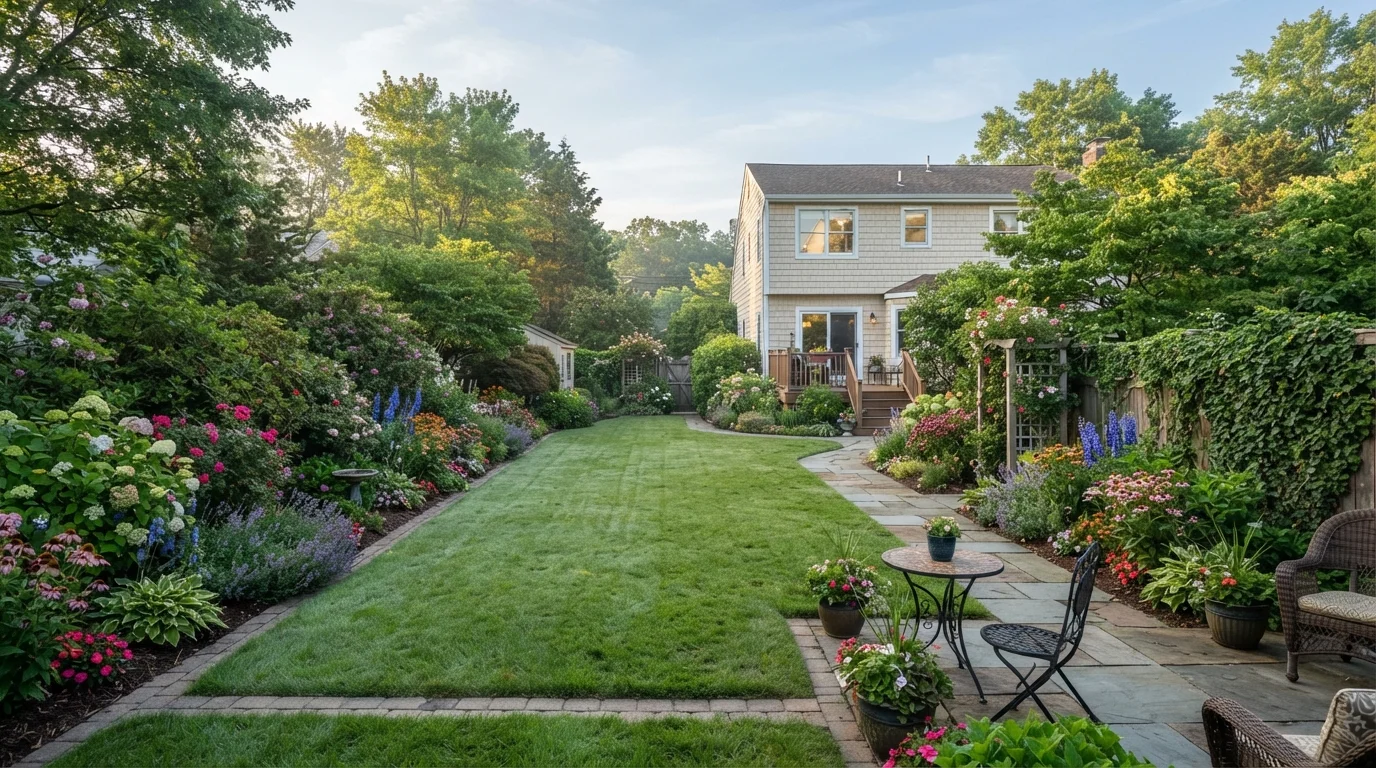
Grass surfaces provide a durable, relatively low-cost ground plane for children's play, outdoor dining, and casual recreation. Unlike hardscape alternatives such as patios or gravel, turf offers a forgiving, cushioned surface that absorbs impact. A healthy lawn also cools the surrounding microclimate through transpiration — a measurable benefit in heat-prone regions.
Visually, a well-maintained lawn unifies a yard's different elements, providing a neutral backdrop that makes garden beds, trees, and structures stand out. For homeowners planning outdoor entertaining, the flexibility of open grass is difficult to replicate. See our guide to planning outdoor living spaces for ideas on integrating lawn and structured areas effectively.
The Case Against Lawn Grass
The environmental and practical drawbacks of traditional lawns are substantial and worth examining honestly.
High water consumption, especially in dry climates
Keeping cool-season grasses green through summer typically requires one to two inches of water per week. In drought-prone regions, this represents a significant and potentially unsustainable draw on local water supplies.
Ongoing time commitment for mowing and upkeep
A standard residential lawn needs mowing every one to two weeks during the growing season, plus seasonal tasks such as aerating, dethatching, and overseeding. The cumulative time investment is substantial over a full year.
Low ecological value compared to planted alternatives
Turfgrass monocultures provide little food or habitat for pollinators, birds, or beneficial insects. Research consistently shows that even modest increases in plant diversity dramatically improve yard-level biodiversity.
Fertilizer and pesticide use can impact local ecosystems
Nitrogen fertilizers applied to lawns are a documented contributor to nutrient runoff into streams and groundwater. Herbicides used to maintain weed-free turf can also affect non-target plants and soil organisms.
Poorly suited to shaded or compacted conditions
Many turfgrass species struggle under tree canopy or in areas with heavy clay soil, leading to thin, patchy coverage. Attempting to maintain grass in these conditions typically requires disproportionate effort and inputs.
Turfgrass monocultures offer little ecological value — they support minimal biodiversity compared to mixed plantings, providing negligible habitat for pollinators or birds. Conventional lawn care also relies heavily on synthetic fertilizers and pesticides that can leach into local waterways. Alternatives such as native plants and drought-tolerant landscaping strategies typically outperform turf on both ecological and resource-efficiency measures.
Maintenance demands are also ongoing. A lawn doesn't reach a finished state — it requires consistent mowing, edging, aerating, overseeding, and seasonal feeding. Homeowners underestimating this commitment often end up with patchy, weedy turf that looks worse than a planned alternative would. For a full picture of year-round tasks, our seasonal garden maintenance reference lays out what lawn and garden care realistically involves across all four seasons.
~40M
Acres of lawn in the United States
Turfgrass is estimated to cover roughly 40 million acres across the US, making it one of the most extensively irrigated crops in the country.
30–60%
Share of household water used on outdoor irrigation
The US Environmental Protection Agency estimates that outdoor watering accounts for 30 to 60 percent of household water use in many regions, with lawn irrigation as the primary driver.
Finding a Middle Ground
Many homeowners find the most satisfying outcome isn't an all-or-nothing choice. Reducing lawn area by converting portions to planting beds, ground covers, or mulched zones can meaningfully lower water and maintenance demands while retaining usable grass where it genuinely earns its keep. Mulch options are worth exploring for transitional areas between turf and planted beds.
If you do keep a lawn, choosing a grass species well-matched to your region's rainfall patterns reduces irrigation needs considerably. Warm-season grasses like bermudagrass and zoysia generally perform better in the South with less supplemental water, while fine fescues tolerate drier conditions in cooler northern climates. Soil health — often overlooked — is also foundational; compacted, nutrient-poor soil produces a lawn that demands far more inputs to maintain.