

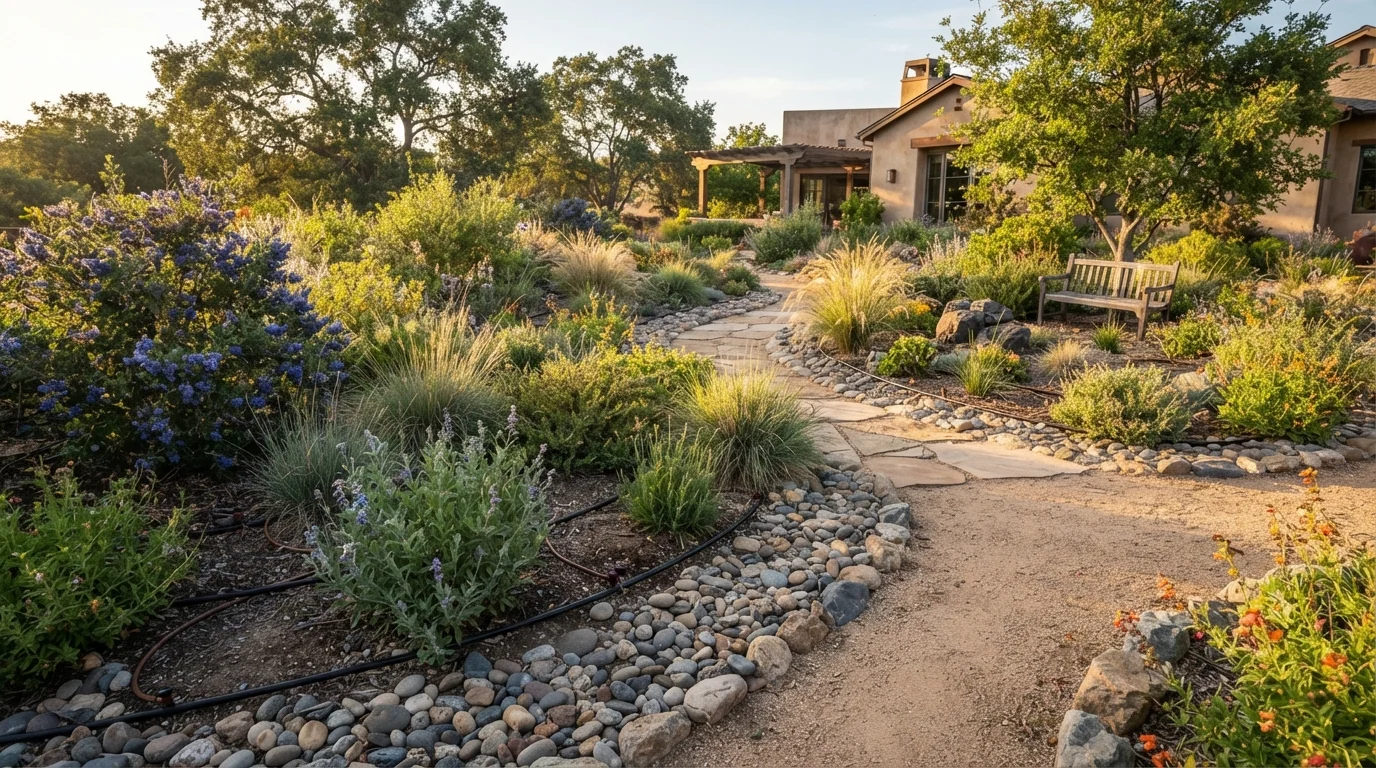
Key Takeaways
Why Water-Wise Landscaping Matters
Outdoor water use accounts for a substantial share of residential water consumption in the United States, with landscaping irrigation often representing the largest single household draw in drier regions. As drought conditions become more frequent across the West, Southwest, and even parts of the South, homeowners are rethinking what a thriving garden actually requires.
The encouraging reality is that reducing water use doesn't mean accepting a bare or dull yard. A well-designed drought-tolerant landscape can offer year-round color, texture, and habitat value — often with less maintenance than a conventional lawn-heavy setup. The strategies below represent widely recognized approaches that landscaping professionals and cooperative extension programs across the US commonly recommend.
For a fuller picture of how water habits affect plant health, the common watering myths worth debunking are a useful companion read before you change any irrigation routines.
Embrace Xeriscaping Principles
Xeriscaping — a term coined in Colorado in the 1980s — is a design philosophy built around minimizing supplemental irrigation. It doesn't prescribe a single aesthetic; rather, it's a framework of seven core principles: planning and design, soil improvement, appropriate plant selection, practical turf areas, efficient irrigation, mulching, and ongoing maintenance.
A xeriscape plan starts with an honest site assessment: which areas receive full sun, where drainage is slow, and which spots are naturally shaded. These observations shape every plant and irrigation decision that follows. Homes that have implemented xeriscape designs often see meaningful reductions in outdoor water use, though actual results vary by region, existing landscape, and rainfall patterns.
Xeriscaping is a design framework, not an aesthetic — it works with any style of garden.
Prioritize Native and Regionally Adapted Plants
Native plants have evolved alongside local rainfall cycles, soil types, and seasonal temperature swings. Once established, many require little or no supplemental watering beyond natural precipitation. This stands in sharp contrast to non-native ornamentals that may need consistent irrigation to survive in climates they weren't adapted to.
Regional native plant societies, university cooperative extensions, and local nurseries are reliable sources for identifying which species suit your specific area. Beyond water savings, natives support pollinators and local wildlife in ways that exotic species typically cannot. Why ecologists keep recommending native plants provides a deeper look at the evidence behind this choice.
Native plants, once established, can thrive on natural rainfall alone in most US regions.
Improve Soil to Hold Moisture Longer
Sandy soils drain water too quickly for roots to absorb it efficiently; dense clay soils may shed water as runoff before it penetrates deeply. Neither extreme supports drought-tolerant plants optimally. Amending soil with compost improves both drainage in clay and water retention in sand, creating a structure where moisture lingers in the root zone.
A basic soil test — available through most cooperative extension offices for a modest fee — will identify your soil's texture, pH, and nutrient profile. This information helps you target amendments precisely rather than guessing. Well-amended soil is one of the highest-return investments in a water-smart landscape because it benefits every plant you grow.
A simple soil test guides amendments that make every drop of water work harder for your plants.
Apply Mulch Generously and Strategically
Mulch is one of the most straightforward tools for reducing water loss. A 2–4 inch layer of organic mulch — such as shredded bark, wood chips, or straw — slows surface evaporation, moderates soil temperature, and suppresses weeds that would otherwise compete for moisture. As organic mulch breaks down, it also gradually improves soil structure.
Keep mulch a few inches away from plant stems and tree trunks to prevent moisture-related rot. Refresh the layer annually, or as it decomposes. Inorganic mulches like gravel or decomposed granite serve a similar evaporation-reduction function and are particularly well-suited to desert-style plantings where a rock-garden aesthetic is the goal.
A 2–4 inch mulch layer can meaningfully cut surface evaporation and reduce watering frequency.
Switch to Drip Irrigation or Soaker Hoses
Conventional overhead sprinkler systems lose a significant portion of water to evaporation and overspray — water lands on paths, driveways, and foliage rather than the root zone where it's needed. Drip irrigation systems and soaker hoses deliver water slowly and directly to the soil at the base of plants, reducing evaporation and limiting moisture on leaves, which can contribute to fungal disease.
Drip systems can be set up on timers and adjusted seasonally, making them a practical upgrade for most homeowners. They're particularly effective in vegetable gardens and established perennial beds. When paired with a rain sensor or soil moisture controller, they eliminate unnecessary watering after rainfall — a simple addition that prevents the kind of over-watering discussed in common garden watering misconceptions.
Drip irrigation delivers water directly to root zones, reducing waste compared to sprinkler systems.
Practice Hydrozoning When Planting
Hydrozoning means grouping plants with similar water requirements together in defined areas of your landscape. It sounds simple, but it's surprisingly common for gardens to mix high-water annuals with drought-tolerant perennials in the same bed, forcing the irrigation system to overwater the whole zone to satisfy the thirstiest plants.
Mapping your yard into zones — high water near downspouts or in areas you want to keep lush, low water in sunny, open areas — allows you to calibrate irrigation precisely. It also makes hand-watering more intentional. This approach pairs naturally with native plant selection, since regionally adapted species often cluster naturally into similar moisture niches.
Grouping plants by water need lets you irrigate each zone precisely, eliminating wasteful overwatering.
Reduce or Reimagine Turf Areas
Conventional turfgrass is typically the highest water-consuming element of a residential landscape. Reducing turf coverage — even partially — can produce a meaningful decrease in overall outdoor water use. Common alternatives include ground covers such as creeping thyme or buffalo grass, permeable hardscaping like decomposed granite or flagstone, or expanded planting beds with drought-tolerant shrubs and perennials.
This doesn't necessarily mean eliminating lawn entirely. Keeping turf in high-use areas (where children or pets play, for example) while replacing ornamental or infrequently used turf sections is a practical middle path. For a thorough comparison of the trade-offs involved, the case for and against lawn grass lays out both sides clearly.
Replacing even a portion of turf with low-water alternatives can significantly reduce outdoor water use.
Putting It All Together
No single technique makes a garden drought-resilient on its own. The approaches above work best in combination — native plants thrive even more in well-amended soil with mulch on top, and drip irrigation paired with hydrozoning delivers the most efficient results. Start with the changes that fit your current landscape, then layer in others over time.
Start Small for Lasting Results
You don't need to overhaul your entire yard at once. Pick one area — a sunny border, a strip between the sidewalk and street, or a section of lawn — and apply drought-tolerant principles there first. Observing what works in your specific soil and light conditions over a season gives you practical knowledge to expand with confidence. Gradual transitions are also easier on your budget and your time.
If you're reconsidering your lawn footprint as part of this process, a balanced look at lawn grass in the modern garden can help you weigh the trade-offs honestly. And if you're working with a small outdoor space, planning a garden area you'll actually use offers practical layout guidance that pairs well with water-smart planting.