

Key Takeaways
Our Verdict
Neither organic nor inorganic mulch is universally superior — they serve different garden goals. Organic mulches are the stronger choice for actively growing beds where soil health matters, while inorganic mulches shine in low-maintenance, decorative, or high-traffic areas. Most gardeners benefit from using both strategically across their outdoor spaces.
| Best for | Recommended |
|---|---|
| Vegetable gardens and actively planted beds | Organic mulch (straw, wood chips, compost) |
| Permanent landscape features and pathways | Inorganic mulch (gravel, river rock) |
| Budget-conscious gardeners wanting long-term soil improvement | Organic mulch |
| Water-wise or xeriscape gardens in hot, dry climates | Inorganic mulch (decomposed granite, pea gravel) |
What Sets Organic and Inorganic Mulch Apart
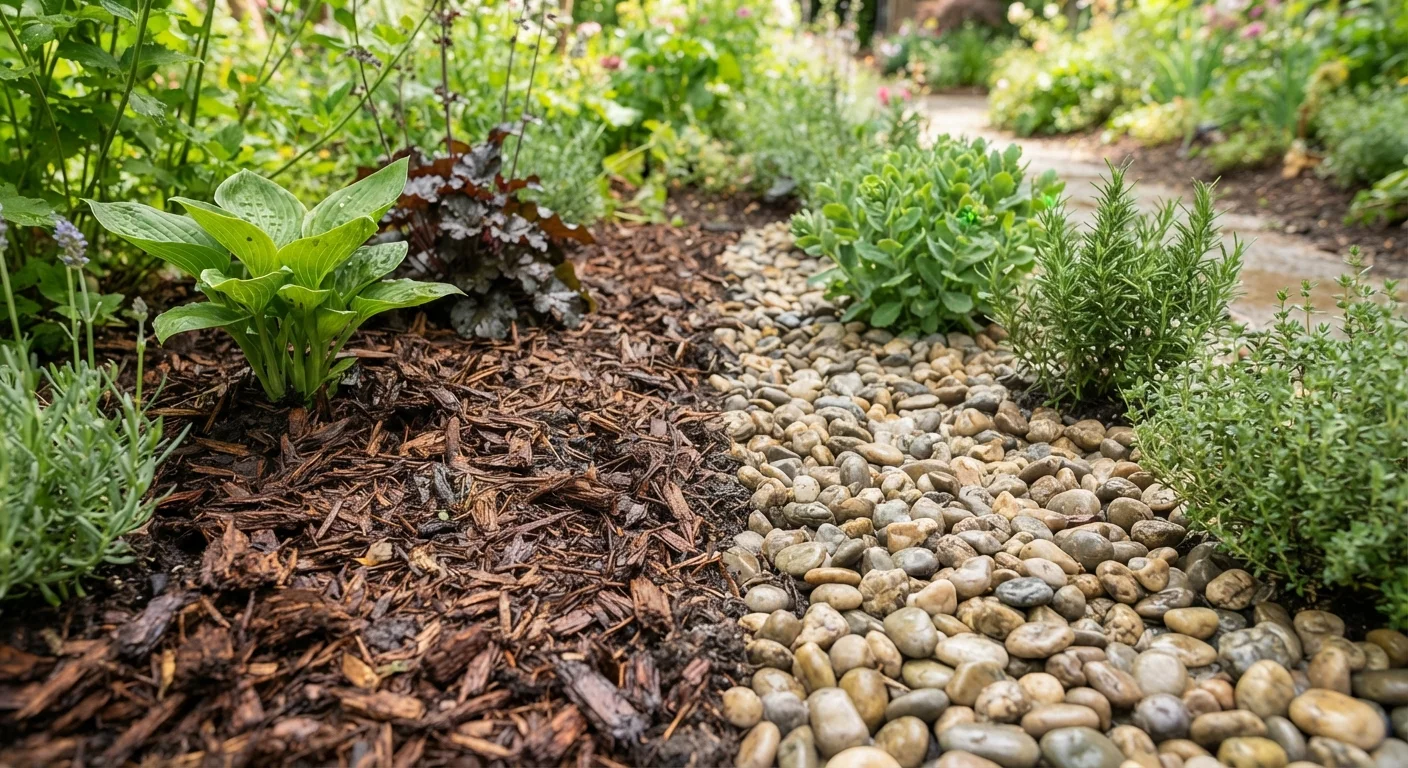
Mulch is any material layered over soil to protect and improve it — but not all mulches work the same way. The core distinction is simple: organic mulches are made from once-living materials that decompose, while inorganic mulches are mineral or synthetic materials that remain stable over time.
Common organic options include wood chips, shredded bark, straw, grass clippings, pine needles, and leaf mold. Inorganic choices range from gravel, pea gravel, and decomposed granite to landscape fabric and rubber chips. Each category has a distinct relationship with your soil, your plants, and your maintenance schedule.
Understanding that difference is the starting point for choosing well. If your garden bed is actively growing vegetables, perennials, or shrubs you want to nurture long-term, the mulch you choose will either feed those ambitions or simply manage appearances. For guidance on how bed structure also influences outcomes, see our comparison of raised beds and in-ground planting.
How Each Type Performs: A Side-by-Side Look
Comparing mulch types across practical criteria helps clarify which fits your specific situation. Both suppress weeds and retain soil moisture to some degree, but their performance diverges in meaningful ways.
| Organic Mulch | Inorganic Mulch | |
|---|---|---|
| Soil enrichment | Improves fertility as it decomposes | No contribution to soil nutrients |
| Longevity | 1–3 years before replenishment needed | 5–10+ years with minimal upkeep |
| Weed suppression | Good with proper 3–4 inch depth | Good to excellent depending on material |
| Moisture retention | Excellent; slows evaporation well | Moderate; varies by material |
| Cost over time | Recurring cost for replenishment | Higher upfront, lower long-term |
| Best use case | Vegetable beds, perennials, soil building | Pathways, xeriscape, decorative areas |
Organic mulches typically need replenishing every one to three years as they break down. That decomposition, however, feeds soil microbes, improves drainage in clay soils, and adds nutrients — particularly valuable in vegetable or mixed perennial beds. Straw is especially popular in food gardens because it's loose, inexpensive, and composts readily at season's end.
Inorganic mulches, by contrast, may last a decade or more with minimal upkeep. Gravel and stone won't blow away easily, resist fire in wildfire-prone regions, and don't harbor certain fungal issues. However, they can raise soil temperature significantly in summer — a consideration in hot climates — and they offer nothing to soil biology.
Soil Health and Long-Term Garden Impact
For gardeners focused on soil health, organic mulch has a clear edge. As wood chips, straw, or shredded leaves break down, they feed earthworms and beneficial microorganisms that aerate and enrich soil. Over several seasons, consistent organic mulching can measurably improve the texture and water-holding capacity of poor or compacted soil.
Apply Mulch at the Right Depth
Most organic mulches perform best at 2–4 inches deep. Too thin and weeds push through; too thick and water may struggle to penetrate to roots. Keep mulch pulled back a few inches from plant stems and tree trunks to discourage rot and pest harborage.
Pairing mulch with a strong composting practice amplifies these benefits further. Our guide to home composting explains how finished compost can be layered beneath wood chips to create an especially nutrient-rich mulch system.
Inorganic mulches essentially leave soil biology untouched. They create a physical barrier but don't contribute to the underground ecosystem. In established xeriscapes or decorative beds where you aren't trying to build soil, this is a perfectly reasonable trade-off. But in a food garden or a bed where you're working to improve thin or depleted soil, inorganic mulch won't move the needle.
Weed Control, Moisture, and Practical Maintenance
Both mulch types suppress weeds by blocking light, but effectiveness varies. A 3–4 inch layer of wood chips or straw provides reliable weed suppression for most annual weeds. Landscape fabric — an inorganic option — can be highly effective initially but tends to degrade over time, and persistent weeds eventually root into the fabric itself, making removal difficult.
For moisture retention, organic mulches generally perform well, slowing evaporation and moderating soil temperature swings. Gravel and stone can actually shed water initially, though in well-draining soils they may help direct rainfall toward roots once in place.
Avoid Piling Mulch Against Plant Stems
"Volcano mulching" — mounding mulch high against tree trunks or shrub bases — is a common mistake that traps moisture and encourages decay and pest activity. Always leave a clear gap between mulch and plant stems, and resist the urge to keep piling on material year after year without removing old, compacted layers first.
On the maintenance side, organic mulches demand more frequent attention: replenishing depth as material breaks down, and occasionally raking to prevent matting (particularly with grass clippings or leaves). Inorganic mulches require less active upkeep but may need periodic cleaning to remove debris and prevent organic material from accumulating on top, which can ironically create a seed bed for weeds. Controlling pests within mulched areas is also worth considering — our article on managing garden pests without chemicals covers integrated approaches that work well alongside mulching.
Matching Mulch to Your Garden's Needs
The right mulch depends on what your garden bed is trying to accomplish. A few guiding questions can simplify the decision:
- Are you actively building soil? Choose organic. Wood chips, straw, or shredded leaves will reward you season after season.
- Do you want near-permanent coverage with minimal upkeep? Inorganic gravel or decomposed granite may suit pathways, foundational plantings, or dry-climate gardens.
- Is aesthetics a priority? Both categories offer attractive options — bark mulch for a natural woodland look, polished river rock for a modern, clean appearance.
- Are you gardening in a hot or fire-prone region? Non-combustible inorganic mulches offer a practical advantage in some US climates.
Many experienced gardeners use both: inorganic gravel on pathways and around permanent hardscape, and organic mulch in planted beds. This hybrid approach lets you match the tool to the task rather than defaulting to one across the entire yard. For inspiration on designing cohesive outdoor areas, our outdoor living spaces planning guide offers a useful framework for thinking through your full garden layout.