

Key Takeaways
Option A
Raised Beds
The controlled, accessible growing environment.
Best for: Gardeners dealing with poor native soil, limited mobility, drainage problems, or small defined spaces who want precise soil management.
Option B
In-Ground Planting
The traditional, expansive, low-upfront-cost approach.
Best for: Gardeners with workable native soil and ample space who want to grow at scale without significant upfront construction costs.
If you have poor, compacted, or contaminated native soil
Raised Beds
Raised beds let you bypass problematic native soil entirely by filling with a custom growing mix, giving plants an immediate, healthy root environment.
If you want to grow vegetables across a large area on a tight budget
In-Ground Planting
In-ground plots require no framing materials or bulk soil purchases, making large-scale growing significantly more affordable to establish.
If accessibility or physical comfort during gardening matters to you
Raised Beds
Building beds to a comfortable height — typically 24 to 30 inches — greatly reduces bending and kneeling, making gardening easier on joints.
If you have naturally fertile, well-draining loam and want low-maintenance growing
In-Ground Planting
Good native soil requires only modest annual amendment and can support a wide range of crops without the ongoing soil replenishment raised beds need.
If you want year-round flexibility and a tidy, structured garden layout
Raised Beds
Raised beds are easy to cover with cold frames or row covers, support crop rotation within defined areas, and lend a clean, organized look to the garden.
Understanding the Core Difference
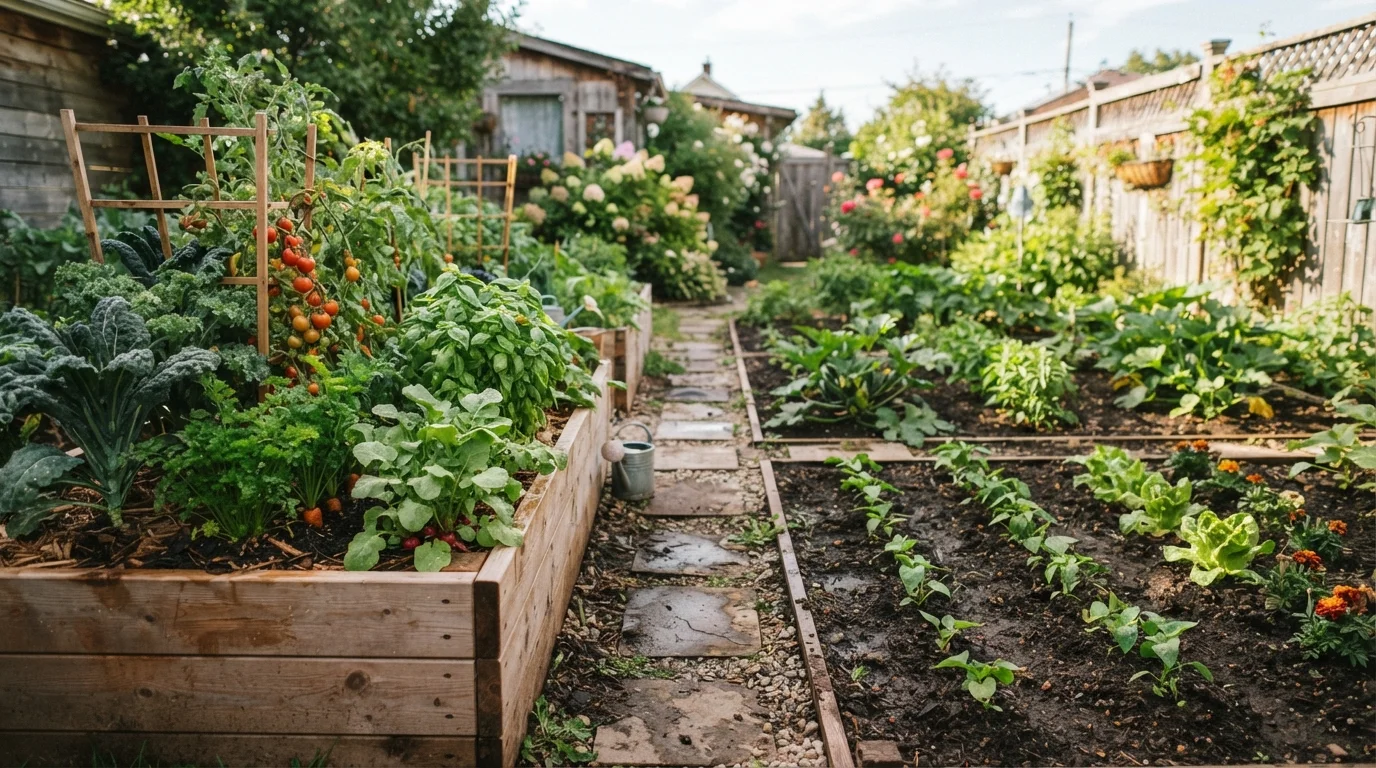
The choice between raised beds and in-ground planting shapes nearly every aspect of your garden — from how you prep the soil each spring to how often you bend over during harvest. At their core, the two methods differ in one fundamental way: raised beds create a contained growing environment above the existing ground, filled with imported or custom-blended soil, while in-ground planting works directly with whatever native soil your property provides.
Neither approach is universally superior. The right fit depends on your soil conditions, physical needs, budget, and the scale at which you want to grow. If you're starting completely from scratch, our beginner's guide to vegetable gardening covers site selection and soil prep fundamentals that apply to both methods.
| Criterion | Raised Beds | In-Ground Planting |
|---|---|---|
| Upfront cost | Higher (materials + fill soil) | Lower (mainly labor + amendments) |
| Soil control | Complete — custom-blended mix | Limited to native soil improvement |
| Drainage | Excellent by design | Depends on native soil type |
| Spring soil warm-up | Faster — exposed on all sides | Slower — ground-insulated |
| Accessibility | High — adjustable height | Low — requires bending to ground level |
| Weed pressure | Lower initially | Higher, especially early on |
| Watering needs | More frequent — dries out faster | Less frequent on moisture-retentive soils |
| Scalability | Limited by material cost | Easy to expand at low cost |
| Root depth for large plants | Restricted by bed depth | Unrestricted — unlimited depth |
Soil Quality, Drainage, and Growing Conditions
One of the most compelling reasons to choose raised beds is control over soil composition. You can fill beds with a custom blend — typically a mix of topsoil, compost, and coarse material such as perlite — optimized for drainage and nutrient availability regardless of what lies beneath. This is particularly valuable on clay-heavy or compacted sites where in-ground roots struggle to penetrate and waterlogging is common.
In-ground planting, by contrast, requires working with and improving native soil over time. On sites with naturally well-draining loam, this can be highly productive with relatively modest annual inputs of compost and organic matter. Understanding how soil pH affects plant health is essential whichever method you choose, since pH influences nutrient availability across both bed types.
Raised beds also warm up more quickly in spring because the soil mass is exposed on all sides. This can give you a modest head start on the season — though the exact benefit varies by climate, bed material, and exposure.
6–12 in.
Minimum recommended raised bed depth
Most cooperative extension services suggest at least 6 inches for shallow-rooted crops and 12 or more for root vegetables like carrots.
~1 cu yd
Fill soil needed per standard 4×8 ft bed at 12 in. deep
Volume calculations vary by bed dimensions; bulk soil delivery is typically more economical than bagged mixes for multiple beds.
2–4 weeks
Earlier planting window raised beds may allow in spring
University extension research generally notes raised bed soil warms earlier than in-ground, though exact timing depends on climate and bed material.
Cost, Setup, and Long-Term Investment
Upfront cost is where in-ground planting holds a clear practical advantage. Preparing a new in-ground plot primarily involves labor — loosening and amending the soil — with little material expense beyond compost or mulch. Raised beds, by contrast, require framing materials (cedar, pine, composite lumber, or galvanized steel are common choices) plus a substantial volume of fill soil purchased in bulk or by the bag. For a standard 4-by-8-foot bed filled 12 inches deep, you may need close to one cubic yard of growing mix.
That said, raised beds can pay back their initial investment through reduced weed pressure and fewer soil amendments over time. Pairing your beds with a good mulching strategy further reduces maintenance demands. Over a five-to-ten-year horizon, the cost difference between the two approaches often narrows considerably.
Material Choice Affects Longevity and Cost
Cedar and redwood are naturally rot-resistant and commonly used for raised bed frames, typically lasting 10 or more years without treatment. Untreated pine costs less upfront but may need replacing in as few as four to six years. Galvanized steel and composite lumber options offer longer lifespans but at higher initial cost. Consider the multi-year cost when comparing material choices.
Pest, Weed, and Water Management
Raised beds tend to have a built-in early advantage over in-ground plots when it comes to weeds. Fresh fill soil contains far fewer weed seeds than established garden ground, and the defined edges make it easier to spot and remove interlopers before they spread. Lining the bottom with hardware cloth also deters burrowing pests such as voles and gophers.
In-ground gardens, however, give deep-rooted plants more room to explore for moisture, which can reduce watering frequency on sites with reasonably moisture-retentive soil. Raised beds dry out faster — especially in summer — and generally require more consistent irrigation. Reviewing common garden watering misconceptions can help you build better habits for either method. For pest management across both systems, integrated approaches that avoid broad-spectrum chemicals are worth exploring.
Which Approach Suits Your Garden Goals?
The most productive gardens are those matched to their site and gardener. If your yard has poor, rocky, or potentially contaminated soil — a concern in older urban properties — raised beds provide a clean slate. If you have generous space and good native soil, in-ground planting lets you scale up growing area quickly without significant expenditure.
Many experienced gardeners use both: raised beds for intensive crops like salad greens, herbs, and root vegetables where precise soil conditions matter, and in-ground rows for sprawling plants like squash, corn, or asparagus that benefit from unrestricted root depth. Planning how your planting areas integrate with the broader outdoor space is worth doing thoughtfully — our guide to designing garden areas you'll actually use offers useful layout thinking. Whichever method you choose, consistent soil care, proper watering, and attentive pest management determine long-term success far more than the choice of raised versus in-ground.