

Key Takeaways
Start here
Choosing the Right Location
Next
Preparing Your Soil
Then
Selecting What to Grow
Finally
Planting, Watering, and Ongoing Care
Choosing the Right Location
Site selection is the foundation of every successful vegetable garden. Before you buy a single seed, spend a few days observing how sunlight moves across your yard. Most vegetables — especially fruiting crops like tomatoes, peppers, and cucumbers — need at least six hours of direct sun per day. Eight or more hours is even better for high-yield production.
Beyond sunlight, consider proximity to a water source. Dragging a hose across a large yard quickly becomes a deterrent to consistent watering. Choose a spot within easy reach of an outdoor tap or plan for a drip irrigation line. Good drainage is equally important — vegetables dislike sitting in waterlogged soil, so avoid low-lying areas that pool after rain.
If your available space is limited to a balcony or patio, container growing is a practical alternative. Our guide on container gardening on balconies and small patios covers what you need to make that work well.
Test Your Sunlight Before You Dig
Take photos of your potential garden area every two hours on a clear day — from morning to evening. Reviewing them side by side quickly reveals exactly how many hours of direct sun the spot actually receives. This simple step prevents one of the most common beginner disappointments: a shady garden that won't produce.
Preparing Your Soil
Soil quality determines more about your harvest than almost any other factor. Vegetables are heavy feeders and need loose, well-draining soil rich in organic matter. Before planting, dig or till the top 10–12 inches of your bed and work in a generous layer of compost — typically 2–4 inches mixed throughout.
A soil test, available through most county cooperative extension offices, reveals your soil's pH and nutrient levels. Most vegetables thrive in a slightly acidic to neutral range of roughly pH 6.0–7.0. The test results will guide any targeted amendments you need, such as lime to raise pH or sulfur to lower it.
Building your own compost is one of the most cost-effective ways to continually improve your soil over time. Learn how to get started with our article on composting at home.
pH (soil)
A measure of how acidic or alkaline your soil is, on a scale from 0 to 14. Most vegetables grow best when soil pH is between 6.0 and 7.0.
Organic matter
Decomposed plant or animal material — such as compost or aged manure — that improves soil structure, drainage, and nutrient availability.
Frost date
The average date of the last spring frost or first fall frost in your area, used to time planting so cold-sensitive crops aren't damaged.
Direct sow
Planting seeds directly into the garden bed rather than starting them indoors in containers first.
Mulching
Covering the soil surface around plants with material like straw or wood chips to retain moisture, moderate soil temperature, and suppress weeds.
Transplant
A young plant that was started indoors or in a nursery and then moved to its permanent outdoor garden location.
Selecting What to Grow
One of the most common beginner mistakes is planting too much variety too soon. A focused first garden — four to six crop types at most — is far easier to manage and far more rewarding than a sprawling, overwhelming plot.
Prioritize crops your household actually eats. Fast-maturing vegetables like radishes, lettuce, and green beans give you early feedback and keep motivation high. Add one or two staples like tomatoes or zucchini for bulk. Avoid notoriously demanding crops such as corn (which requires significant space and quantity to pollinate) or melons until you have a season or two of experience.
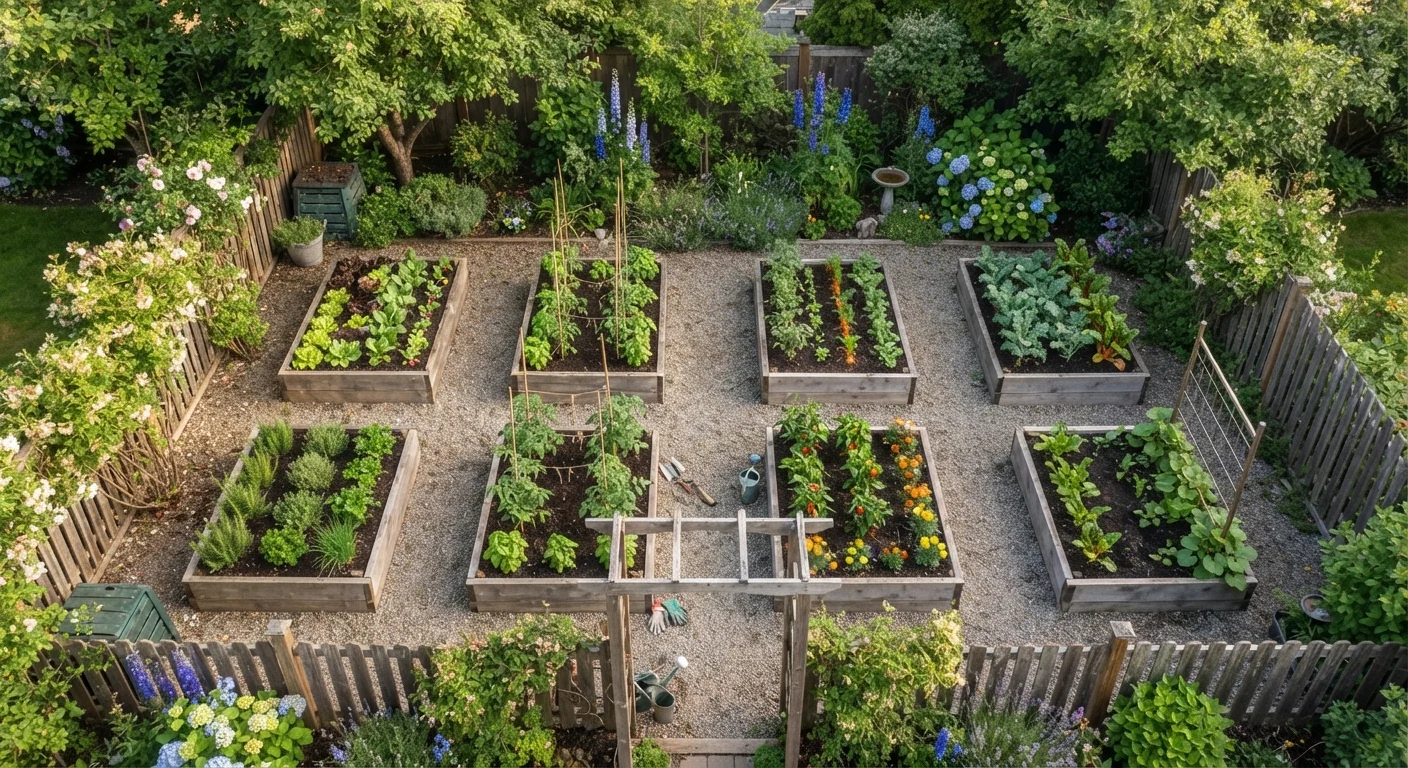
When deciding on your growing format, understanding the trade-offs between raised beds and in-ground rows helps you plan wisely. Our detailed breakdown — raised beds vs. in-ground planting — covers drainage, cost, and accessibility so you can choose confidently.
Avoid Overplanting Your First Season
It's tempting to fill every square foot of available space, but an oversized first garden often leads to burnout when maintenance demands peak in midsummer. Start with a bed no larger than 4 by 8 feet, or an equivalent area. A small, well-tended garden consistently outproduces a large, neglected one.
Planting, Watering, and Ongoing Care
Follow seed packet or transplant tag spacing guidelines carefully — crowded plants compete for light, water, and nutrients, reducing yields and increasing disease risk. Plant seeds at the correct depth, water gently to settle the soil, and mark your rows so you can distinguish seedlings from weeds early on.
Aim for consistent moisture rather than sporadic deep soaks or daily shallow sprinkles. A simple finger test — insert your index finger one inch into the soil; if it's dry, water — is a reliable low-tech method. Mulching around plants with straw or wood chips helps retain moisture and suppresses weeds.
Check plants at least twice a week for signs of pest damage or disease. Catching problems early — a cluster of aphids, a wilting stem, yellowing leaves — makes intervention much simpler. Before each new growing season, use our garden prep checklist to reset beds, test soil, and plan planting windows. For a full seasonal overview, the year-round garden maintenance reference outlines what to do month by month so nothing falls through the cracks.
Cooperative Extension Soil Testing Services
Most US state cooperative extension offices offer affordable soil testing with results that guide precise amendments. Search for your state's land-grant university extension to find your local service.
USDA Plant Hardiness Zone Map
The USDA's free online map helps you identify your hardiness zone, which determines which crops are viable in your region and informs planting window decisions.
Seasonal Garden Maintenance Reference
A month-by-month task guide covering soil prep, planting windows, and winterising — useful for staying on track throughout the full growing year.