

Key Takeaways
Why Container Gardening Works on Small Spaces
Container gardening isn't a compromise—it's a distinct approach with genuine advantages. You control the growing environment completely: soil composition, drainage, and positioning are all adjustable in ways that in-ground beds rarely allow. This is especially valuable on balconies and patios where existing ground conditions are irrelevant.
Unlike starting a vegetable garden from scratch in open ground, container gardening requires no tilling, no soil amendment at scale, and no permanent commitment to a layout. Pots can be rearranged as plants grow, seasons change, or your needs evolve. For renters especially, it's one of the most accessible ways to garden without altering permanent structures.
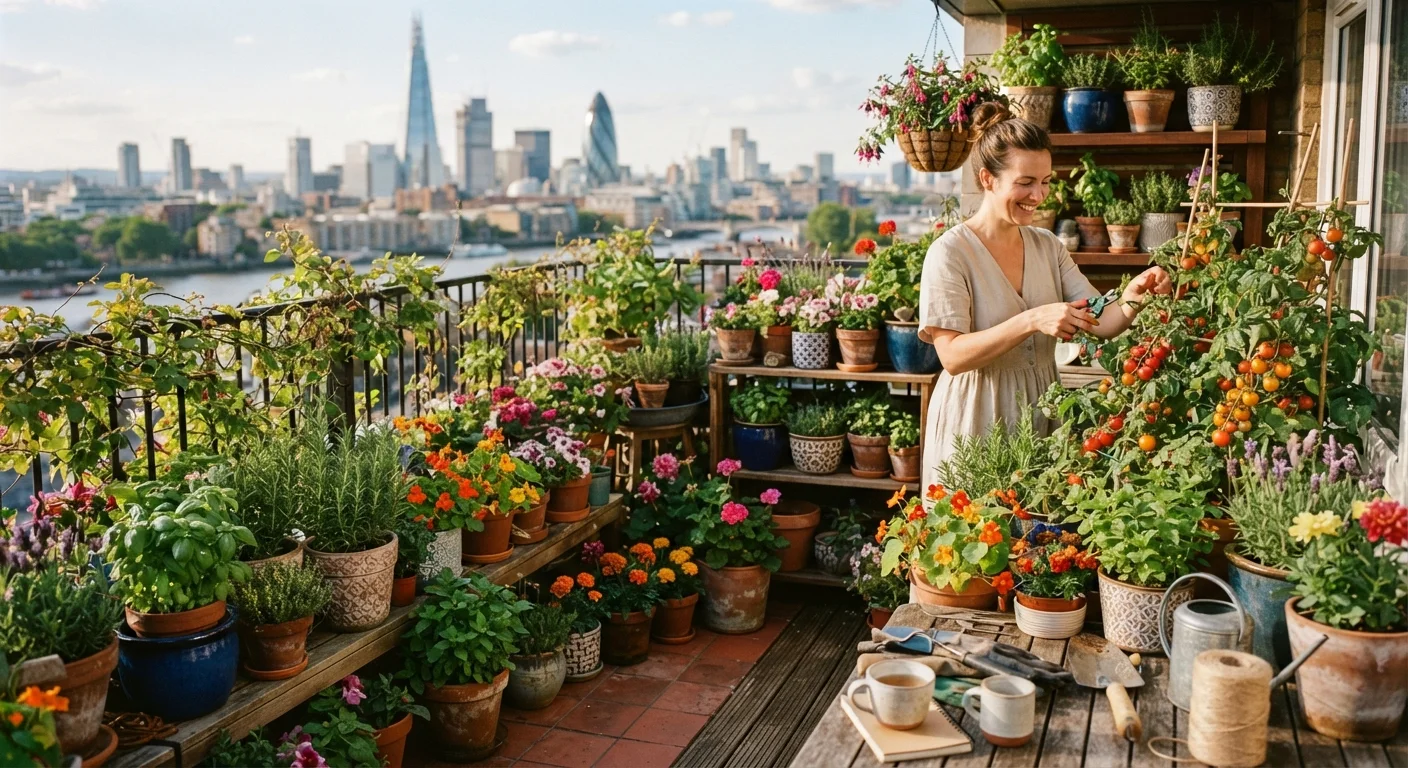
Container gardening also pairs naturally with home décor principles—thoughtfully arranged pots in complementary materials and colors can transform a bare balcony into a genuinely inviting outdoor room. The line between functional and beautiful blurs quickly once plants are thriving.
Check Your Balcony's Weight Capacity First
Containers filled with moist potting mix, plants, and water can be surprisingly heavy—large pots can exceed 100 lbs each. Before arranging multiple containers, check with your building manager or a structural engineer about your balcony's load rating. Distributing weight along load-bearing walls rather than the balcony's center is generally the safer approach.
What You'll Need Before You Start
Gathering the right materials before planting saves multiple trips and prevents improvised substitutions that undermine results. Review the prerequisites and tools below carefully—a few key items, particularly the potting mix and properly draining containers, are non-negotiable.
What you will need
Potting mix (container-specific)
Provides the aeration, drainage, and nutrient base that container plants require—distinct from heavy garden soil.
Containers with drainage holes
Allows excess water to escape, preventing root rot in all plant types.
Slow-release granular fertilizer
Feeds container plants steadily over weeks, compensating for nutrients that leach out with regular watering.
Watering can or drip irrigation kit
Delivers water accurately and gently without displacing soil or compacting the surface.
Pot saucers or drip trays
Collects drainage water to protect balcony surfaces and comply with building rules about runoff.
Perlite or coarse sand
Mixed into potting soil to increase drainage and air pockets around roots.
Plant stakes or small trellis
Supports vining or top-heavy plants like small tomatoes and cucumbers in windy balcony conditions.
Avoid Using Garden Soil in Containers
Garden soil compacts tightly in pots, cutting off air to roots and blocking drainage—conditions that quickly cause root rot. Always use a quality potting mix formulated specifically for containers. Some gardeners blend in perlite or coarse sand to improve aeration further.
Step-by-Step Setup
Follow these steps in sequence for the most reliable results. Each stage builds on the previous, and skipping ahead—particularly the sunlight assessment—commonly leads to plant failures that beginners mistakenly attribute to bad luck rather than placement.
Assess Your Space and Sunlight
Before purchasing a single pot, spend a day observing how sunlight moves across your balcony or patio. Note how many hours of direct sun each zone receives—this is the single most important factor in plant selection. Six or more hours qualifies as full sun; three to six is partial shade; fewer than three is full shade.
Also note wind exposure. High-rise balconies can experience strong gusts that desiccate foliage and topple taller containers. Low-profile plants and heavier pots are more stable in exposed locations.
Choose the Right Containers
Select containers sized appropriately for what you intend to grow. Herbs generally do well in 6–8 inch pots; tomatoes and peppers need at least 12–15 inches in diameter and depth; root vegetables like carrots require 12 inches of depth or more. When in doubt, go larger—small containers dry out faster and restrict root development.
Material matters for weight and insulation. Lightweight plastic and resin containers reduce load on your balcony. Unglazed terracotta is breathable but dries out quickly and is heavier. Fabric grow bags offer excellent aeration and drainage and fold flat for storage.
Every container must have drainage holes. If you fall in love with a decorative pot that lacks them, use it as a cachepot (outer sleeve) and place a functional container with holes inside it.
Select Plants Suited to Container Life
Not every plant adapts equally to container growing. Look for varieties described as compact, dwarf, or patio-bred. These terms indicate the plant was selected for smaller root zones and proportional above-ground growth.
- Edibles: Cherry tomatoes (e.g., patio types), bush beans, leaf lettuce, spinach, radishes, peppers, and most culinary herbs thrive in containers.
- Flowers: Petunias, marigolds, calibrachoa, and dwarf zinnias provide color while also attracting pollinators that benefit nearby edibles—a principle covered in companion planting strategies.
- Shade-tolerant options: If your balcony receives limited sun, focus on ferns, impatiens, coleus, and leafy greens like kale and chard, which tolerate partial shade.
Fill Containers With Quality Potting Mix
Fill each container with a quality potting mix to within 1–2 inches of the rim. This gap prevents water from running off before it can soak in. For deeper containers, some gardeners place a layer of coarse gravel or lava rock at the very bottom to improve drainage, though research suggests this is more about reducing mix volume than dramatically improving drainage—simply using a well-draining mix is usually sufficient.
If you plan to grow fruiting vegetables, blend a slow-release granular fertilizer into the mix at planting time according to package directions. Container plants lose nutrients with every watering cycle, so a built-in reserve helps sustain early growth.
Plant, Water, and Position Your Containers
Plant at the same depth plants were growing in their nursery containers—burying stems too deep encourages rot, while planting too shallow exposes roots. Water thoroughly immediately after planting until water runs freely from the drainage holes. This settles the mix and eliminates large air pockets around roots.
Position containers according to your earlier sunlight assessment. Keep sun-loving plants where they receive the most direct light, and push shade-tolerant varieties to lower-light corners. Consider using wheeled pot stands for heavier containers—this lets you rotate plants and move them indoors easily when frost threatens.
Establish a Watering and Feeding Routine
Container plants dry out far faster than in-ground beds because their root zones are limited and pots heat up quickly in sun. Check moisture daily during warm months by inserting a finger an inch into the soil—if it feels dry, water thoroughly. On hot, windy days, some containers may need watering twice.
Supplement slow-release fertilizer with a liquid feed every two to three weeks during the growing season, especially for heavy feeders like tomatoes and peppers. Consistent nutrition is the difference between adequate growth and genuinely productive container crops.
For ongoing seasonal care beyond the growing season, seasonal garden maintenance guidance can help you plan soil refresh, overwintering decisions, and spring restarts.
Group Containers for Humidity and Impact
Clustering pots together creates a slightly more humid microclimate, which benefits most edibles and ornamentals during hot summers. Grouping by water needs also makes maintenance faster—place drought-tolerant plants like herbs together away from moisture-loving crops like lettuce.
Once your container garden is established, you may also want to explore keeping garden pests in check without chemicals, since balcony gardens can still attract aphids, whiteflies, and spider mites despite being elevated and enclosed.
Troubleshooting Common Container Garden Problems
Even well-planned container gardens run into predictable issues. Knowing what to look for early prevents minor setbacks from becoming crop failures.
- Yellowing leaves
- Often signals overwatering, poor drainage, or nitrogen deficiency. Check that drainage holes are unobstructed, adjust watering frequency, and consider a liquid feed if the potting mix is more than a few months old.
- Wilting despite moist soil
- Counterintuitively, root rot from overwatering causes wilting even when the soil surface feels damp. Remove the plant carefully and inspect roots—brown, mushy roots confirm rot. Trim affected roots, repot in fresh mix, and reduce watering.
- Leggy, stretched growth
- Plants reaching toward light rather than growing compactly need more direct sun. Reposition the container or switch to shade-tolerant varieties if your balcony cannot provide more light.
- Fast drying and salt crust on soil surface
- Heavy white deposits on the soil surface indicate mineral buildup from tap water and fertilizers. Flush containers thoroughly with clean water monthly to leach accumulated salts before they damage roots.
If you find yourself wanting to expand beyond containers into a broader outdoor design, planning a usable outdoor living space offers layout and planting guidance for larger areas.