

Key Takeaways
Why Rethinking Chemical Pest Control Matters
Broad-spectrum pesticides can knock down pest populations quickly, but they rarely stop there. Many also harm pollinators, beneficial predatory insects, soil microbes, and local waterways. Over time, repeated applications can contribute to pesticide-resistant pest populations — making the original problem harder, not easier, to manage.
Integrated pest management (IPM) is a science-backed approach that treats the garden as an ecosystem. Rather than reaching for a spray at the first sign of damage, IPM asks gardeners to identify the pest accurately, assess whether intervention is actually needed, and choose the least disruptive method that will work. The result is a more resilient garden that functions with, rather than against, natural processes.
For a broader look at how your garden setup influences overall plant health and pest pressure, see our raised beds vs. in-ground planting guide.
Core Practices for Chemical-Free Pest Management
The practices below form the foundation of an effective, lower-risk pest management strategy. None requires specialized equipment or expertise — just consistent attention and a willingness to work with your garden's natural dynamics.
Monitor your garden at least twice a week, inspecting leaves closely for early pest signs.
Most pest infestations are far easier to manage in their early stages, before populations explode or damage becomes systemic. Regular inspection also ensures you correctly identify the pest before choosing any response, avoiding unnecessary treatments.
Use physical barriers such as floating row covers, copper tape, and sticky traps to exclude target pests.
Physical exclusion stops pests before they reach plants, requiring no chemical inputs and posing no risk to beneficial insects when applied correctly. Barriers are especially effective when installed at planting time, before pests establish.
Practise companion planting to repel pests and attract natural predators.
Certain plant combinations disrupt pest behavior through scent, habitat, or by drawing in the insects that eat garden pests. This strategy improves biodiversity while reducing pest pressure passively.
Rotate crop families annually to break pest and disease cycles in the soil.
Many soil-dwelling pests and pathogens are host-specific. Moving plant families to different beds each year denies these organisms a reliable food source, reducing their populations naturally over time.
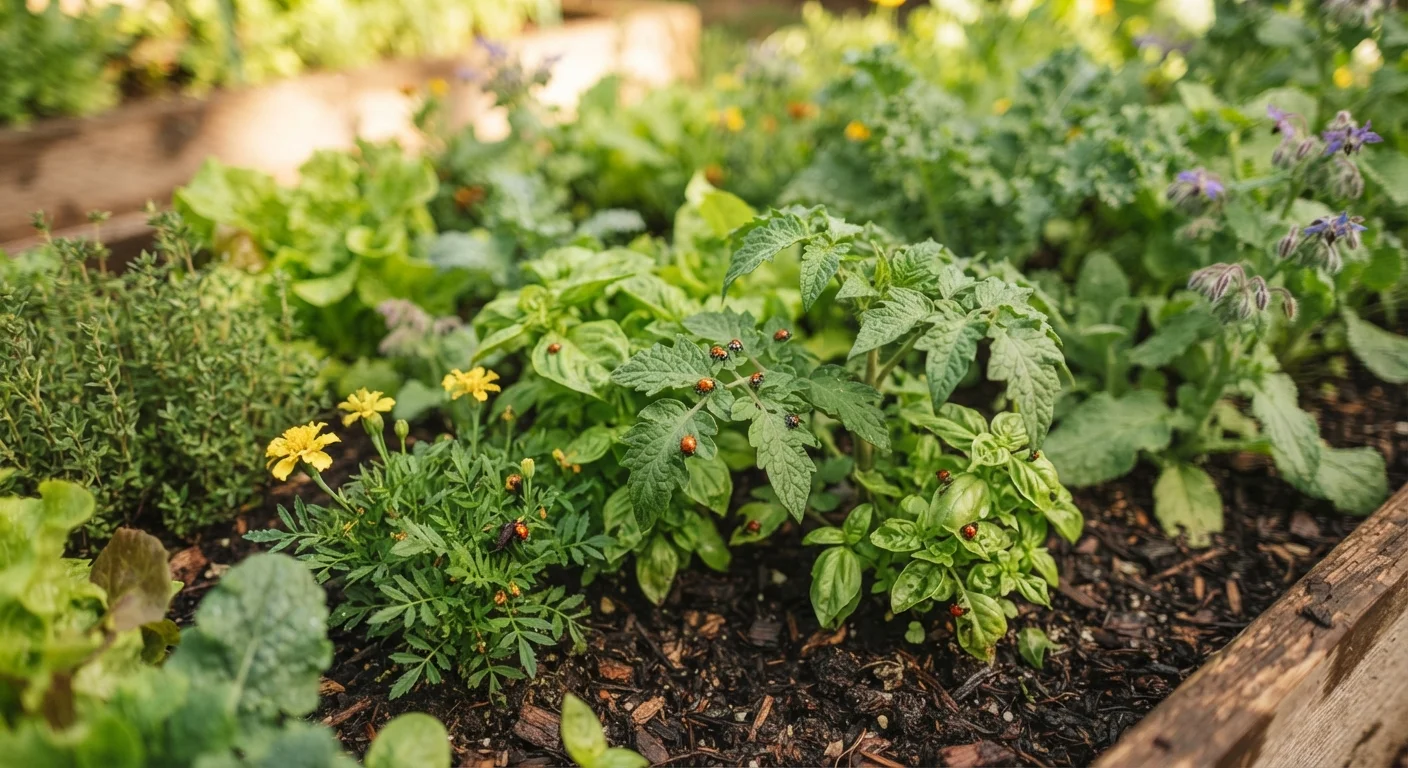
Encourage and preserve beneficial insects by planting nectar-rich flowers and avoiding broad-spectrum sprays.
Predatory and parasitic insects — including ladybugs, lacewings, parasitic wasps, and ground beetles — provide free, continuous pest suppression. Broad-spectrum insecticides eliminate these allies along with target pests, often making rebound infestations worse.
Remove pest-damaged plant material and garden debris promptly to eliminate overwintering habitat.
Spent plant material, fallen fruit, and accumulated debris provide shelter and food for many pests during colder months. Removing this material as part of seasonal cleanup directly reduces the pest population that will emerge the following spring.
Quick Actions You Can Take This Weekend
You don't need to overhaul your entire garden to start reducing pest pressure. Small, targeted actions taken now can make a measurable difference by the end of the season.
When Low-Risk Treatments Are Appropriate
Even within an IPM framework, there are times when a targeted, lower-risk treatment — such as insecticidal soap, neem oil, or diatomaceous earth — may be warranted for a specific pest at a damaging threshold. These options are more selective than broad-spectrum chemicals, but they still affect non-target organisms if used carelessly. Always read the label, apply in the early morning or evening to reduce contact with pollinators, and use the minimum effective amount. Consulting your local cooperative extension office can help you identify which products, if any, are appropriate for your situation.
Building Long-Term Resilience
Sustainable pest management is a long game. Healthy soil, diverse plantings, and consistent monitoring compound over seasons — meaning each year's garden tends to need less intervention than the last.
“The single greatest tool in pest management is knowledge — knowing your pest, knowing your crop, and knowing when to act and when to wait. More intervention is rarely better.”
— Extension Integrated Pest Management Program, Land-grant university cooperative extension guidance
Mulching is one underappreciated contributor to this resilience. A well-mulched bed suppresses weeds that harbor pests, moderates soil temperature and moisture, and encourages beneficial ground beetles. Explore the options in our organic vs. inorganic mulch comparison to find what suits your beds best.
Keeping a simple garden journal — noting which pests appeared, when, and on which plants — helps you spot patterns and prepare targeted defenses in future seasons. Pairing that with our year-round seasonal maintenance reference gives you a structured framework for staying ahead of problems rather than reacting to them.
Over 90%
Of insect species are neutral or beneficial to gardens
University extension entomology educators commonly note that the vast majority of insects found in a garden are not pests and should not be disturbed.
3–5×
Faster pest rebound after broad-spectrum insecticide use
Research published in agricultural ecology literature has documented that removing natural enemy populations through pesticide use often accelerates pest population recovery.