

Key Takeaways
Native Plants
Native plants are species that evolved naturally in a specific region over thousands of years without human introduction. They are adapted to local soils, rainfall patterns, and climate cycles, making them well-suited to grow with minimal outside help. In the garden context, a plant is considered native when it existed in a given area before European colonization of North America.
Nativity is geographically specific — a plant native to the Midwest may be non-native (and potentially invasive) in the Pacific Northwest. Always verify nativity by ecoregion, not just country or state.
What Makes a Plant Truly Native
A native plant isn't simply one that grows well in your yard — it's a species with deep evolutionary ties to a specific region. Over millennia, these plants developed alongside local insects, birds, fungi, and soils. That co-evolution is at the heart of why ecologists advocate for them so consistently.
Defining nativity requires geographic precision. A prairie coneflower native to Illinois may be entirely out of place — and ecologically disruptive — if planted in coastal Georgia. This is why plant professionals recommend working from ecoregion-level lists rather than broad national categories. The USDA Plants Database and state cooperative extension services are among the most reliable public resources for this kind of verification.
It's also worth distinguishing between straight native species and nativars — cultivated varieties bred for traits like unusual flower color or compact form. While nativars are derived from native species, some research suggests their modifications may reduce their value to specialist pollinators that evolved alongside the original plant. For gardens where ecological function is the priority, straight species are generally recommended.
The Ecological Case: Wildlife, Pollinators, and Soil
The ecological argument for native plants rests on interconnection. Insects — particularly specialist pollinators like native bees and certain moth species — often depend on specific plant families for food, shelter, and reproduction. Research by entomologist Douglas Tallamy and colleagues has highlighted that native oaks, for example, support hundreds of caterpillar species, which in turn are critical food sources for nesting birds.
70%
Of native bee species are ground-nesters
According to the Xerces Society, the majority of North America's 4,000+ native bee species nest in the ground and benefit directly from undisturbed native plant areas.
96%
Of land birds rely on insects to feed young
Research cited by the National Audubon Society indicates that nearly all North American land bird species depend on insect protein — largely supplied by native plant ecosystems — to raise their chicks.
35%
Reduction in landscape water use
Established native plantings can use significantly less supplemental water than conventional turf or ornamental gardens, though actual savings vary by region, soil type, and plant selection.
Soil ecology is another dimension frequently overlooked by home gardeners. Native plants foster relationships with mycorrhizal fungi already present in regional soils. These fungal networks improve nutrient uptake and water retention. Introducing plants from entirely different ecosystems can disrupt those underground relationships, sometimes reducing soil health over time.
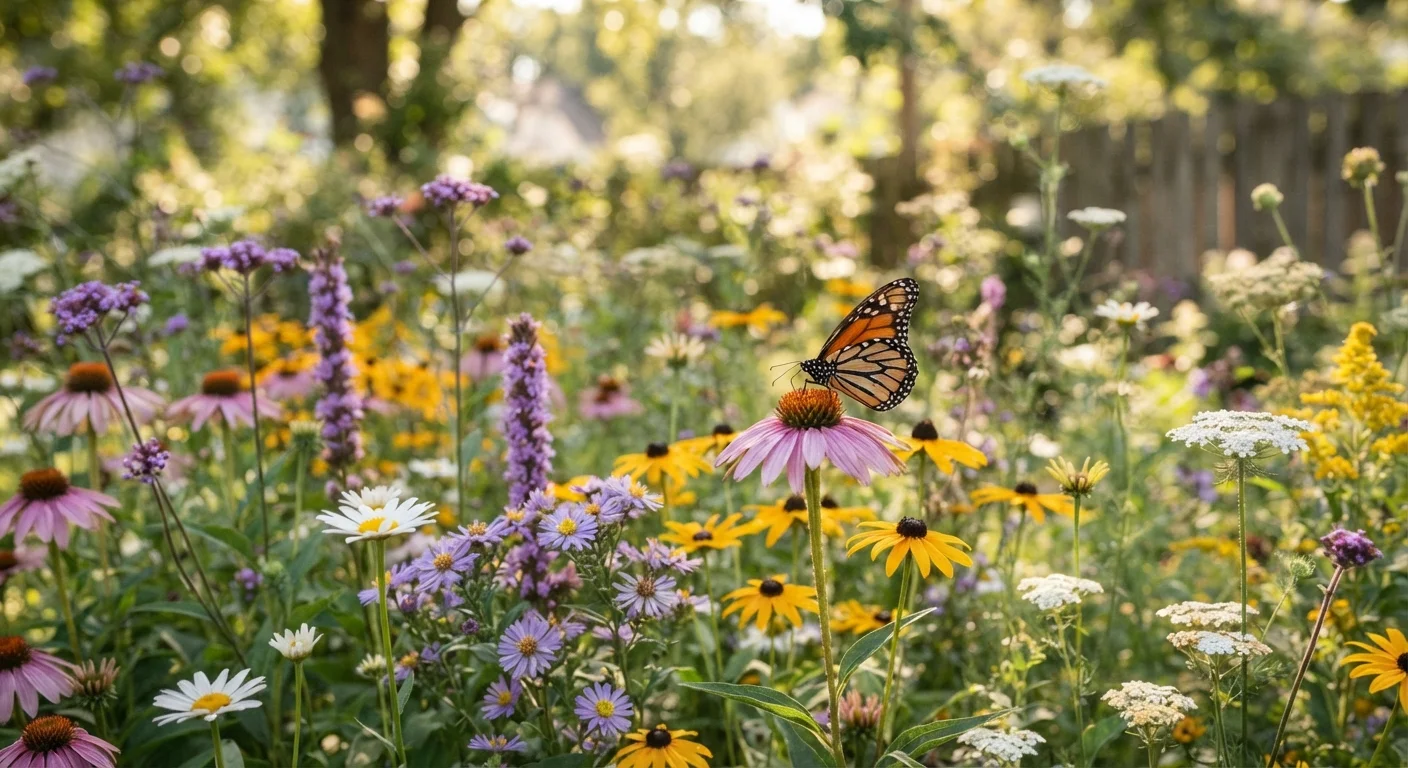
Pollinators are perhaps the most visible beneficiaries. Native flowering plants evolved with local bee, butterfly, and hummingbird species, offering nectar and pollen in forms those animals can readily use. This is one reason a native garden can attract noticeably more pollinator activity than an ornamental planting of similar size.
Practical Garden Benefits for Homeowners
Beyond ecology, native plants offer concrete advantages for everyday gardeners. Because they're adapted to regional rainfall and temperature ranges, established native plants generally need less supplemental irrigation than non-native ornamentals — a meaningful benefit in drought-prone regions. See our drought-tolerant landscaping guide for strategies that pair well with a native plant approach.
Start Small for Best Results
Replacing an entire yard at once can be overwhelming and expensive. Choose one manageable area — a foundation bed, a section of lawn edge, or a container grouping on a patio — and establish those plants successfully before expanding. Small wins build both confidence and ecological benefit over time.
Pest and disease pressure is also typically lower. Native plants and their local insect communities reached a kind of ecological balance — most native insects don't devastate the plants they feed on, unlike some introduced pests that encounter plants with no evolved defenses. This can reduce the need for pesticide intervention, which itself benefits the broader garden ecosystem.
Fertilizer needs tend to be minimal once natives are established, since they're adapted to regional soil nutrient levels. This stands in contrast to many high-maintenance ornamentals or lawn grasses that require regular feeding. For gardeners curious about how planting strategy affects inputs and effort, the raised beds vs. in-ground planting comparison is a useful companion read.
Getting Started With Native Plants
Transitioning a garden toward native plants doesn't require a complete overhaul. Many ecologists suggest starting by converting a section of lawn or replacing a few ornamental beds — even partial native coverage produces meaningful habitat benefit. For a balanced look at the trade-offs of maintaining lawn space, see the case for and against lawn grass.
When selecting plants, consider a mix of bloom times to support pollinators across the growing season, and include host plants — species that specific insects use for egg-laying and larval development. Layering plants of different heights, from groundcovers to shrubs to canopy trees, creates the structural diversity that wildlife depends on.
Watering newly planted natives consistently through their first season gives roots time to establish before the plant can sustain itself on regional rainfall. For guidance on making the most of that establishment period, our garden watering myths article addresses common missteps that can undermine young plants. Pairing natives thoughtfully with other garden species can also amplify benefits — the principles in companion planting apply whether or not the species involved are native.