

Key Takeaways
Companion Planting
Companion planting is the practice of growing different plant species in close proximity so they benefit one another. These benefits can include deterring pests, attracting pollinators, improving soil nutrients, or providing physical support. It draws on both traditional agricultural knowledge and ongoing horticultural research.
Some companion planting effects are well-documented — such as legumes fixing atmospheric nitrogen — while others remain based on observational or traditional evidence and may vary by region, soil type, and season.
The Logic Behind Pairing Plants
Gardeners have long noticed that certain plants seem to thrive when grown near specific neighbors. The mechanisms behind these relationships fall into a few broad categories: nutrient exchange, physical structure, pest disruption, and pollinator attraction.
Nitrogen fixation is one of the clearest examples. Legumes like beans and peas form a partnership with soil bacteria that converts atmospheric nitrogen into a plant-available form. Plants growing nearby can access this enriched soil — a natural alternative to synthetic fertilizer. Before planting, it helps to have your soil health in order; see our guide on soil pH and what it means for your plants to understand the foundation your companions will share.
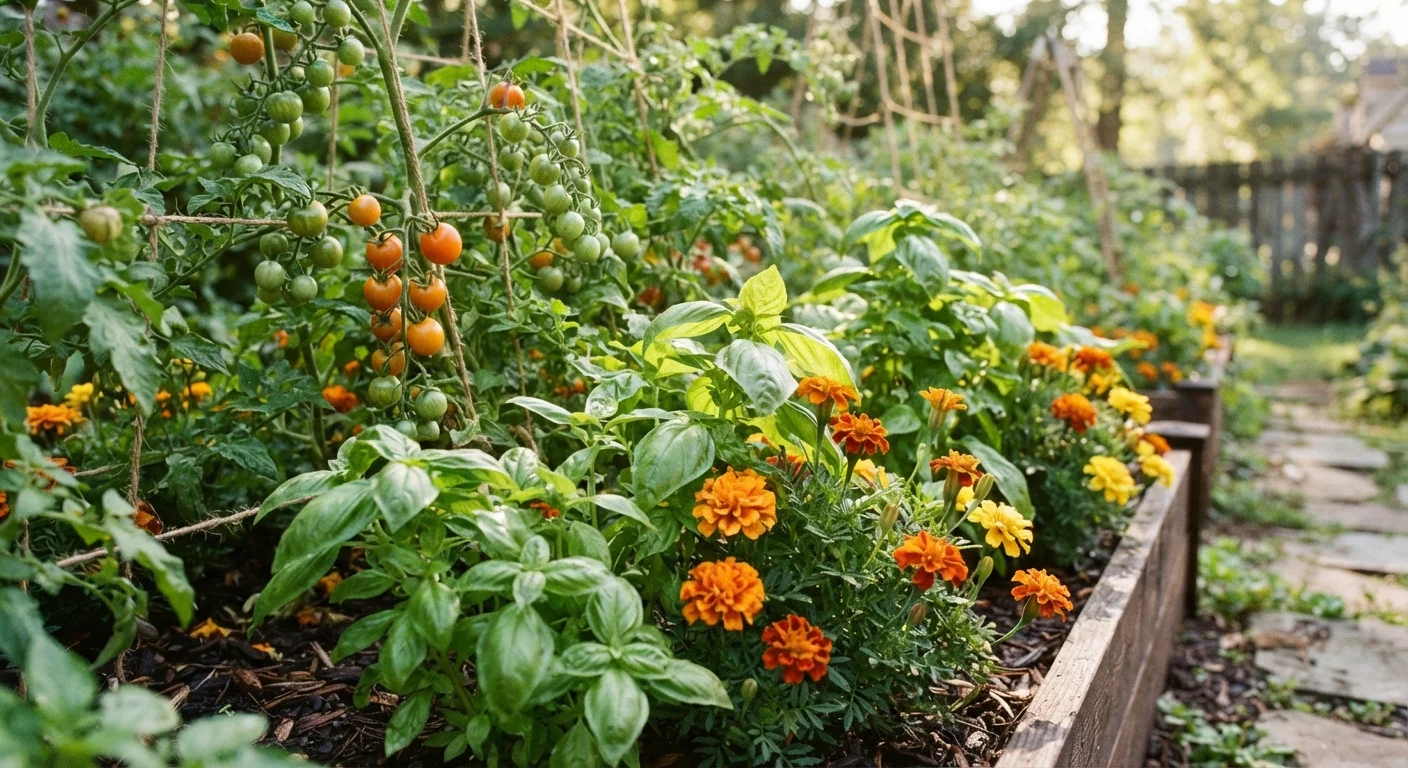
Aromatic plants work differently. Strong-scented herbs like basil, mint, and rosemary can confuse or deter insects that locate host plants by scent. Flowers like marigolds are widely used for their ability to repel certain nematodes and aphids, though their effectiveness can vary by pest species and garden conditions.
Start With Scented Herbs as Companions
If you're new to companion planting, aromatic herbs are a forgiving entry point. Basil, dill, and mint are easy to grow, serve culinary purposes, and add pest-deterrent value near vegetables. Just note that mint spreads aggressively — planting it in a container buried at soil level helps contain its roots.
Classic Companion Pairings Worth Knowing
The most celebrated companion planting system is the Three Sisters — corn, beans, and squash — developed and practiced by Indigenous peoples of North America for centuries. Corn provides a vertical pole for beans to climb; beans fix nitrogen that feeds the corn and squash; and squash's broad leaves shade the soil, suppressing weeds and retaining moisture. This is a model of ecological efficiency that modern gardeners continue to use today.
Other reliable pairings include:
- Tomatoes and basil: A popular pairing in both kitchen and garden. Basil's volatile oils may help deter thrips and certain flies, and the two plants have compatible water and sunlight needs.
- Carrots and onions: Their distinct scents are thought to confuse the carrot fly and onion fly respectively — each masking the host scent from the other's pest.
- Roses and garlic: Garlic planted at the base of rose bushes is a long-standing practice believed to help reduce aphid pressure.
If you're planning out a new garden bed, our garden prep checklist for the new season can help you think through spacing, timing, and layout before you commit to a companion strategy.
3,000+
Years the Three Sisters system has been practiced
Indigenous agricultural communities in North America developed and refined the Three Sisters companion system over thousands of years of cultivation.
~80%
Of atmospheric nitrogen fixed by legume partnerships
Legumes working with rhizobium bacteria can meet a substantial portion of their own nitrogen needs and contribute to neighboring plants' soil availability, according to established soil science literature.
Plants That Don't Play Well Together
Companion planting isn't only about beneficial relationships — understanding incompatibilities is equally important. Some plants produce root exudates or airborne compounds that actively suppress neighboring species, a phenomenon called allelopathy.
Fennel is the most commonly cited example. Most vegetables, including tomatoes, peppers, and beans, grow poorly near fennel, which releases compounds that inhibit germination and root development in many plants. It's generally best given its own dedicated space.
Other combinations to avoid:
- Onions and beans/peas: Alliums can stunt legume growth.
- Brassicas and strawberries: These compete aggressively and may suppress each other.
- Potatoes and tomatoes: Both are in the nightshade family and share diseases like blight — keeping them apart reduces the risk of rapid spread.
Shared Disease Risk in the Nightshade Family
Tomatoes, potatoes, peppers, and eggplant all belong to the Solanaceae (nightshade) family and are susceptible to similar fungal and bacterial diseases, including late blight. Planting them in close proximity increases the risk that a disease affecting one will spread quickly to others. Crop rotation across seasons further reduces this risk.
If you're working with a raised bed or structured garden layout, being deliberate about placement becomes even more manageable. Our guide to raised beds vs. in-ground planting explores how your chosen garden structure affects these decisions.
Building Companion Planting Into Your Garden Plan
Start simple. Choose one or two well-documented pairings rather than redesigning your entire garden. Tomatoes with basil, beans beside corn, or marigolds bordering a vegetable patch are low-risk starting points that most home gardeners can integrate without major layout changes.
Keep notes on what works in your specific conditions. Companion planting outcomes are influenced by local pest populations, soil health, microclimate, and seasonal timing — what thrives in one garden may perform differently in another. Good soil preparation, including regular composting, provides the foundation that makes all companion strategies more effective. Our guide on composting at home can help you build that base.
For gardeners with limited outdoor space, the same principles translate to container groupings. Pairing herbs and vegetables in adjacent pots or in a shared planter can still deliver some of the pest-deterrent and growth benefits. Learn more in our article on planning a garden area you'll actually use.
“The greatest service which can be rendered any country is to add a useful plant to its culture — understanding which plants strengthen one another only deepens that value.”
— Thomas Jefferson, Founding Father and noted horticulturalist at Monticello