

Key Takeaways
Summary
22 items · 10–20 minutes
Why Pre-Trip Checks Matter for Safety and Compliance
Most roadway incidents involve at least one vehicle with a preventable mechanical defect — a blown tyre, a failed brake light, or an obstructed windshield. US traffic law in virtually every state requires drivers to maintain their vehicles in a condition that does not endanger themselves or others. Failing to do so can result in citations, liability exposure, or worse.
Spending 10 to 20 minutes on a structured inspection before driving is one of the most practical things a driver can do. It's especially important before longer journeys — see our road trip planning guide for a broader look at pre-departure preparation. For drivers newer to ownership, our introduction to keeping a car roadworthy covers the habits and schedules that underpin safe driving year-round.
The checklist below is organized into four logical categories. Work through each group methodically, and note anything that needs attention from a qualified mechanic before driving.
Defective Vehicles Can Mean Legal Liability
Operating a vehicle with known defects — expired registration, non-functional lights, bald tyres — can expose a driver to traffic citations and, in the event of a collision, heightened civil liability. State vehicle codes vary, but most require that all safety equipment be maintained in proper working order. This checklist provides general guidance; always verify requirements with your state's DMV or a qualified legal professional for your specific situation.
Tools and Documents to Have Ready
Before starting your inspection, gather the items below. Most of these should already live in or near the vehicle.
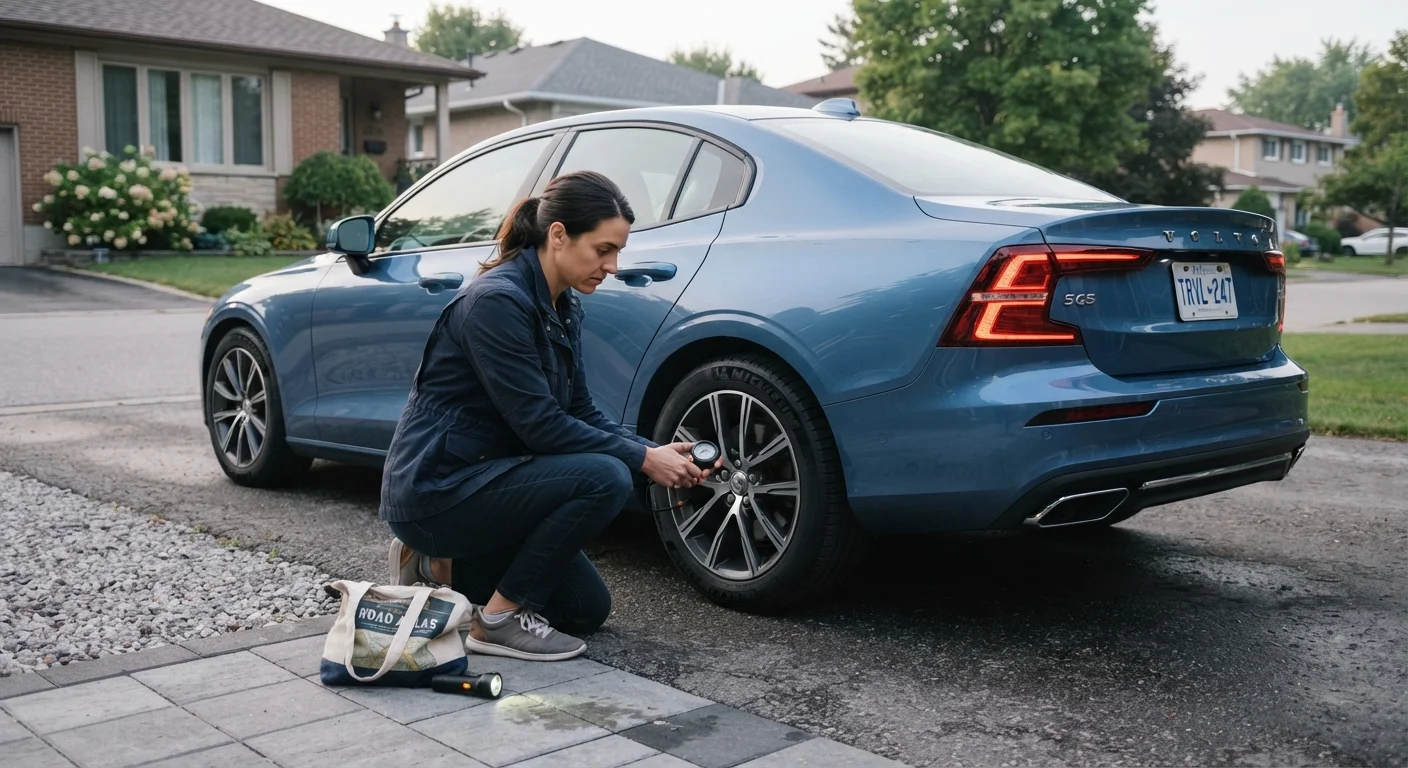
Tyre pressure gauge
Accurately measures tyre PSI so you can inflate or deflate to the manufacturer's recommended level.
Penny (for tread depth test)
A US penny inserted into a tyre groove reveals whether tread depth has fallen to an unsafe level.
Flashlight or work light
Helps you inspect tyres, undercarriage, and engine bay in low-light conditions.
Clean rag or paper towel
Used when checking the oil dipstick and wiping fluid reservoirs for accurate readings.
Vehicle owner's manual
Contains manufacturer-specific fluid specs, tyre pressure values, and warning light explanations.
Proof of insurance (physical or digital)
A legal requirement in all US states; must be presented during a traffic stop or after a collision.
The Pre-Trip Checklist
Work through each group systematically. Items marked must are non-negotiable for legal, safe operation. Items marked should are strongly recommended. Nice-to-have items improve comfort and preparedness on longer drives.
Documents and Legal Requirements
Tyres and Wheels
Lights and Signals
Visibility and Fluid Levels
Never Drive with Known Brake or Steering Problems
If you notice a spongy brake pedal, pulling to one side when steering, or unusual grinding noises when braking, do not drive the vehicle until a qualified mechanic has diagnosed the issue. Brake and steering failures can occur with little warning and create serious hazards for all road users. When driving in challenging conditions, also review legal obligations in adverse weather to understand how weather affects your responsibilities.
If your dashboard displays any active warning lights before you leave, consult our warning lights guide to understand urgency before deciding whether to drive. For seasonal-specific checks — battery health in winter, tyre pressure in summer heat — refer to the seasonal car maintenance checklist.
After the Inspection: What to Do with What You Find
Not every issue requires you to cancel your trip, but some do. A tyre that is visibly flat or bulging, brakes that feel spongy or unresponsive, or headlights that are completely out are reasons to delay driving until a qualified mechanic has assessed the vehicle. Driving with known safety defects can increase your legal liability if an incident occurs.
For minor items — a slightly low tyre that can be inflated at a nearby station, or a cracked wiper blade that can be replaced quickly — note them and act before they become hazards. Recognising early warning signs can help you catch developing problems before they escalate.
Keep a log of recurring findings. Patterns — such as consistently low coolant or a tyre that loses pressure frequently — are signals that a professional inspection is overdue. For a comprehensive yearly review of your vehicle's legal and mechanical standing, see the annual vehicle ownership review.
Finally, if you are ever pulled over, knowing what documents officers can ask for and what you are legally required to provide matters. Traffic stop etiquette is worth reading alongside this checklist as part of responsible driving preparation.