

Key Takeaways
Start here
Why Maintenance Matters From Day One
Learn the language
Key Concepts Every New Owner Should Know
Build your routine
Essential Maintenance Tasks and How Often to Do Them
Stay alert
Reading Warning Signs Before They Become Problems
Develop lasting habits
Building Good Ownership Habits
Why Maintenance Matters From Day One
Owning a vehicle is one of the most significant ongoing financial commitments most people take on. Yet many new drivers focus entirely on the purchase and overlook what comes after: keeping the car safe, legal, and reliable for years of daily use.
Neglected vehicles don't just cost more to repair — they become safety hazards. Worn brake pads, underinflated tires, and low coolant levels are among the most common contributors to preventable breakdowns and collisions. The good news is that vehicle maintenance is largely about consistency, not expertise. A driver who follows a simple schedule and pays attention to how their car looks, sounds, and feels will catch the vast majority of issues before they escalate.
For a broader look at the administrative side of car ownership — registration, insurance, and managing running costs — see our Vehicle Ownership hub.
Key Concepts Every New Owner Should Know
Before diving into specific tasks, it helps to understand a few foundational terms that appear in every maintenance conversation.
Owner's manual
The booklet supplied with every vehicle that contains manufacturer specifications, service intervals, and operating instructions specific to your car's make, model, and engine.
Service interval
The recommended mileage or time period between a specific maintenance task — such as an oil change or tire rotation — as specified by the manufacturer.
Tread depth
The measurement of the grooves in a tire's surface. Adequate tread depth is essential for grip, especially in wet conditions; worn tread significantly increases stopping distances.
Coolant
A fluid that circulates through the engine to regulate its temperature, preventing both overheating in summer and freezing in winter. Also called antifreeze.
OBD-II diagnostic code
A standardized fault code stored by a vehicle's onboard computer when it detects a problem. Mechanics and some auto parts retailers can read these codes with a simple scanning tool.
Tire rotation
Moving each tire to a different position on the vehicle at regular intervals so that all four tires wear evenly over time, extending their useful life.
Your owner's manual is the most reliable reference for every interval and specification listed above. Manufacturer recommendations are based on engineering data specific to your vehicle — they take precedence over generalized advice or automotive folklore. Common maintenance myths — like the universal 3,000-mile oil change — persist widely but often don't reflect what modern vehicles actually need.
Essential Maintenance Tasks and How Often to Do Them
The following tasks form the backbone of any responsible maintenance schedule. Frequencies are general guidelines — always cross-reference your owner's manual.
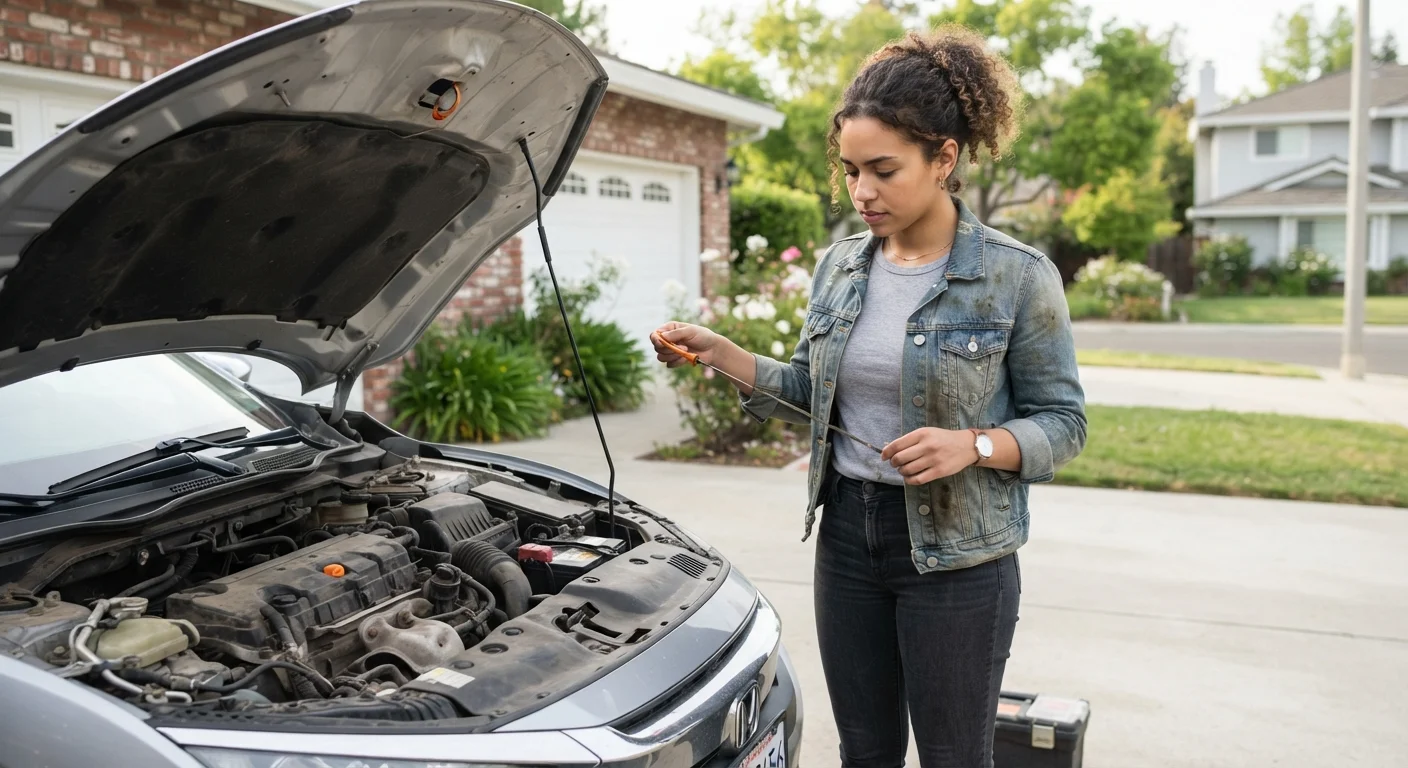
- Engine oil and filter: Check the dipstick monthly; change oil per manufacturer interval (commonly 5,000–10,000 miles for synthetic oil).
- Tire pressure and tread: Check pressure monthly and before trips using a gauge; rotate tires every 5,000–7,500 miles to promote even wear.
- Coolant level: Inspect the reservoir when the engine is cold; flush and replace coolant per manufacturer schedule (often every 30,000–50,000 miles).
- Brake fluid: Inspect color and level at each oil change; replace if the fluid appears dark or per service interval.
- Air filter: Inspect annually; replace when visibly dirty or clogged — typically every 15,000–30,000 miles.
- Wiper blades: Replace when streaking or skipping, generally once a year or before wet seasons.
- Battery: Have the battery tested annually after the three-year mark; clean any visible corrosion from terminals.
Track Every Service in Writing
A consistent service log is one of the easiest ways to stay on schedule and demonstrates responsible ownership if you ever sell the vehicle. Note the date, mileage, and work performed for every service — including tasks you carry out yourself. Many smartphone apps designed for vehicle maintenance can send automatic reminders when an interval is approaching.
Keeping a simple log — either in a notebook stored in the glove box or a smartphone app — of each service date and mileage makes it easy to track when tasks are due and supports your car's resale value.
Reading Warning Signs Before They Become Problems
Vehicles communicate. Learning to interpret what your car is telling you is one of the most valuable skills a new driver can develop.
Never Ignore Brake-Related Symptoms
Squealing, grinding, a soft brake pedal, or increased stopping distances are all signs that your braking system needs professional inspection without delay. Brakes are a primary safety system — do not attempt to diagnose or repair brake components without proper training and tools. Schedule a mechanic visit as soon as any of these symptoms appear.
- Dashboard warning lights: Do not ignore illuminated warning lights. The check engine, oil pressure, battery, and temperature lights each signal a specific system that needs attention. Look up the symbol in your owner's manual immediately.
- Unusual noises: Squealing during braking often indicates worn brake pads. A grinding noise suggests metal-on-metal contact — a situation that requires prompt professional inspection.
- Vibration or pulling: Steering that pulls to one side, or a vibrating steering wheel, can indicate tire pressure imbalance, alignment issues, or suspension wear.
- Fluid spots under the car: A puddle beneath a parked vehicle warrants investigation. Clear water from air conditioning is normal; oily, colored, or sweet-smelling fluid is not.
Prompt attention to these signals almost always results in a smaller repair bill than waiting. For guidance on keeping repair costs manageable, our managing car costs article offers practical strategies.
Building Good Ownership Habits
Maintenance is only part of responsible vehicle ownership. The administrative side — registration, insurance, and understanding your car's documented history — matters just as much. Our guide to first-time car ownership covers these foundations in detail, and our vehicle registration walkthrough explains exactly what documents you need and what deadlines to watch.
If you're driving an older vehicle, maintenance priorities shift somewhat — owning an older vehicle examines the realistic cost trade-offs involved.
Finally, how you drive affects how quickly your car wears. Smooth acceleration, gentle braking, and anticipating traffic rather than reacting to it all reduce wear on mechanical components. These habits overlap directly with defensive driving principles — an approach that benefits both safety and vehicle longevity.
Vehicle ownership rewards attentiveness. Drivers who treat maintenance as a routine rather than a reaction spend less, stress less, and stay safer on the road.