

Key Takeaways
Summary
22 items · 45–90 minutes
Why an Annual Vehicle Review Matters
Most drivers focus on the mechanical side of car ownership — oil changes, tyre rotations, and brake inspections — but the administrative and financial dimensions deserve equal attention. Insurance policies renew, registration fees come due, and the cost picture of owning a particular vehicle shifts with age and mileage. Without a deliberate annual review, it's easy to let coverage gaps form, miss renewal deadlines, or continue spending on a vehicle that no longer makes financial sense.
Think of this checklist as a yearly audit of everything your vehicle ownership involves beyond the driveway. It complements the kind of routine upkeep covered in seasonal maintenance checks and the daily habits outlined in pre-trip vehicle checks. Where those focus on keeping your car road-ready day to day, this review steps back to examine the bigger picture of responsible, informed ownership.
State DMV or Motor Vehicle Agency Website
Look up registration renewal deadlines, emissions testing requirements, and title transfer procedures specific to your state.
NHTSA Recall Lookup Tool
Enter your VIN to check whether any open safety recalls affect your vehicle.
Vehicle Maintenance Logbook or App
Store service receipts, mileage records, and upcoming maintenance reminders in one organized location.
Insurance Policy Documents
Review your current coverage types, limits, deductibles, and renewal date during the annual insurance check.
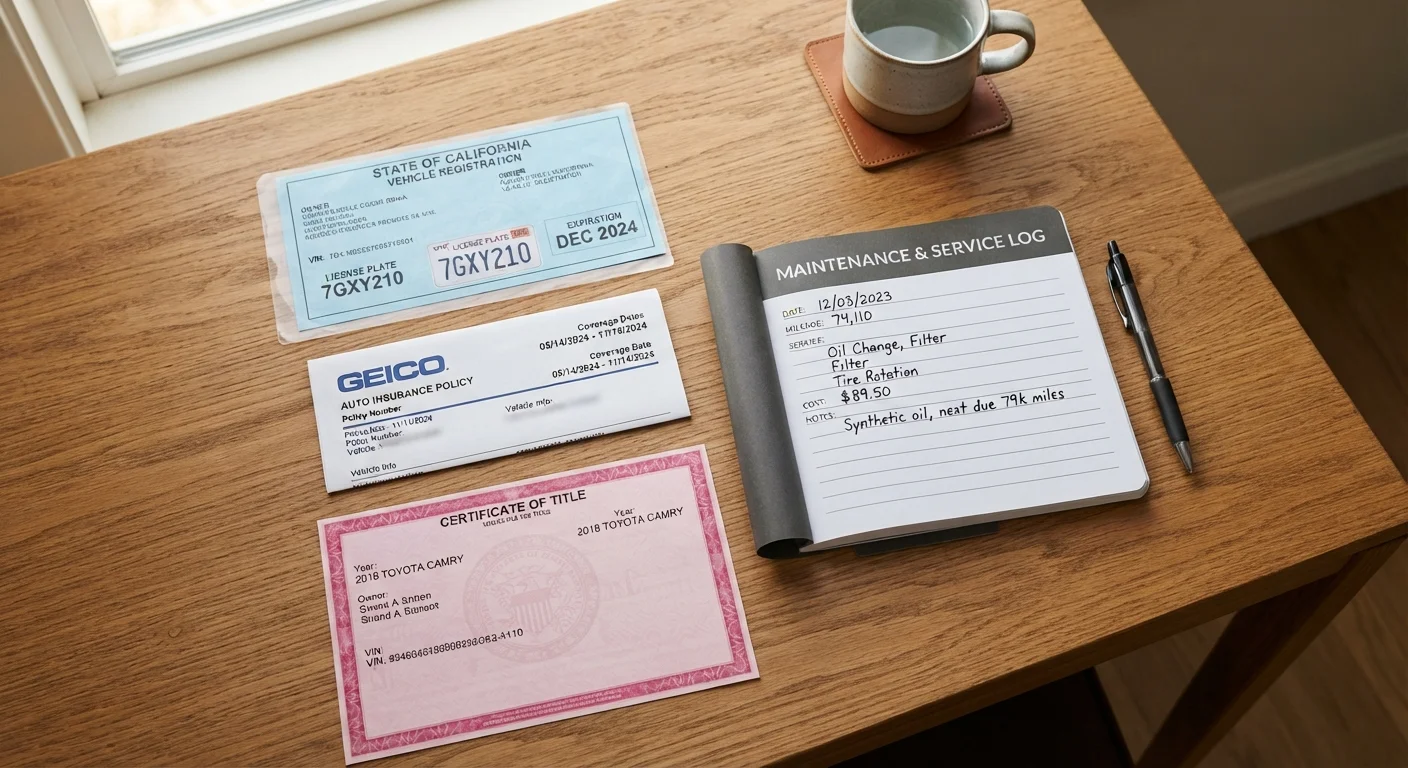
Vehicle Title and Registration Certificate
Confirm ownership details are current and the documents are stored securely and accessibly.
Spreadsheet or Budgeting App
Tally annual vehicle expenses across fuel, insurance, maintenance, and loan payments for a clear financial picture.
Insurance and Legal Standing
Auto insurance is the most time-sensitive item on any annual ownership checklist. Policy terms change, your driving profile changes, and the coverage that was adequate last year may be misaligned with your current situation. Understanding the factors that influence your premium — from your annual mileage to where you park overnight — can help you have a more informed conversation with your insurer at renewal time.
Letting Insurance Lapse Carries Serious Consequences
Driving without valid insurance is illegal in nearly every US state and can result in fines, license suspension, and personal financial liability for any damages in an at-fault accident. Even a brief gap in coverage — for example, missing an auto-renewal payment — can affect your future premiums and legal standing. Review your payment method on file with your insurer during this annual check to ensure continuity of coverage.
Registration requirements, smog or emissions testing schedules, and inspection sticker deadlines all vary by state. Check your state's DMV or equivalent agency for current timelines rather than relying on memory from prior years. Late renewals typically carry financial penalties and can affect your legal right to operate the vehicle on public roads.
Insurance Review
Registration and Legal Compliance
Maintenance Records and Documentation
Financial Assessment
Maintenance Records and Vehicle Documentation
Your vehicle's paper trail — service receipts, the title, odometer readings, and any recall completion notices — forms a record that matters both for your own planning and for future resale. As explained in reading a vehicle's paper trail, gaps in this documentation can reduce a car's resale value and complicate transfers of ownership. Once a year, consolidate all service receipts, confirm the title is stored safely, and note the current odometer reading for your records.
Don't Store Your Title in the Vehicle
Vehicle titles should be kept in a secure location at home — not in the glove compartment. If your car is stolen, a thief with possession of the title could attempt a fraudulent transfer of ownership. A fireproof home safe or secure filing cabinet is a practical storage option.
If your vehicle is older or high-mileage, this is also a good moment to revisit the fluid maintenance schedule and check whether any manufacturer recalls remain unaddressed. The National Highway Traffic Safety Administration (NHTSA) maintains a free recall lookup tool using your vehicle identification number (VIN).
The Annual Financial Health Check
Vehicle ownership costs extend well beyond the monthly loan payment. Fuel, insurance premiums, registration fees, tyres, scheduled maintenance, and depreciation add up to a figure that most drivers underestimate. A full breakdown of real annual vehicle costs can serve as a useful reference when tallying your own numbers.
If you own an older vehicle, the calculus becomes more nuanced. The financial realities of keeping an ageing car are worth examining honestly — particularly if repair costs in the past year have been significant. Folding this vehicle cost review into your broader financial planning is worth doing; the monthly budget review checklist offers a complementary framework for tracking these figures consistently throughout the year.
This article provides general educational information for vehicle owners and is not a substitute for personalised legal, financial, or mechanical advice. Always consult qualified professionals and verify requirements with official state agencies for decisions specific to your situation.