

| VIN Length | 17 characters (alphanumeric) (NHTSA standard, post-1981 vehicles) |
| Federal Odometer Disclosure Law | Truth in Mileage Act (49 U.S.C. § 32701 et seq.) |
| Vehicles Requiring Disclosure | Most vehicles under 10 years old at time of transfer (Federal Motor Vehicle Information and Cost Savings Act) |
| Where to Find VIN on Vehicle | Windshield dash plate, driver's door jamb, title and registration |
| Title Status Check Resource | NMVTIS-authorized history report providers (U.S. Department of Justice, NMVTIS) |
| Salvage Title: Typical Threshold | Repair cost exceeds 75–100% of vehicle value (varies by state) |
Why the Paper Trail Matters
Every vehicle on US roads carries a paper trail that documents its identity, ownership history, and disclosed mileage. Whether you're managing a car you already own or preparing to sell one, understanding these records helps you stay legally protected and financially informed.
Three identifiers form the backbone of that trail: the odometer reading, the Vehicle Identification Number (VIN), and the title status. Each captures something different, and together they answer the most important questions about any vehicle's past.
For a broader foundation on vehicle ownership responsibilities, see our practical introduction to keeping your car roadworthy.
| VIN Length | 17 characters (alphanumeric) (NHTSA standard, post-1981 vehicles) |
| Federal Odometer Disclosure Law | Truth in Mileage Act (49 U.S.C. § 32701 et seq.) |
| Vehicles Requiring Disclosure | Most vehicles under 10 years old at time of transfer (Federal Motor Vehicle Information and Cost Savings Act) |
| Where to Find VIN on Vehicle | Windshield dash plate, driver's door jamb, title and registration |
| Title Status Check Resource | NMVTIS-authorized history report providers (U.S. Department of Justice, NMVTIS) |
| Salvage Title: Typical Threshold | Repair cost exceeds 75–100% of vehicle value (varies by state) |
The VIN: A Vehicle's Permanent Identity
The Vehicle Identification Number (VIN) is a 17-character alphanumeric code assigned to every motor vehicle manufactured after 1981. No two vehicles share the same VIN. It encodes the manufacturer, country of assembly, vehicle type, engine, model year, and a unique serial number.
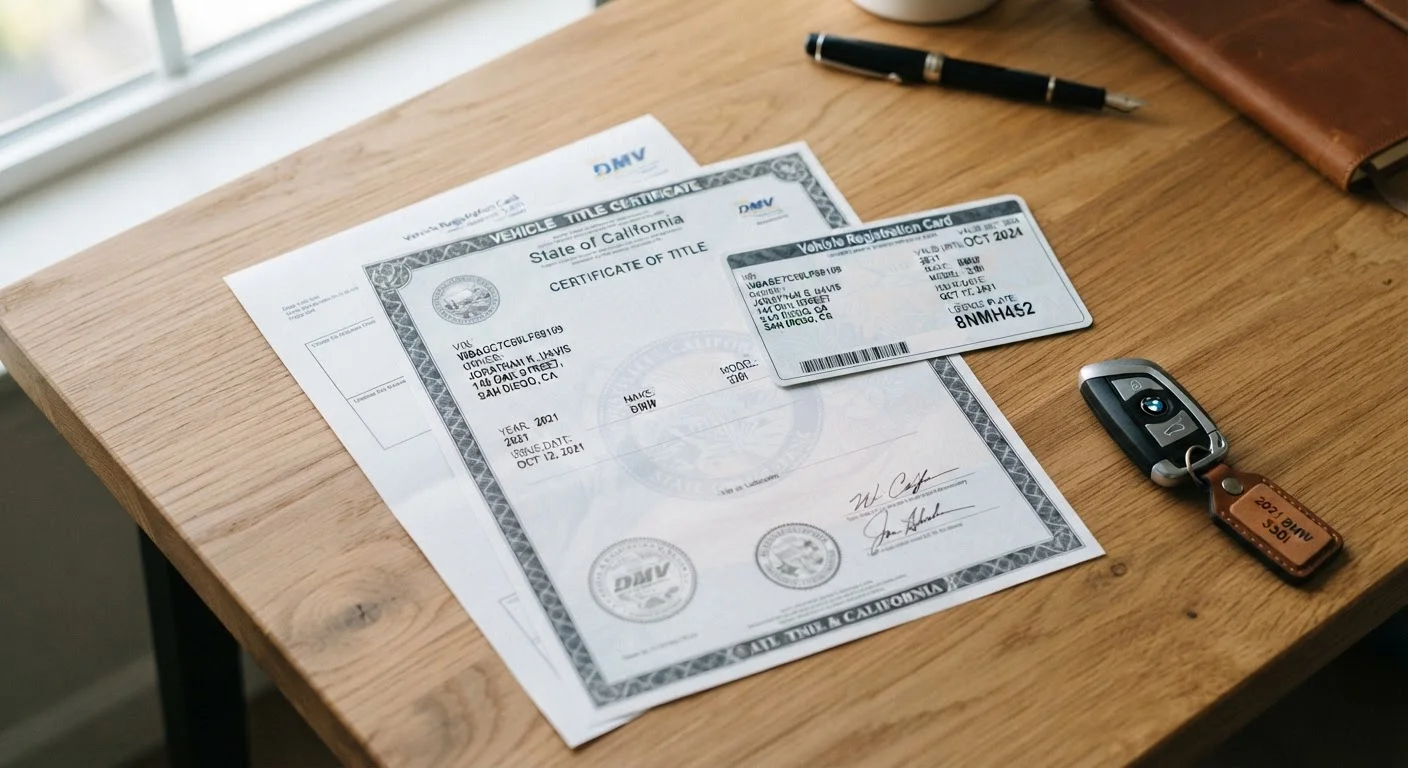
You'll find the VIN in several places: stamped on a metal plate visible through the lower-left corner of the windshield, on the driver's-side door jamb sticker, and on the vehicle's title and registration documents. Verifying that the VIN matches across all three locations is a basic but important consistency check.
VIN-based history reports — available through services authorized by the National Motor Vehicle Title Information System (NMVTIS) — can reveal prior title states, odometer disclosures, and whether a vehicle has been reported as stolen or declared a total loss. These reports are a standard due-diligence step in any vehicle transaction.
VIN (Vehicle Identification Number)
A unique 17-character code assigned to every motor vehicle, encoding manufacturer details, model year, and serial number. No two vehicles share the same VIN.
Odometer Disclosure
A federally required statement of a vehicle's mileage at the time of a title transfer. It becomes part of the vehicle's permanent ownership record.
Clean Title
A title status indicating the vehicle has not been declared a total loss and has no unresolved financial liens attached to it.
Salvage Title
A title designation issued when an insurer declares a vehicle a total loss. The vehicle cannot be legally driven until repaired and re-inspected by the state.
NMVTIS
The National Motor Vehicle Title Information System, a federal database that aggregates title, brand, and total-loss information from states, insurers, and junk and salvage yards.
Title Brand
A permanent notation on a vehicle's title indicating a significant event — such as flood damage, fire damage, or a lemon law buyback — that affected the vehicle's history.
Odometer Disclosure: What the Mileage Record Shows
Federal law — specifically the Truth in Mileage Act — requires sellers to provide an accurate odometer disclosure at the time of a title transfer for most vehicles under ten years old. This disclosure is recorded on the title itself and becomes part of the permanent ownership record.
Odometer fraud, the practice of rolling back or tampering with a vehicle's mileage display, is a federal crime. Discrepancies between a vehicle's recorded mileage at various title transfers can signal tampering. A history report that shows declining mileage between transfers is a significant red flag.
High-mileage vehicles present their own financial trade-offs. Our article on owning an older vehicle examines what accumulated mileage actually means for ongoing costs.
~452,000
Odometer fraud victims per year (est.)
The National Highway Traffic Safety Administration has estimated that odometer fraud affects hundreds of thousands of US consumers annually, costing billions in inflated vehicle values.
~$1 billion
Annual consumer losses from odometer fraud
NHTSA estimates consumers lose approximately one billion dollars per year due to odometer rollback schemes across the United States.
Title Status: Clean, Salvage, and Everything In Between
A vehicle's title status is arguably the most consequential entry in its paper trail. A clean title means the vehicle has not been declared a total loss and carries no unresolved liens. Other statuses signal complications worth understanding before ownership changes hands.
- Salvage title: Issued after an insurer declares a vehicle a total loss — typically when repair costs exceed a set percentage of the vehicle's value. A salvaged vehicle cannot be legally driven until it passes a state inspection and receives a rebuilt or reconstructed title.
- Rebuilt/reconstructed title: Indicates a former salvage vehicle that has been repaired and passed state inspection. These vehicles can be registered and driven, but insurance options and resale value are often affected.
- Lemon law buyback: Some states brand titles when a manufacturer repurchases a vehicle under lemon law provisions.
- Flood or fire damage brand: Certain states issue title brands when a vehicle sustains significant flood or fire damage, even if repairs were made.
Title transfers involve specific documentation requirements that vary by state. Our state-by-state overview of title transfers explains what's typically required. Registration is a related step — see our vehicle registration walkthrough for the full process.
As part of sound annual vehicle management, reviewing your title and registration documents should be on your recurring checklist — as outlined in our annual vehicle ownership review.
Title Brands Are Permanent and Transfer With the Vehicle
Once a title brand — such as salvage, flood, or rebuilt — is applied, it follows the vehicle through every subsequent ownership transfer, regardless of which state the car is registered in. NMVTIS is designed to prevent title washing, the practice of re-titling a branded vehicle in a state that doesn't recognize the original brand. Always check a history report before a title transfer, not just the physical title document in hand.