

Key Takeaways
Why Vehicle Fluids Matter More Than Most Drivers Realize
A modern vehicle contains numerous fluid systems working simultaneously to lubricate moving parts, dissipate heat, transmit force, and maintain driver control. When any one of these fluids drops too low, becomes contaminated, or degrades beyond its useful life, the consequences can range from reduced performance to catastrophic mechanical failure.
Yet fluid checks remain one of the most neglected aspects of everyday car ownership. Many drivers wait until a warning light appears — by which point damage may already be underway. Understanding what each fluid does and how to monitor it puts you in control of your vehicle's health long before problems escalate.
For a broader look at how fluid maintenance fits into your overall ownership responsibilities, see our practical introduction to keeping your car roadworthy.
~40%
Engine failures linked to lubrication issues
Industry data from engine failure analysis studies consistently identifies lubrication problems — often related to low or degraded oil — as a leading cause of internal engine damage.
3–5 min
Time needed for a basic fluid inspection
Checking engine oil, coolant, and brake fluid levels requires minimal time and no specialized tools, making it one of the most accessible forms of preventive maintenance.
2–3 years
Typical brake fluid replacement interval
Many manufacturers and automotive safety organizations recommend replacing brake fluid every two to three years due to moisture absorption, regardless of mileage.
Engine Oil: The Lifeblood of Your Powertrain
Engine oil lubricates the hundreds of metal components moving inside your engine, reduces friction-generated heat, and carries away microscopic debris. Without adequate oil, metal surfaces grind against each other — a process that can seize an engine within minutes.
How to Check It
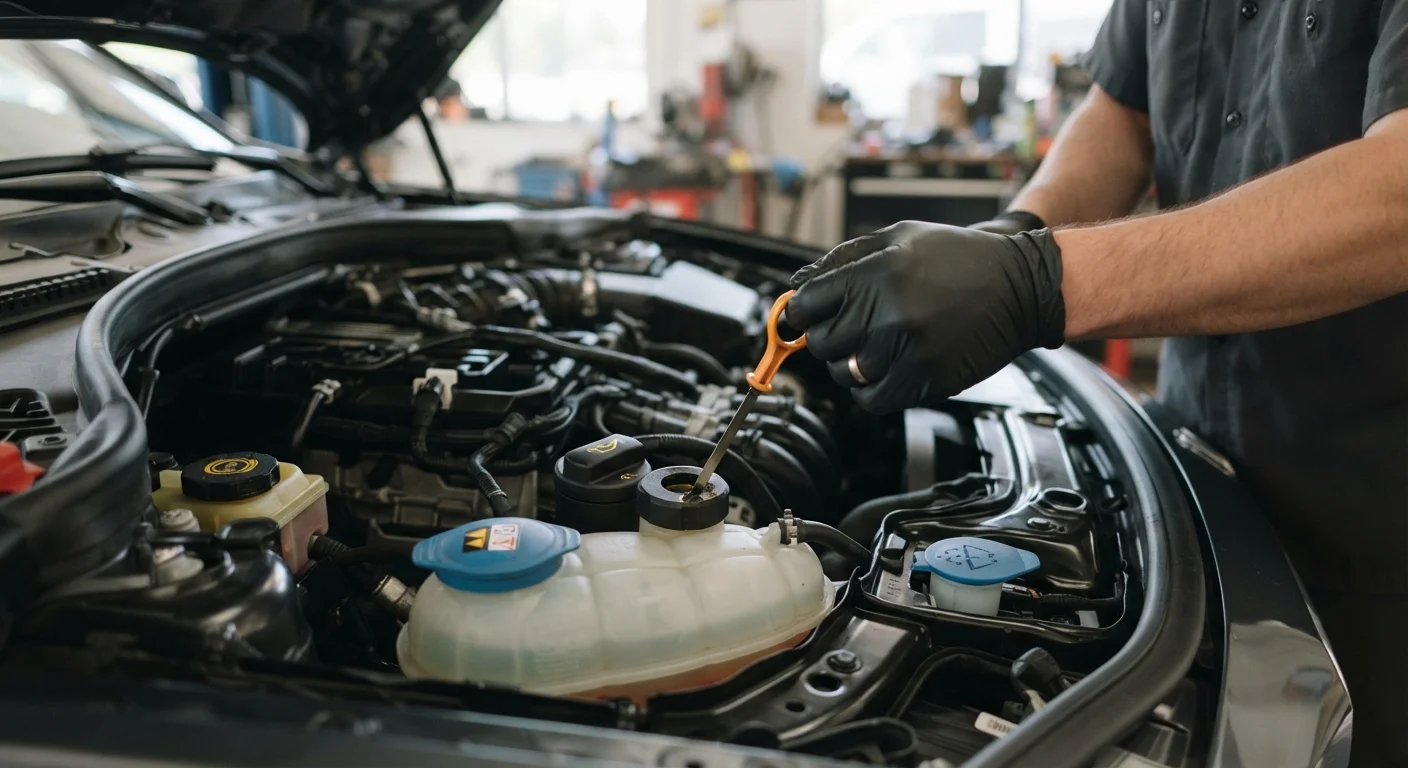
With the engine off and cooled for at least a few minutes, locate the dipstick (typically marked with a bright handle), pull it out, wipe it clean, reinsert it fully, then pull it out again. The oil level should fall between the two marks on the dipstick. Also note the oil's color: fresh oil is amber; dark brown or black oil is heavily used. A milky or foamy appearance may indicate coolant contamination — a serious condition requiring prompt professional attention.
When to Change It
Change intervals vary significantly by vehicle and oil type. Conventional oil has traditionally been changed every 3,000 miles, but many modern vehicles using full synthetic oil can go 7,500 to 10,000 miles or more between changes. Always follow your owner's manual — it accounts for your engine's specific requirements. Ignoring this interval is among the costliest mistakes a driver can make; learn more in our article on the true cost of deferred maintenance.
Check your engine oil when the engine is cold and the vehicle has been parked for at least 10 minutes. A reading taken immediately after driving can show a falsely low level because oil hasn't fully drained back into the pan.
Oil takes time to settle from the upper engine components into the sump, so checking too soon after driving can lead drivers to overfill — which is also harmful to engine seals and components.
Keep a small flashlight in your glove box specifically for underhood checks. Many fluid reservoirs and dipstick markings are difficult to read accurately in low-light conditions, especially in a parking garage or on a cloudy day.
Misreading a fluid level due to poor visibility is a surprisingly common reason drivers overlook legitimate problems or add unnecessary fluid — both of which have consequences.
Coolant (Antifreeze): Keeping Temperatures in Check
Coolant — a mixture of water and ethylene glycol-based antifreeze — circulates through your engine to absorb heat, then releases it through the radiator. It also prevents freezing in winter and raises the boiling point of the liquid to prevent overheating in summer. The right coolant mixture protects your engine across a wide temperature range.
How to Check It
Never open the radiator cap on a hot engine — pressurized coolant can cause serious burns. Instead, check the translucent plastic overflow reservoir located near the radiator. The level should fall between the MIN and MAX markings. The fluid should appear green, orange, pink, or blue depending on the formulation — not rusty, oily, or murky. Color changes often signal breakdown or contamination.
When to Service It
Coolant degrades over time and loses its ability to prevent corrosion inside the cooling system. Service intervals vary — some long-life coolants are rated for 5 years or 150,000 miles, while conventional formulas may need replacement every 2–3 years. Your owner's manual will specify the correct interval and coolant type for your vehicle. Never mix coolant types without consulting that guidance, as incompatible formulas can cause chemical reactions that damage seals and metal components.
Never Open a Hot Radiator Cap
The cooling system operates under pressure. Opening the radiator cap on a hot engine can cause scalding coolant to erupt suddenly. Always wait until the engine has cooled completely — typically at least 30 minutes after shutting off — before removing any cooling system cap or checking coolant levels. If your temperature gauge is in the red, pull over safely and do not open the hood until the engine cools.
Brake Fluid: The Link Between Pedal and Stopping Power
Brake fluid is a hydraulic fluid that transmits the force of your foot on the brake pedal to the brake calipers and wheel cylinders that actually stop the vehicle. Without functioning brake fluid at the correct level and quality, braking performance degrades — a direct safety risk.
A Critical Property to Understand
Brake fluid is hygroscopic, meaning it absorbs moisture from the surrounding environment over time. As water content increases, the fluid's boiling point drops. Under hard braking, fluid that boils can create vapor bubbles — vapor is compressible, unlike liquid, which causes a spongy pedal and reduced stopping ability. This is known as brake fade and is particularly dangerous on long descents or in emergency situations.
How and When to Check It
The brake fluid reservoir is a small, translucent plastic container near the firewall, typically labeled. Check the level against the MIN/MAX markings. The fluid should appear clear to pale yellow; dark brown fluid is a sign of moisture contamination and aged fluid that should be replaced. Most manufacturers recommend replacing brake fluid every 2–3 years regardless of mileage, though driving conditions and climate can affect this. For a complete picture of brake system health, including worn pads and service signals, see our guide on brake maintenance and service intervals.
A Spongy Brake Pedal Requires Immediate Attention
If your brake pedal feels soft, spongy, or sinks closer to the floor than normal, do not continue driving until the system has been inspected by a qualified mechanic. This symptom can indicate air in the brake lines, dangerously low fluid, or a hydraulic leak — all of which significantly impair stopping ability. This is a safety-critical system; do not delay diagnosis.
Transmission Fluid, Power Steering, and Windshield Washer Fluid
Transmission Fluid
Transmission fluid lubricates the gears and clutch packs inside your automatic or manual transmission, also acting as a hydraulic fluid in automatics. Low or degraded transmission fluid causes hard shifts, slipping, and eventual transmission failure — one of the most expensive repairs a driver can face. Check it via the transmission dipstick (if equipped — many newer vehicles have a sealed transmission requiring a shop check) with the engine warm and running. The fluid should be red to pink and not smell burnt.
Power Steering Fluid
Vehicles with hydraulic power steering use a dedicated fluid to assist steering effort. Note that many newer vehicles use electric power steering and have no fluid to check. If your vehicle has a power steering reservoir, the fluid level and condition should be inspected periodically. Low fluid causes heavy, difficult steering; contaminated fluid can damage the pump and rack.
Windshield Washer Fluid
While not a mechanical fluid, washer fluid directly affects visibility — and therefore safety. Use a formulation rated for the temperatures in your region; plain water can freeze in the lines and reservoir in winter. Refilling this reservoir is the simplest fluid task any driver can perform. For a seasonal approach to all these checks, consult our seasonal car maintenance checklist.
Building a Simple Fluid Check Routine
Fluid checks don't require mechanical expertise — just consistency. A practical approach is to tie checks to a recurring event: once a month when you fill up fuel, or every time you change the clocks for daylight saving. Most fluid checks take under five minutes with no tools required.
A Straightforward Monthly Check
- Engine oil: Level and color via dipstick, engine cold or after sitting.
- Coolant: Level in overflow reservoir, engine cold only.
- Brake fluid: Level in reservoir; flag discoloration for your next service appointment.
- Windshield washer fluid: Top off as needed.
Transmission fluid and power steering fluid can be checked less frequently — quarterly or at each oil change is reasonable for most drivers.
An annual vehicle ownership review is also a good opportunity to cross-reference your fluid service history against your owner's manual schedule and flag anything overdue. If a warning light related to any fluid system illuminates on your dashboard, our guide to what your car's warning lights are telling you can help you interpret the urgency.
Keep a Simple Log of Your Fluid Checks
Recording the date and result of each fluid check — even in a notes app on your phone — creates a useful history that helps your mechanic and gives you early warning of a fluid that's repeatedly running low, which may indicate a leak or other underlying issue. A pattern of low brake fluid, for example, often points to a developing leak in the hydraulic system.
This article provides general vehicle maintenance information for educational purposes. Always consult your vehicle's owner's manual and a qualified mechanic for guidance specific to your make, model, and driving conditions.