

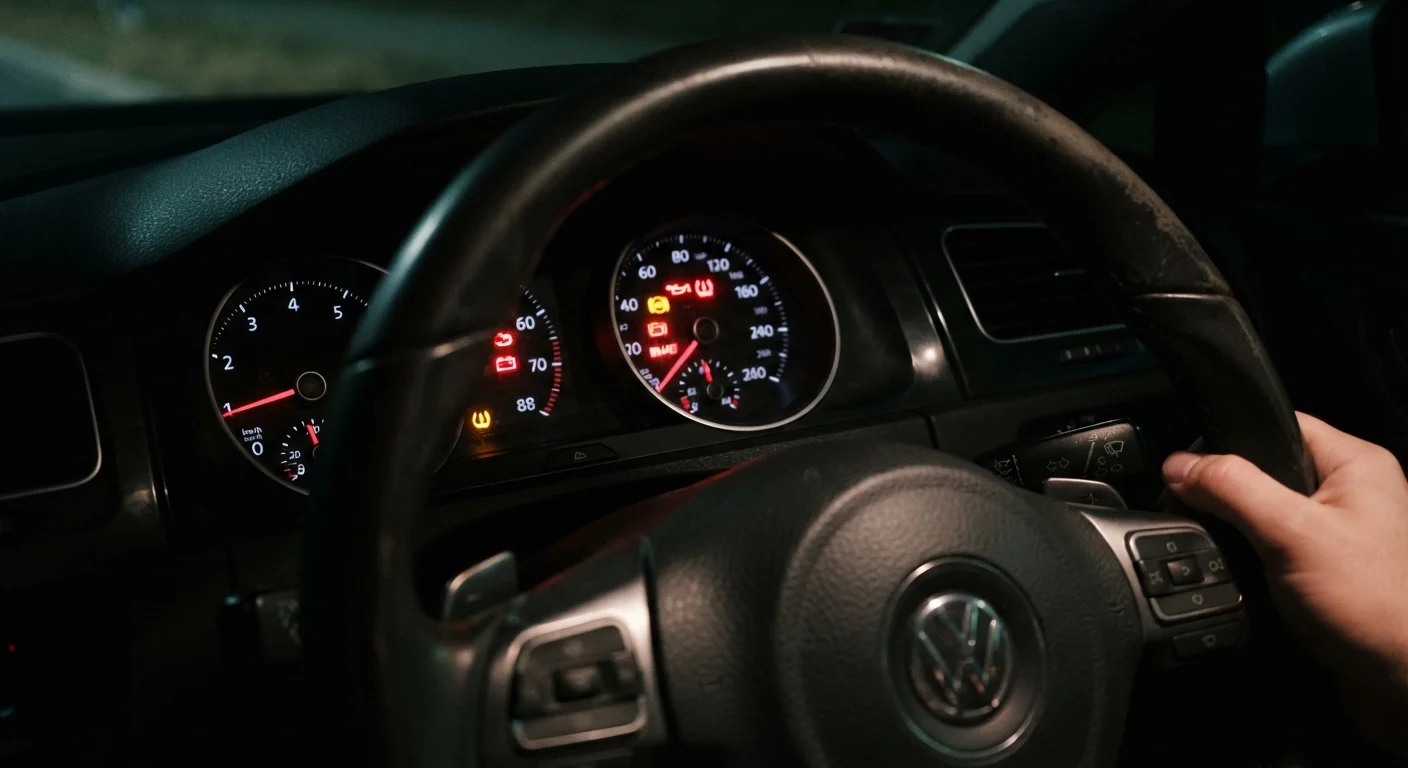
| Color: Red | Stop driving — immediate action required |
| Color: Amber/Yellow | Caution — service needed soon |
| Color: Blue/Green | Informational — no action needed |
| OBD-II required since | 1996 (all US passenger vehicles) (US EPA / NHTSA mandate) |
| TPMS mandatory since | 2008 model year (NHTSA FMVSS No. 138) |
| Flashing MIL means | Active misfire — pull over, seek immediate service |
Why Warning Lights Exist — and Why They Matter
Modern vehicles are equipped with an OBD system that continuously monitors dozens of sensors throughout the car. When something falls outside acceptable parameters, the system triggers a dashboard warning light. These symbols aren't arbitrary — each one corresponds to a specific system, and their color carries immediate meaning.
| Color: Red | Stop driving — immediate action required |
| Color: Amber/Yellow | Caution — service needed soon |
| Color: Blue/Green | Informational — no action needed |
| OBD-II required since | 1996 (all US passenger vehicles) (US EPA / NHTSA mandate) |
| TPMS mandatory since | 2008 model year (NHTSA FMVSS No. 138) |
| Flashing MIL means | Active misfire — pull over, seek immediate service |
Ignoring a warning light rarely makes the underlying problem disappear. In many cases, continued driving worsens the fault, increases repair costs, or creates a safety hazard. For context on what good vehicle health looks like before a journey, see our pre-trip vehicle checks guide.
Decoding the Color Code
Dashboard lights follow a broadly standardized traffic-light logic across most modern vehicles sold in the US:
- Red: Stop or act immediately. A red light indicates a serious fault — continuing to drive risks vehicle damage, system failure, or personal injury.
- Amber/Yellow: Caution required. Something needs attention soon, but you may be able to drive a short distance to a repair facility.
- Blue/Green: Informational only. These confirm an active system (e.g., high beams on, cruise control engaged) and require no action.
Always consult your owner's manual for vehicle-specific interpretations — not every symbol is universal across manufacturers.
Malfunction Indicator Lamp (MIL)
The official term for the "check engine" light. It illuminates when the OBD system detects a fault in the engine, transmission, or emissions systems and stores a corresponding diagnostic trouble code.
OBD-II
On-Board Diagnostics, second generation — a standardized diagnostic system required on all US vehicles manufactured after 1996. It allows technicians and diagnostic tools to read fault codes from the vehicle's computer.
TPMS
Tire Pressure Monitoring System. A federally mandated sensor system (required on US vehicles since 2008) that alerts drivers when tire pressure drops to an unsafe level.
SRS
Supplemental Restraint System — the technical term for the airbag and seatbelt pre-tensioner system. An SRS warning light means this safety system may not function correctly in a collision.
Diagnostic Trouble Code (DTC)
A standardized alphanumeric code stored by the OBD system when a sensor reading falls outside acceptable limits. DTCs help technicians pinpoint the system or component involved in a fault.
Alternator
A generator driven by the engine that keeps the battery charged while the vehicle is running. A failing alternator triggers the battery warning light and can cause the car to stall.
The Most Common Warning Lights Explained
Below are the dashboard indicators drivers encounter most frequently, along with what each typically signals:
- Check Engine (MIL)
- The MIL — often a yellow engine outline — can mean anything from a loose gas cap to a failing catalytic converter. A steady MIL warrants a diagnostic scan at a shop soon; a flashing MIL means pull over safely and seek immediate service, as it often indicates an active engine misfire that can damage the catalytic converter.
- Oil Pressure Warning
- A red oil can symbol means your engine is not receiving adequate oil pressure. Stop driving as soon as it is safe — running an engine with low oil pressure can cause catastrophic, irreversible damage within minutes.
- Temperature Warning
- A red thermometer in liquid indicates engine overheating. Pull over, turn off the engine, and allow it to cool before checking coolant levels. Never open a hot radiator cap. Our fluid system guide covers coolant checks in detail.
- Battery / Charging System
- A red battery symbol typically means the alternator is not charging the battery. Electrical systems may fail progressively — drive directly to a service center without turning the engine off.
- Brake System Warning
- This red exclamation mark in a circle can indicate low brake fluid, a brake system fault, or — if combined with the parking brake light — that the parking brake is engaged. For a thorough look at brake health, see brake maintenance explained.
- TPMS (Tire Pressure)
- A yellow horseshoe with an exclamation point signals that one or more tires is significantly under-inflated. Check and correct tire pressure when it is safe to do so — driving on underinflated tires affects handling and fuel economy.
- Airbag / SRS Warning
- If this amber light stays on, the supplemental restraint system may be compromised and airbags may not deploy correctly in a collision. This requires professional diagnosis.
Your Owner's Manual Is the Definitive Reference
Warning light symbols are not fully universal — some manufacturers use proprietary icons or assign slightly different meanings to standard shapes. Your vehicle's owner's manual contains the exact definitions for every light on your specific dashboard. If you no longer have a physical copy, most automakers provide digital versions through their official websites.
Many subtle performance changes appear before a warning light illuminates. Our article on early signs your car needs a service explains what to watch for between services.
What To Do When a Light Comes On
Your response should match the urgency of the color and symbol:
- Red light, any symbol: Pull over safely as soon as possible and do not continue driving until the fault is identified.
- Flashing amber (especially MIL): Reduce speed, avoid heavy acceleration, and get to a mechanic the same day.
- Steady amber: Schedule a diagnostic appointment within a few days. Don't ignore it — amber lights worsen over time.
Scanning the OBD port with a diagnostic tool (available at many auto parts stores and repair shops) generates a fault code that narrows the problem significantly. This is always a recommended first step before assuming the worst — or the best.
1 in 4
Vehicles on the road with an active check engine light
Estimates from automotive research organizations suggest roughly one in four vehicles on US roads has an illuminated MIL at any given time.
$0
Cost of reading OBD fault codes at many auto parts stores
Many national auto parts retailers offer complimentary OBD-II code scanning, making it easy to get a starting point before visiting a mechanic.
Keeping up with scheduled maintenance is the most reliable way to prevent warning lights from appearing unexpectedly. Drivers looking to manage ownership costs and stay road-legal will find broader guidance in the Vehicle Ownership hub.