

Key Takeaways
Why Traffic Stop Conduct Matters
A traffic stop is a brief but legally significant interaction. How you respond in those first few moments can affect both the safety of the encounter and any legal proceedings that follow. Officers approach traffic stops with a degree of caution by default — the situation is unpredictable from their perspective. Understanding what is expected of you, and what protections you have, puts you in a better position to navigate the stop without confusion or conflict.
Traffic violations range from minor infractions like a broken tail light to more serious moving violations. Either way, the core rules of conduct remain the same. Drivers who understand their rights and responsibilities are far less likely to inadvertently escalate a routine stop. Being informed also helps you recognize if something goes wrong, so you can address it through the proper channels. For additional context on the laws that govern everyday driving, see our right-of-way rules overview.
Keep Documents Accessible Before You Drive
Store your registration and proof of insurance in a consistent, easy-to-reach location such as the driver's side visor or a small wallet in the center console. Fumbling through a cluttered glove box during a stop adds unnecessary stress. See our pre-trip vehicle checks guide for what documents to have ready before every journey.
What to Do Step by Step
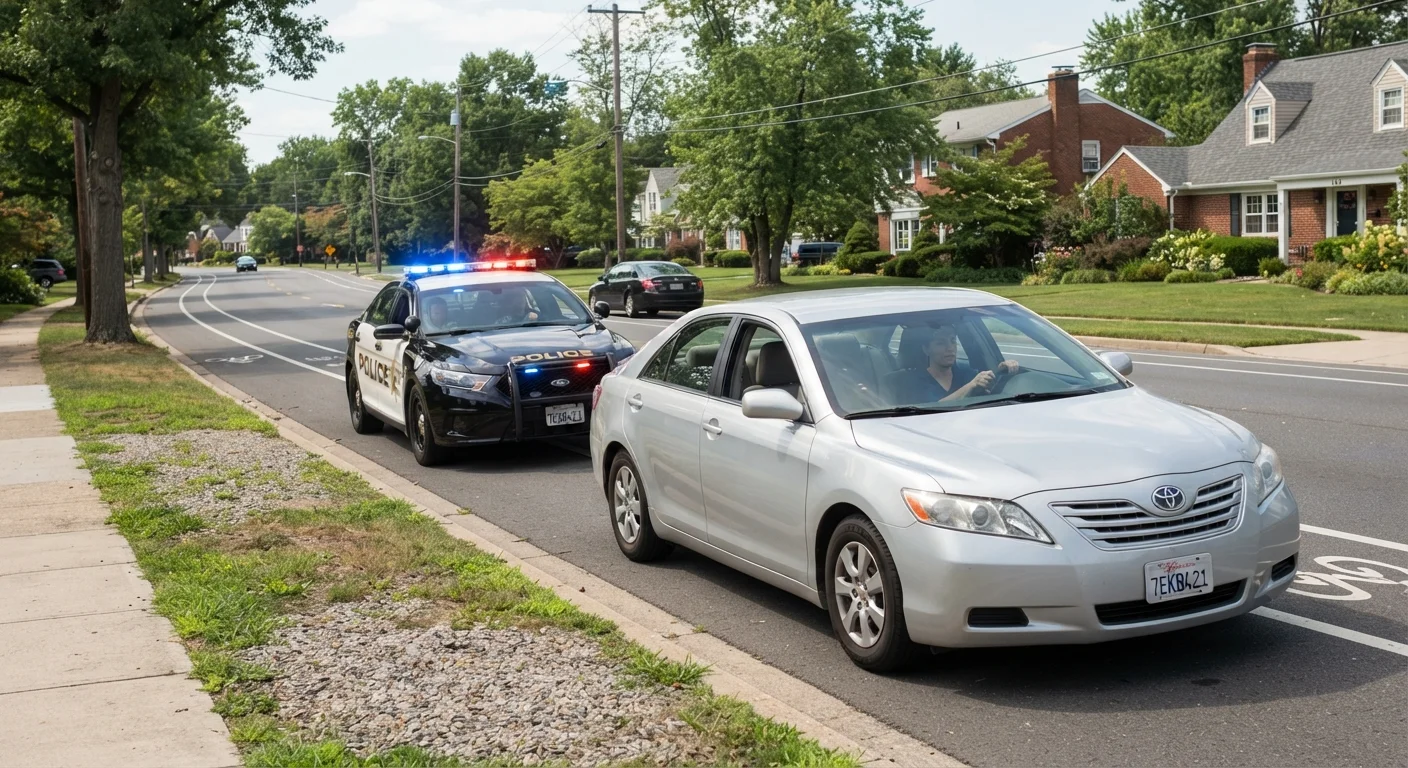
The steps below cover the full sequence of a typical traffic stop — from the moment you see the officer's lights to the point when you pull back into traffic. Follow them in order for a calm, legally sound interaction.
What you will need
Driver's License
Required by law to present to a law enforcement officer upon request during a traffic stop.
Vehicle Registration
Confirms that the vehicle is legally registered in your state — officers will typically request this at every stop.
Proof of Insurance
Demonstrates that the vehicle is covered by a valid insurance policy, as required by law in nearly every US state.
Signal and pull over safely to the right
As soon as you notice emergency lights or hear a siren directed at your vehicle, activate your right turn signal and begin moving toward the right shoulder or nearest safe pull-off area. Avoid stopping abruptly — slow down gradually and choose a location with adequate space away from moving traffic, such as a parking lot entrance or a wide shoulder.
Turn off the engine and lower your windows
Once stopped, turn off the engine and lower at least the driver's side window fully. If it is night, turn on your interior cabin light so the officer can see clearly inside the vehicle. Place both hands on the steering wheel in a visible position and wait for the officer to approach.
Inform the officer before reaching for documents
When asked for your license, registration, and proof of insurance, verbally tell the officer exactly where each document is before you reach for it — for example, "My registration is in the glove compartment; may I reach for it?" Wait for a clear acknowledgment before moving.
Communicate clearly and remain calm
Respond to the officer's questions politely and directly. You are required to provide your name and identification documents. Beyond that, in most states you have the right to remain silent regarding the circumstances of the stop. If you choose to exercise that right, do so calmly and respectfully — for example, "I prefer not to answer additional questions without speaking to an attorney."
Understand what officers can and cannot do
Officers may ask you to exit the vehicle — comply if instructed. They may conduct a pat-down for weapons if they have reasonable suspicion. Consent to a vehicle search is a separate matter: you have the right to decline a search if no warrant is presented and no legal exception applies. Clearly but calmly stating "I do not consent to a search" is within your rights. If you believe the officer has acted unlawfully, note the details and address it through proper legal channels afterward — do not resist or argue at the scene.
Accept any citation and depart safely
If issued a citation, accept it without argument — signing a ticket is not an admission of guilt, only an acknowledgment of receipt. Ask the officer if it is safe to re-enter traffic before pulling away. Signal, check your mirrors and blind spots, and merge carefully. You can contest the citation later through the appropriate court process.
Do Not Exit Without Instruction
Getting out of your vehicle without being told to do so can be interpreted as a threat and escalate the situation significantly. Stay seated with your seatbelt on until the officer approaches and gives direction. This applies even if you feel the stop is unwarranted.
This article is for general informational and educational purposes only and does not constitute legal advice. Laws governing traffic stops, search and seizure, and identification requirements vary by state. Consult a licensed attorney for guidance specific to your situation.