

Key Takeaways
Why Mechanics Start With the Manual
Walk into any professional repair shop and you'll find technicians who consult manufacturer documentation before performing routine service — not because they lack experience, but because vehicle specifications vary significantly across makes, model years, and engine variants. The owner's manual is the manufacturer's direct communication to anyone maintaining that vehicle.
For everyday drivers, the manual tends to collect dust in a glove box. That's a missed opportunity. It contains fluid capacities, recommended grades, tire pressure specifications, and maintenance intervals that are calibrated for your exact vehicle — not a similar one. Generic advice found elsewhere may be close, but close isn't always correct when it comes to protecting a mechanical system worth thousands of dollars.
If you've misplaced your manual, most manufacturers make current and archived versions available as free PDF downloads on their official websites. Once you have it, the goal isn't to read every page — it's to know which sections matter and how to use them. See our introduction to vehicle ownership for broader context on building good maintenance habits.
What you will need
The Three Sections That Do the Heavy Lifting
Mechanics mentally index three parts of any manual. You should too.
1. The Maintenance Schedule
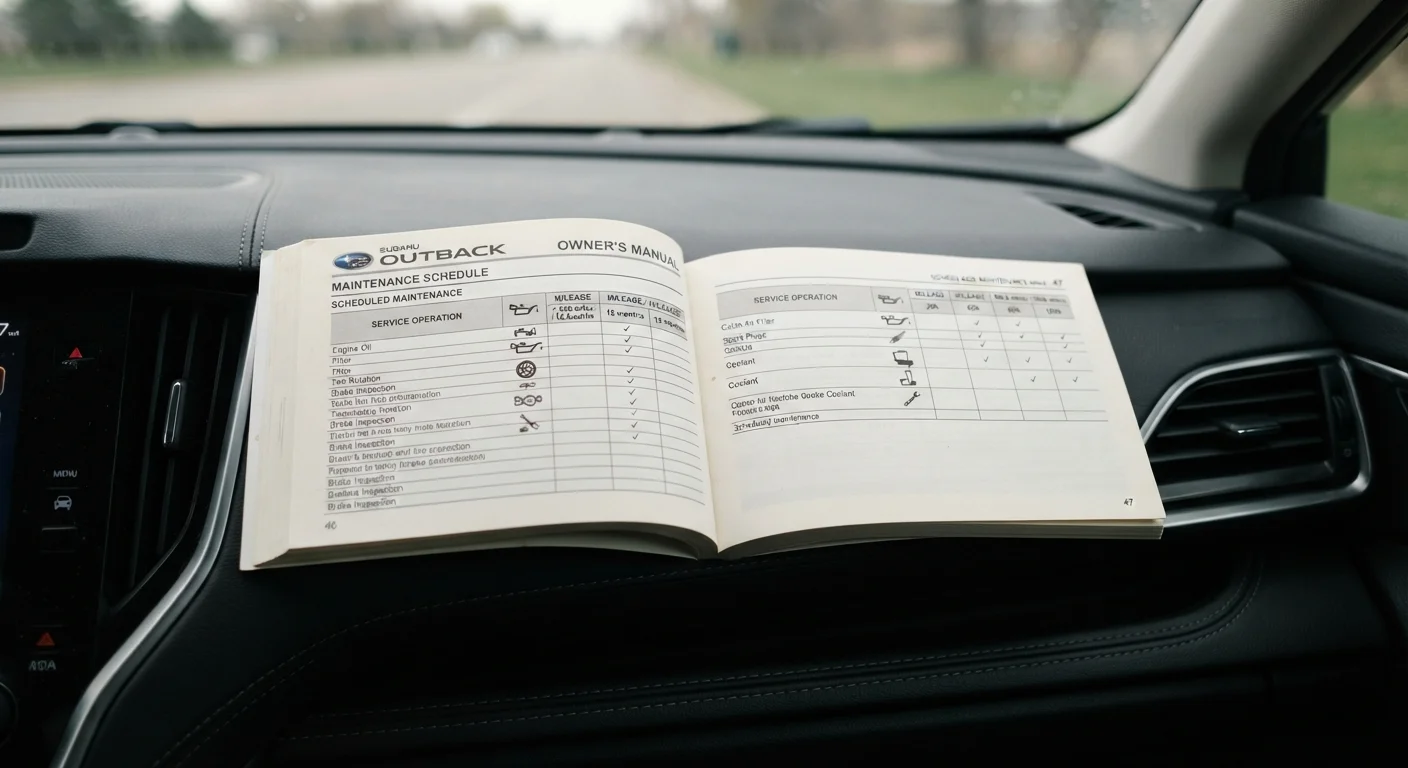
This is the most actionable section. It lists every service item — oil changes, filter replacements, brake inspections, spark plug intervals, transmission fluid changes — and specifies when each is due by mileage or time, whichever comes first. Critically, most manuals include two separate schedules: one for normal driving and one for severe or special operating conditions. Check both and honestly assess which applies to you. Seasonal maintenance checks pair well with these intervals to catch time-sensitive items the mileage schedule can miss.
Severe Driving Conditions Are More Common Than You Think
Most drivers assume they fall under "normal" driving conditions, but manufacturer definitions of severe driving include frequent short trips under five miles, stop-and-go city traffic, towing, and extreme temperatures. If any of these apply to you, use the severe-duty maintenance schedule — intervals are shorter and skipping them can lead to accelerated wear.
2. Fluid Specifications
Every vehicle has precise requirements for engine oil grade, coolant type, transmission fluid, brake fluid, and power steering fluid (where applicable). These aren't suggestions — using the wrong specification can void your warranty and, in some cases, damage components. Your manual will list the exact grade required, such as SAE 5W-30 or a specific ATF type. For a deeper look at what oil grades mean and how they affect engine performance, see our guide on engine oil grades and viscosity.
3. Warning Light Index
Dashboard warning lights are only useful if you know what they mean. Your manual's warning light section — usually illustrated — explains every symbol, distinguishes between warnings that require immediate action and those that can wait for a scheduled appointment, and often outlines the first diagnostic step you should take.
Bookmark the Pages You'll Actually Use
Use sticky tabs or a notes app to flag the maintenance schedule, fluid specifications table, and warning light section. Mechanics keep these sections mentally indexed — having them physically marked means you can act quickly when a dashboard light appears or a service interval approaches.
Step-by-Step: Using Your Manual Effectively
Follow these steps to extract practical value from your owner's manual and use it the way a knowledgeable mechanic would.
Owner's Manual (Physical or Digital PDF)
The primary reference document containing all vehicle-specific maintenance schedules, fluid specifications, and system information.
Sticky Tab Flags or Highlighters
Used to mark the most frequently referenced sections for quick future access.
Maintenance Log or Notebook
Records completed services against manual intervals so you can track what's due and when.
Locate or Download Your Manual
Find your physical manual in the glove box or download the PDF from your manufacturer's official website. Search for your vehicle's year, make, model, and trim to ensure you get the correct version — specifications can differ between trim levels of the same model year.
Find and Read Both Maintenance Schedules
Turn to the maintenance or scheduled maintenance section — often indexed under 'M' or listed in the table of contents. Locate both the normal and severe-duty schedules. Compare the intervals and determine honestly which set of conditions matches your typical driving pattern.
Record Your Current Position in Each Interval
Using your vehicle's current mileage, calculate how far you are from the next service due date for each item on the schedule. Note which services are overdue, which are approaching, and which are well ahead. Write these in a maintenance log or a notes app so you have a running record.
Identify the Required Fluid Specifications
Locate the fluids section and write down the exact specifications for engine oil, coolant, transmission fluid, and any other fluids your vehicle uses. Note the oil grade — such as 0W-20 or 5W-30 — and any specific certifications required (for example, API SN or ILSAC GF-6). For context on what these grades mean, see our article on synthetic vs. conventional motor oil.
Learn Your Warning Lights Before You Need Them
Review the warning light section while you're not under pressure. Familiarize yourself with the symbols that require immediate action — such as oil pressure or brake system warnings — versus advisory lights that can wait for a scheduled visit. This preparation can prevent costly mistakes when a light appears unexpectedly on the road.
When the Manual Points You to a Professional
Not every service item in your maintenance schedule is a reasonable DIY task. The manual will describe what needs servicing, but it won't always clarify the skill level or tooling required. Timing belt replacements, transmission fluid flushes, and differential services are examples of tasks that are technically within the manual's scope but often require professional equipment and expertise to perform safely.
If you're unsure where your skills end and a mechanic's begin, our guide on DIY car maintenance vs. taking it to a mechanic can help you draw that line clearly. Use your manual to stay informed about what's due, and use professional judgment — or a qualified technician — to determine how each item should be handled. Staying on top of your annual service picture is easier with a structured approach; our annual vehicle ownership review provides a practical year-end framework to complement your manual's schedule.
Generic Maintenance Advice Can Mislead You
Interval recommendations you find online — such as "change oil every 3,000 miles" — are generalizations that may not apply to your vehicle. Your owner's manual reflects the engineering decisions made for your specific engine, transmission, and operating conditions. Always treat your manual as the authoritative source over third-party guides.