

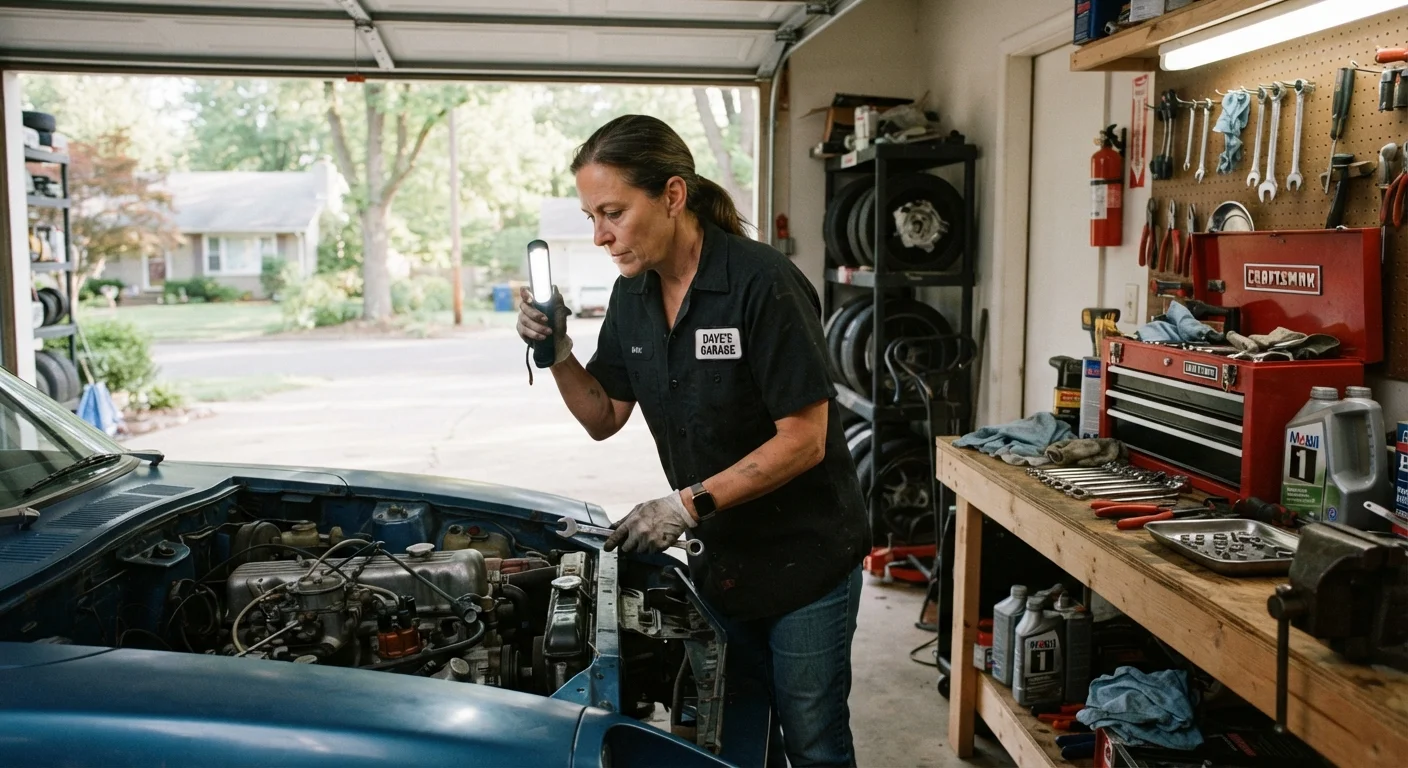
Key Takeaways
Reduces labor costs on simple, low-risk tasks
Routine jobs like air filter swaps or wiper blade replacements cost a fraction of shop labor rates when done at home, and the parts are widely available.
Builds practical vehicle knowledge
Hands-on familiarity with your car helps you spot developing problems earlier and communicate symptoms more precisely to a mechanic when professional work is needed.
Offers scheduling flexibility
DIY maintenance can be done on your timeline, without booking appointments or waiting for a service bay — useful for straightforward tasks on weekends or evenings.
Increases confidence in vehicle ownership
Successfully managing basic upkeep gives drivers a sense of competence and reduces anxiety about minor issues that would otherwise require an immediate shop visit.
Errors on safety-critical systems can be dangerous
Brake, steering, and suspension work require precision that leaves no margin for error — a mistake can compromise vehicle control at highway speeds.
Incorrect repairs often cost more to fix
A DIY job gone wrong frequently results in secondary damage or the need to undo and redo the work, inflating total cost beyond what a professional would have charged.
Modern vehicles demand specialized diagnostic tools
Increasingly complex electronics mean that many faults require dealer-level or professional scan tools that are impractical for home mechanics to own or operate.
Warranty and insurance implications
Improper home repairs can void manufacturer or extended warranties, and may complicate insurance claims if a related failure contributes to an accident or breakdown.
Time investment can outweigh savings
Researching, sourcing parts, and performing unfamiliar work takes significantly longer than a professional job, reducing or eliminating the practical benefit for complex repairs.
Our Verdict
DIY car maintenance is a practical skill that can reduce costs and build confidence — but only when applied to the right tasks. The distinction between what's DIY-appropriate and what isn't comes down to tools, safety consequences, and technical complexity. When in doubt, a qualified mechanic's judgment is an investment, not an extravagance.
Best suited to drivers who want to handle routine, low-risk upkeep themselves while knowing clearly when a professional is the safer and smarter choice.
The Case for DIY: What Makes It Worth Considering
Taking on some of your own car maintenance isn't just about saving money on labor — though that's a real benefit. It's also about understanding your vehicle well enough to catch problems early and communicate clearly with a mechanic when you do need one.
Reduces labor costs on simple, low-risk tasks
Routine jobs like air filter swaps or wiper blade replacements cost a fraction of shop labor rates when done at home, and the parts are widely available.
Builds practical vehicle knowledge
Hands-on familiarity with your car helps you spot developing problems earlier and communicate symptoms more precisely to a mechanic when professional work is needed.
Offers scheduling flexibility
DIY maintenance can be done on your timeline, without booking appointments or waiting for a service bay — useful for straightforward tasks on weekends or evenings.
Increases confidence in vehicle ownership
Successfully managing basic upkeep gives drivers a sense of competence and reduces anxiety about minor issues that would otherwise require an immediate shop visit.
Several tasks sit comfortably in the DIY category for a careful, prepared home mechanic: replacing engine air filters, swapping out cabin air filters, changing wiper blades, topping up washer fluid, checking and inflating tire pressure, and replacing basic exterior bulbs on vehicles that allow accessible access. These jobs typically require minimal tools, carry low safety risk if done incorrectly, and are well-documented in most owner's manuals.
For a deeper look at which maintenance intervals apply to your specific vehicle, see how to read your owner's manual like a mechanic would — it's the most authoritative source for your car's actual requirements, not generalized rules of thumb.
Where DIY Reaches Its Limits
The line between a manageable home project and a dangerous mistake is often drawn by the consequences of getting it wrong. With car maintenance, certain systems are unforgiving.
Errors on safety-critical systems can be dangerous
Brake, steering, and suspension work require precision that leaves no margin for error — a mistake can compromise vehicle control at highway speeds.
Incorrect repairs often cost more to fix
A DIY job gone wrong frequently results in secondary damage or the need to undo and redo the work, inflating total cost beyond what a professional would have charged.
Modern vehicles demand specialized diagnostic tools
Increasingly complex electronics mean that many faults require dealer-level or professional scan tools that are impractical for home mechanics to own or operate.
Warranty and insurance implications
Improper home repairs can void manufacturer or extended warranties, and may complicate insurance claims if a related failure contributes to an accident or breakdown.
Time investment can outweigh savings
Researching, sourcing parts, and performing unfamiliar work takes significantly longer than a professional job, reducing or eliminating the practical benefit for complex repairs.
Brake servicing — including pad replacement, rotor resurfacing, and caliper work — demands precise torque specifications and a thorough understanding of hydraulic systems. An error here doesn't just damage your car; it can cause brake failure at speed. Similarly, suspension and steering components involve geometry settings that typically require professional alignment equipment after any significant work.
Fuel system repairs, airbag-related work, and advanced engine diagnostics (beyond reading a basic OBD-II fault code) also fall firmly in professional territory. Modern vehicles are increasingly reliant on interconnected electronic systems, and disturbing one module without proper diagnostic software can create cascading faults that are expensive to untangle.
~35%
Share of vehicle repair costs attributed to labor
Industry estimates suggest labor commonly accounts for roughly a third or more of total repair bills, making it a meaningful target for informed DIY savings on appropriate tasks.
168 million
DIY auto repair participants in the US
According to the Auto Care Association, tens of millions of Americans perform at least some of their own vehicle maintenance each year, reflecting widespread interest in the practice.
It's also worth remembering that some repairs require vehicle-specific tools that are cost-prohibitive to buy for a single job. A professional shop has already made that investment. As explored in the true cost of deferred car maintenance, a job done incorrectly — or skipped entirely — often compounds into a far more expensive repair down the line.
The Hidden Costs of Getting It Wrong
There's a common assumption that attempting a repair yourself is always the lower-cost option. That's only true when the repair is completed correctly. When it isn't, the cost of fixing a DIY mistake frequently exceeds what professional labor would have cost originally.
When Attempting a Repair, Stop If You're Unsure
It's always safer to pause a repair mid-task and seek professional help than to proceed with uncertainty on a safety-related system. A partially disassembled brake caliper or suspension component should not be left incomplete. If a job reveals unexpected complexity — corroded fasteners, unfamiliar components, or missing instructions for your specific trim level — a qualified mechanic can assess and complete the work safely. Never drive a vehicle in a known unsafe condition.
Consider oil changes: while changing your own oil is a task many drivers handle successfully, using the wrong oil specification or improperly torquing the drain plug can lead to engine damage that costs thousands to repair. The savings on a $50 service interval are quickly erased.
Beyond direct repair costs, there are liability considerations. If a brake job performed at home contributes to an accident, insurance and legal questions become complicated. This isn't a reason to avoid DIY maintenance altogether — it's a reason to be honest about your skill level and the stakes involved. The car maintenance myths that could be costing you unnecessary repairs article addresses several widespread misconceptions that lead drivers to over- or under-maintain their vehicles.
A Practical Framework for Deciding
When evaluating any maintenance task, consider four questions: Do you have the correct tools? Do you understand the safety consequences of an error? Is the procedure clearly documented for your specific vehicle? And do you have the time to do it carefully and completely?
If the answer to any of those is uncertain, professional service is the appropriate choice — not a personal failing. Mechanics bring not just technical knowledge but calibrated equipment, warranty-backed parts, and accountability for the work they perform.
New drivers especially benefit from building a clear mental map of their responsibilities early. Vehicle ownership for new drivers is a good starting point for understanding which habits matter most from the outset. And if you're tempted to delay a task you're unsure about, why skipping routine maintenance tends to snowball into major repairs is a useful reminder of what's at stake.
The goal isn't to do everything yourself or nothing yourself — it's to match the task to your genuine capability and the vehicle's genuine needs.