

| Finish categories (least to most sheen) | Flat → Matte → Eggshell → Satin → Semi-Gloss → High-Gloss |
| Best finish for ceilings | Flat or Matte |
| Best finish for high-moisture rooms | Semi-Gloss |
| Most forgiving finish for imperfect walls | Flat / Matte |
| Most washable finish | High-Gloss |
| Versatile everyday finish | Eggshell or Satin |
Why Paint Finish Is More Than an Afterthought
Most homeowners spend hours choosing a colour, then click the first available finish without much thought. That's a common and costly oversight. Paint finish — also called sheen level — determines how light bounces off a surface, how well the wall stands up to scrubbing, and how visible every imperfection becomes. Choose the wrong one and even a perfectly chosen colour can look flat in the wrong room, or show every scuff and fingerprint in the wrong hallway.
If you're starting a room from the ground up, our room decorating guide covers how finish decisions fit into the broader design process. But if you're ready to decode finishes specifically, here's what you need to know.
| Finish categories (least to most sheen) | Flat → Matte → Eggshell → Satin → Semi-Gloss → High-Gloss |
| Best finish for ceilings | Flat or Matte |
| Best finish for high-moisture rooms | Semi-Gloss |
| Most forgiving finish for imperfect walls | Flat / Matte |
| Most washable finish | High-Gloss |
| Versatile everyday finish | Eggshell or Satin |
The Finish Spectrum: From Matte to High-Gloss
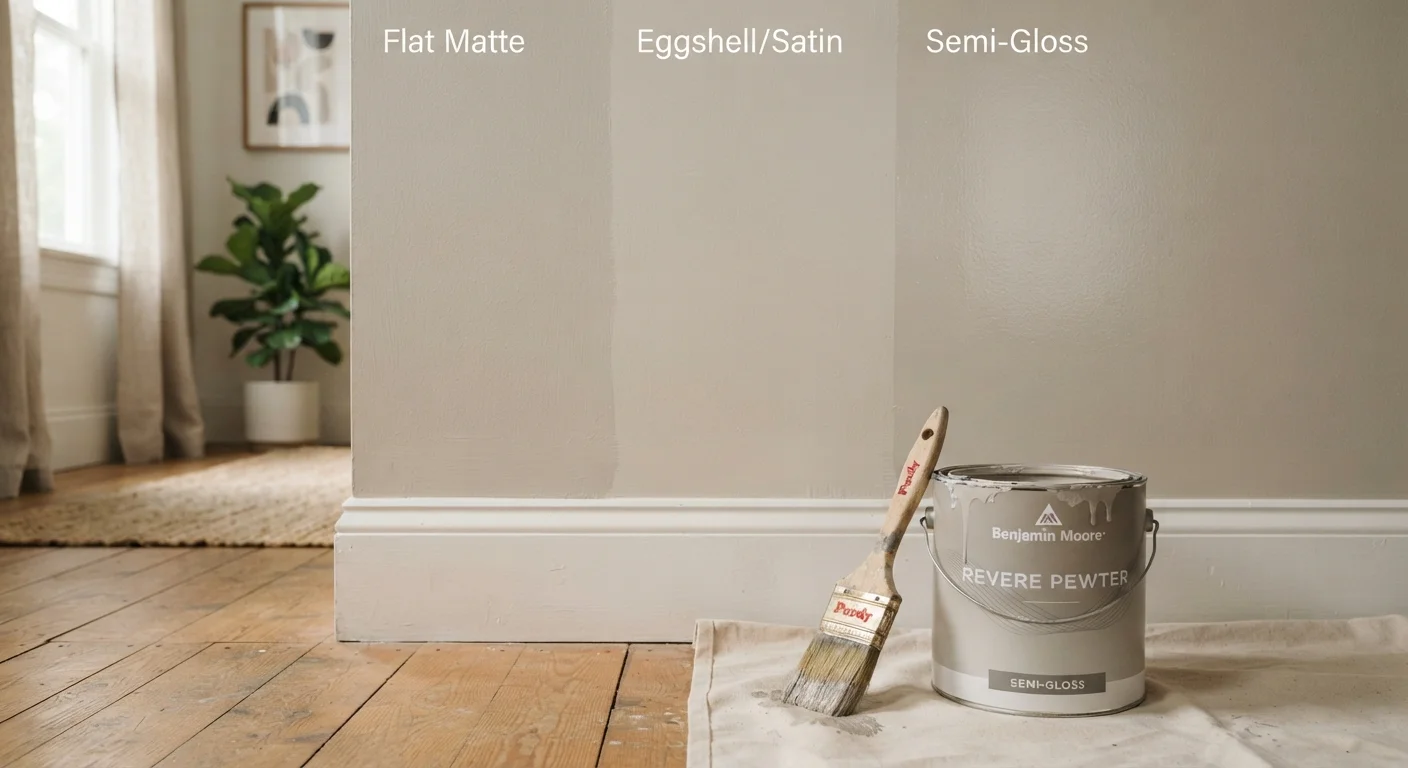
Paint finishes are ranked by sheen — the amount of light they reflect. Moving from least to most reflective, the main categories are:
- Flat / Matte: No measurable sheen. Absorbs light, hides surface imperfections well, and gives walls a velvety, sophisticated look. Because it doesn't reflect, it's harder to wipe clean — any aggressive scrubbing can remove paint. Best suited to low-traffic areas like adult bedrooms, formal dining rooms, and ceilings.
- Eggshell: Named for the faint sheen of an eggshell, this finish offers a very subtle glow. It hides minor wall flaws better than satin, tolerates light cleaning, and is the go-to choice for living rooms and bedrooms that see moderate use.
- Satin: A soft, pearl-like sheen that holds up well to repeated wiping. Satin is the workhorse of family spaces — hallways, children's rooms, and kitchens benefit from its balance of appearance and durability. It does highlight roller marks if applied carelessly, so good technique matters.
- Semi-Gloss: Noticeably shiny and highly moisture-resistant. This finish is standard for bathrooms, kitchens, and trim work. It shows surface imperfections clearly, so walls should be prepped carefully before application.
- High-Gloss: Mirror-like reflectivity, the most durable and washable of all finishes. Typically reserved for trim, cabinetry, and doors rather than large wall surfaces, since every bump and crack is amplified under its shine.
Sheen Level
A measure of how much light a dried paint surface reflects. Higher sheen means more reflectivity, greater durability, and more visible surface flaws.
Flat / Matte Finish
A paint finish with no perceptible shine. It hides wall imperfections well but is less resistant to scrubbing and moisture than higher-sheen options.
Eggshell Finish
A finish with a faint, subtle sheen — similar to the surface of an egg. It sits between matte and satin, offering light washability and a soft glow.
Satin Finish
A finish with a smooth, pearl-like sheen. It is more durable and moisture-resistant than eggshell, making it well-suited for active living areas.
Semi-Gloss Finish
A noticeably shiny finish that resists moisture and cleans easily. Commonly used in bathrooms, kitchens, and on trim work.
High-Gloss Finish
The most reflective and durable paint finish. Typically reserved for trim, doors, and cabinetry where maximum washability and a crisp look are priorities.
Primer
A preparatory coating applied to walls before paint. Primer improves adhesion, evens out surface porosity, and helps the topcoat achieve a consistent finish.
For a broader design vocabulary reference, see The Decorator's Glossary.
Matching Finish to Room: A Practical Room-by-Room Guide
There's no single finish that works everywhere. Consider traffic, moisture, and the wall's condition when choosing:
5
Distinct sheen levels in standard interior paint lines
Most major paint manufacturers offer at least five finish categories: flat, eggshell, satin, semi-gloss, and high-gloss.
~60%
Of interior wall paint sold is eggshell or satin
Industry estimates suggest mid-sheen finishes dominate residential interior paint sales due to their balance of aesthetics and durability.
| Room | Recommended Finish | Reason |
|---|---|---|
| Ceilings | Flat / Matte | Hides texture irregularities; not a high-touch surface |
| Master Bedroom | Matte or Eggshell | Low traffic, relaxed aesthetic |
| Children's Room | Satin | Washable; stands up to sticky hands |
| Living Room | Eggshell | Balanced look and moderate durability |
| Hallways / Entryways | Satin or Semi-Gloss | High contact, needs frequent wiping |
| Kitchen Walls | Satin or Semi-Gloss | Grease and moisture resistance |
| Bathroom | Semi-Gloss | Humidity and splashing demand washability |
| Trim, Doors, Cabinets | Semi-Gloss or High-Gloss | Maximum durability and crisp definition |
Keep in mind that colour also interacts with sheen. Higher-gloss finishes intensify colour saturation, while matte finishes soften it — a consideration explored in our article on colour psychology in home décor.
Finish Labels Can Vary by Manufacturer
Paint sheen terminology is not standardised across the industry. One brand's 'satin' may have a sheen level closer to another's 'eggshell.' When comparing options, check the sheen percentage or gloss unit (GU) value on the technical data sheet rather than relying on the finish name alone. When in doubt, request a sample chip in the intended finish before purchasing full quantities.
Surface Prep, Common Mistakes, and Final Tips
Even the right finish underperforms on poorly prepared walls. Higher-sheen paints are particularly unforgiving — they reflect light onto every dent, crack, and dried drip. Fill nail holes, sand rough patches, and prime bare drywall before applying satin or above. Matte and eggshell finishes are more forgiving of minor wall flaws but still benefit from a clean, primed surface.
A few common mistakes to avoid:
- Using flat paint in bathrooms or kitchens — moisture and mildew will degrade it quickly, and mold stains won't wipe away cleanly.
- Assuming all sheens in the same colour look identical — they don't. Order a small sample of your chosen colour in the intended finish before committing to a full room.
- Skipping primer when switching finishes — going from a high-gloss wall to a matte finish without priming can lead to uneven adhesion and blotchy results.
- Mixing finishes mid-project — if you run out and buy a different batch, even in the same sheen category, slight variations can be visible under raking light.
If you're weighing paint against other wall treatments entirely, our wallpaper vs. paint comparison covers both options in depth. And if you've been working with assumptions about what paint can and can't do, it's worth reading common home décor myths debunked before picking up the roller.