

Key Takeaways
Our Verdict
Paint wins on flexibility, ease, and upfront cost — making it the practical default for most rooms and most budgets. Wallpaper earns its place when durability, visual texture, or a bespoke aesthetic are the priority and the commitment feels right. Neither is universally superior; the better choice depends on how long you plan to stay, how much wall prep work you're willing to do, and the kind of atmosphere you want to create.
| Best for | Recommended |
|---|---|
| Budget-conscious homeowners or frequent redecorators | Paint |
| Those wanting bold patterns, texture, or long-lasting visual impact | Wallpaper |
| Renters or those in temporary living situations | Paint |
| Creating a single dramatic feature wall with maximum personality | Wallpaper |
Cost: What You'll Actually Spend
Paint is the clear winner on upfront cost. A gallon of interior paint typically covers around 350–400 square feet and can be purchased at a wide range of price points. Even with primer, painter's tape, and rollers factored in, a full room refresh usually runs well below the equivalent wallpaper project.
Wallpaper costs vary considerably by material and complexity. Standard vinyl rolls are more affordable, while designer or textured papers — grasscloth, linen-look, embossed — can cost significantly more per roll. You'll also need adhesive, a smoother brush, and seam tools. Professional installation adds further to the total, and it's a step many homeowners choose not to skip.
One often-overlooked expense: removal. If wallpaper is already on your walls, stripping it before painting or re-papering can require renting a steamer, purchasing scoring tools, and spending considerable time. Budget for that before making any decision.
| Paint | Wallpaper | |
|---|---|---|
| Upfront material cost | Low to moderate | Moderate to high |
| DIY difficulty | Beginner-friendly | Moderate to advanced |
| Pattern and texture range | Color and finish only | Extensive — pattern, texture, depth |
| Durability in high-traffic areas | Moderate | High (vinyl types) |
| Ease of touch-up or repair | Very easy | Difficult, especially patterned |
| Reversibility | Easy — repaint anytime | Labor-intensive removal |
| Lifespan (typical) | 5–10 years before refresh | 10–20+ years if well applied |
Effort and Application
Painting a room is one of the most approachable DIY home projects. With proper masking, a quality roller, and a steady hand on edges, most homeowners can achieve clean results over a weekend. The learning curve is shallow, and mistakes are easy to fix before the paint dries.
Wallpaper hangs differently. Matching patterns across seams, managing bubbles, trimming around outlets and moldings, and working on plumb vertical lines all require patience and precision. Peel-and-stick varieties have lowered the bar somewhat, but traditional paste-hung paper remains a project where professional installation often produces measurably better results.
Test Before You Commit
Before papering or painting an entire room, test your choice on a single section of wall and observe it across different lighting conditions — morning, afternoon, and artificial evening light. Colors and patterns read very differently throughout the day. For wallpaper, order a sample or hang a loose section before purchasing full rolls.
For renters curious about temporary wallpaper options, our guide on decorating a rental without permanent changes covers peel-and-stick papers and other reversible approaches in detail.
Visual Impact and Design Range
Paint offers an enormous color spectrum and, through finish selection, genuine variation in how a wall reads in a room. A flat matte finish absorbs light and feels cozy; a satin or semi-gloss reflects it and reads as sharper. If you're navigating those options, our breakdown of interior paint finishes explains what each sheen level offers in practical terms.
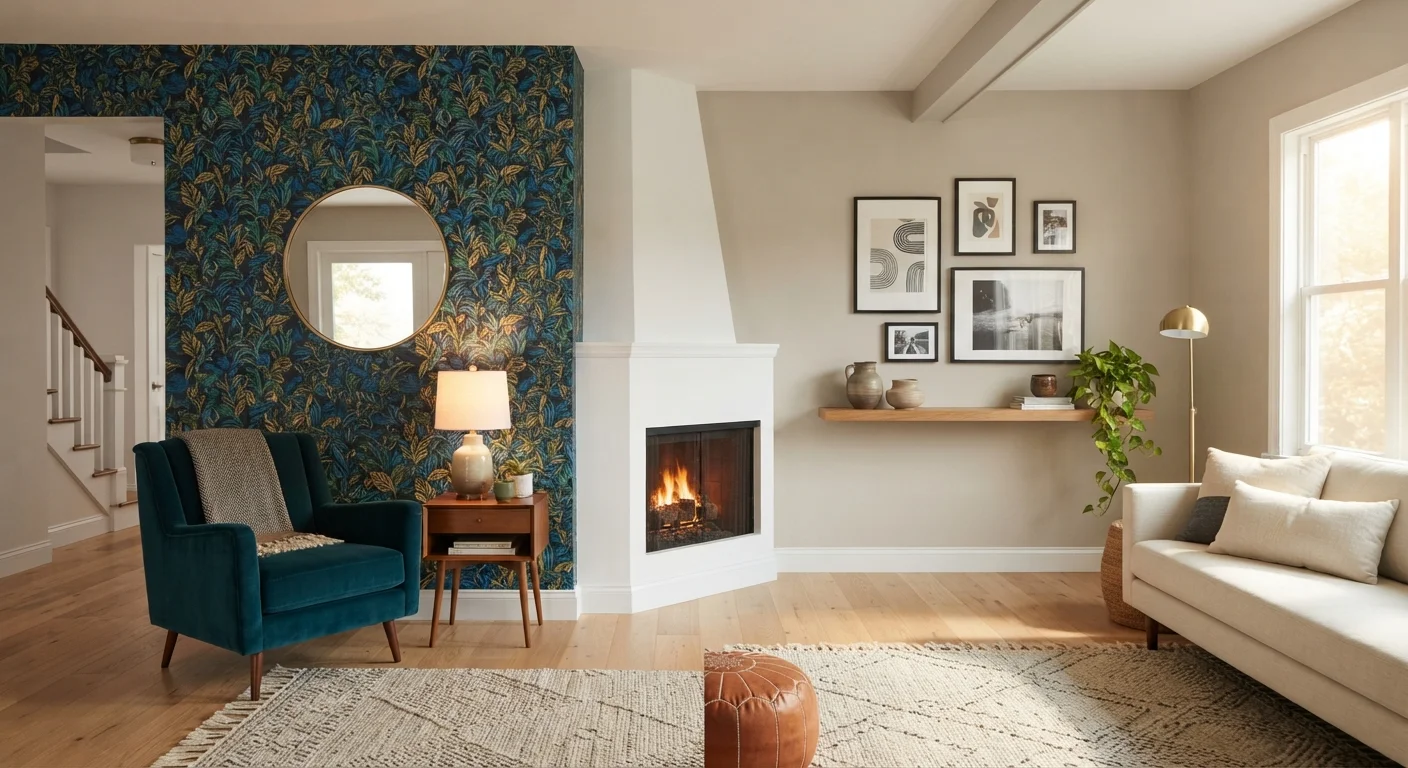
Wallpaper brings something paint physically cannot: texture and pattern depth. A grasscloth wall has dimensionality under light. A geometric print creates a rhythm across a surface that a painted wall simply doesn't replicate. That visual weight can anchor a room — or overwhelm it, depending on scale and placement.
Used on a single wall, wallpaper functions as a statement surface. For a closer look at the pros and cons of that approach, see our feature on feature walls. Paint, by contrast, tends toward cohesion — wrapping a room in a unified tone rather than spotlighting a single plane.
~400 sq ft
Coverage per gallon of interior paint
Standard coverage estimate used by most paint manufacturers for smooth interior surfaces.
25–30 sq ft
Typical coverage per standard wallpaper roll
Roll coverage varies by manufacturer and pattern repeat; always purchase extra to account for matching and waste.
Durability and Longevity
High-quality vinyl wallpaper is more durable than paint in high-traffic areas. It resists scuffs better and, in some cases, can be wiped clean more aggressively without damage. In hallways, children's rooms, or stairwells where walls take regular abuse, that durability is a genuine practical advantage.
Paint, however, is far easier to touch up. A small can of leftover paint resolves a scuff or nick in minutes. Patching wallpaper — especially a patterned one where dye lots may no longer match — is considerably harder and sometimes impossible to do invisibly.
Neither material lasts forever. Paint may need refreshing every five to ten years in heavily used rooms. Wallpaper can last decades when properly applied and maintained, but moisture, peeling seams, or style changes often prompt earlier replacement.
If you're starting a room from scratch and want to think through the full design sequence, our guide on decorating a room from scratch is a practical next step.