

Key Takeaways
Creates a clear focal point in any room
A well-placed feature wall gives the eye somewhere to land, making a room feel composed and intentional rather than visually directionless.
Lets you use bold materials more affordably
Limiting an expensive or dramatic finish to one wall significantly reduces material cost while still delivering substantial visual impact.
Adds depth and dimension without full renovation
Texture, pattern, or contrasting color on a single surface creates a sense of layering that flat, uniform walls cannot achieve.
Easier to update than a full room treatment
Repainting or re-papering one wall is a manageable weekend project, making it simpler to refresh a room as your style evolves.
Works across a range of decorating philosophies
From a minimal plaster-effect panel to a maximalist botanical wallpaper, the format is flexible enough to serve very different aesthetic intentions.
Arbitrary placement reads as dated quickly
A feature wall that doesn't correspond to a natural focal point — fireplace, headboard, entry view — often feels like a decorating trend rather than a considered choice.
Can clash with existing architectural features
In rooms with crown molding, chair rails, or bay windows, a strong accent wall can compete with rather than complement the built-in details.
Risk of visual imbalance in small rooms
In compact spaces, a heavily treated wall can make proportions feel lopsided, particularly if the opposite wall is plain white and unadorned.
Some materials are difficult to reverse
Tile, stone cladding, and certain peel-resistant wallpapers require significant effort and expense to remove, limiting flexibility if your preferences change.
Trend-tied finishes can age poorly
Finishes closely associated with a particular design moment — certain shiplap treatments, for instance — can feel less fresh once the trend passes.
Our Verdict
A feature wall is a genuinely useful decorating tool when it responds to the room's architecture and existing palette rather than working against them. The concept itself isn't dated — but lazy or arbitrary execution often is. Done thoughtfully, a single statement surface adds dimension, personality, and a clear focal point without the cost or disruption of a full room overhaul.
Homeowners who want to introduce bold color, texture, or pattern into a room incrementally — and who are willing to plan placement carefully around the room's natural focal points.
What Exactly Is a Feature Wall?
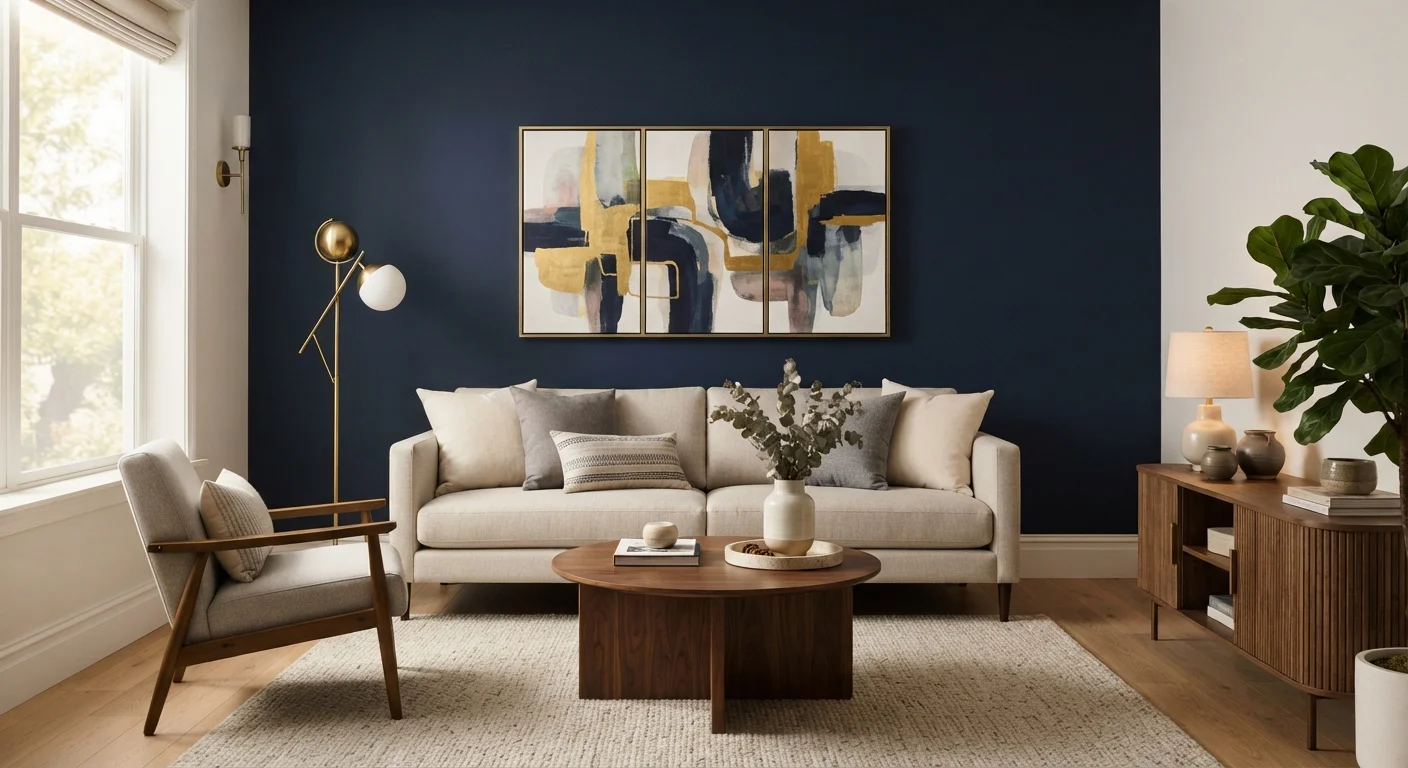
A feature wall — sometimes called an accent wall — is a single surface treated differently from the other three walls in a room. That treatment might be a contrasting paint color, bold wallpaper, natural stone cladding, wood paneling, shiplap, tile, or even a gallery arrangement of art. The goal is to give one wall deliberate visual weight while the others recede.
The idea emerged as a middle ground between full room transformations and leaving walls entirely neutral. It's particularly common in living rooms, bedrooms, and dining rooms, where a dominant wall can anchor the space. If you're starting a room layout from scratch, our guide to decorating a room from scratch covers how a feature wall fits into the broader decision-making sequence.
The Advantages of a Feature Wall
Creates a clear focal point in any room
A well-placed feature wall gives the eye somewhere to land, making a room feel composed and intentional rather than visually directionless.
Lets you use bold materials more affordably
Limiting an expensive or dramatic finish to one wall significantly reduces material cost while still delivering substantial visual impact.
Adds depth and dimension without full renovation
Texture, pattern, or contrasting color on a single surface creates a sense of layering that flat, uniform walls cannot achieve.
Easier to update than a full room treatment
Repainting or re-papering one wall is a manageable weekend project, making it simpler to refresh a room as your style evolves.
Works across a range of decorating philosophies
From a minimal plaster-effect panel to a maximalist botanical wallpaper, the format is flexible enough to serve very different aesthetic intentions.
Beyond aesthetics, feature walls solve a practical problem: they let you introduce a material or finish that would feel overwhelming across four walls. A deeply saturated terracotta paint, for instance, might feel oppressive on every surface but compelling on one. The same logic applies to heavily patterned wallpaper — a single wall carries the pattern's energy without visual fatigue.
Feature walls also tend to be more cost-effective than full room treatments. One wall of premium wallpaper or stone veneer panels uses significantly less material and labor than four. For homeowners curious about how those materials compare more broadly, our wallpaper vs. paint comparison breaks down the practical trade-offs of each approach.
~25%
Material saving vs. full four-wall treatment
Treating one wall instead of four with the same material typically uses roughly one-quarter of the total quantity, reducing both material and labor costs proportionally.
1 day
Typical completion time for a painted accent wall
A standard painted feature wall — including prep, two coats, and drying time — can generally be completed within a single day for most room sizes.
The Drawbacks Worth Considering
Arbitrary placement reads as dated quickly
A feature wall that doesn't correspond to a natural focal point — fireplace, headboard, entry view — often feels like a decorating trend rather than a considered choice.
Can clash with existing architectural features
In rooms with crown molding, chair rails, or bay windows, a strong accent wall can compete with rather than complement the built-in details.
Risk of visual imbalance in small rooms
In compact spaces, a heavily treated wall can make proportions feel lopsided, particularly if the opposite wall is plain white and unadorned.
Some materials are difficult to reverse
Tile, stone cladding, and certain peel-resistant wallpapers require significant effort and expense to remove, limiting flexibility if your preferences change.
Trend-tied finishes can age poorly
Finishes closely associated with a particular design moment — certain shiplap treatments, for instance — can feel less fresh once the trend passes.
The most common pitfall is arbitrary placement — choosing a wall simply because it's the largest, rather than because it corresponds to a natural focal point. When a feature wall doesn't align with how people actually enter or move through the room, it can feel visually confused rather than intentional.
Trend sensitivity is also a real concern. Some finishes that read as fresh today may feel dated in five to eight years, particularly when tied to a specific moment in interior design culture. This isn't a reason to avoid feature walls entirely, but it's worth choosing materials and colors that feel personally resonant rather than purely trend-driven. Those committed to a more permanent neutral approach might find value in reading about minimalism vs. maximalism to understand how each philosophy treats surfaces differently.
Making It Work: Placement and Material Principles
The strongest feature walls follow the room's existing logic. In a bedroom, the wall behind the headboard is a natural choice — the furniture already draws the eye there. In a living room, a fireplace wall or the surface directly opposite the entry point tends to work well. Avoid treating a wall that's partially interrupted by doorways, windows, or awkward alcoves, as the breaks undermine the statement.
Material selection should account for the room's light levels. Dark paint or richly textured paneling in a north-facing room with limited natural light can feel oppressive. In those cases, consider lighter hues with a tactile finish — linen-effect wallpaper, whitewashed wood — that add depth without absorbing what light there is.
Light Direction Matters More Than You Think
Before committing to a dark or heavily saturated feature wall, note which direction the room faces. South-facing rooms receive warm, consistent natural light that flatters deep tones. North-facing rooms receive cooler, indirect light that can make the same shade feel flat or cold. Testing a large paint swatch on the actual wall — and observing it at different times of day — is a reliable way to avoid surprises before full application.
If you're renting and can't commit to paint or permanent installation, temporary peel-and-stick wallpaper and removable fabric panels offer a reversible alternative. Renting and decorating without permanent changes covers these options in detail. Once the wall is treated, consider how art placement interacts with it — decorating with art explains how scale and grouping affect the finished result.