

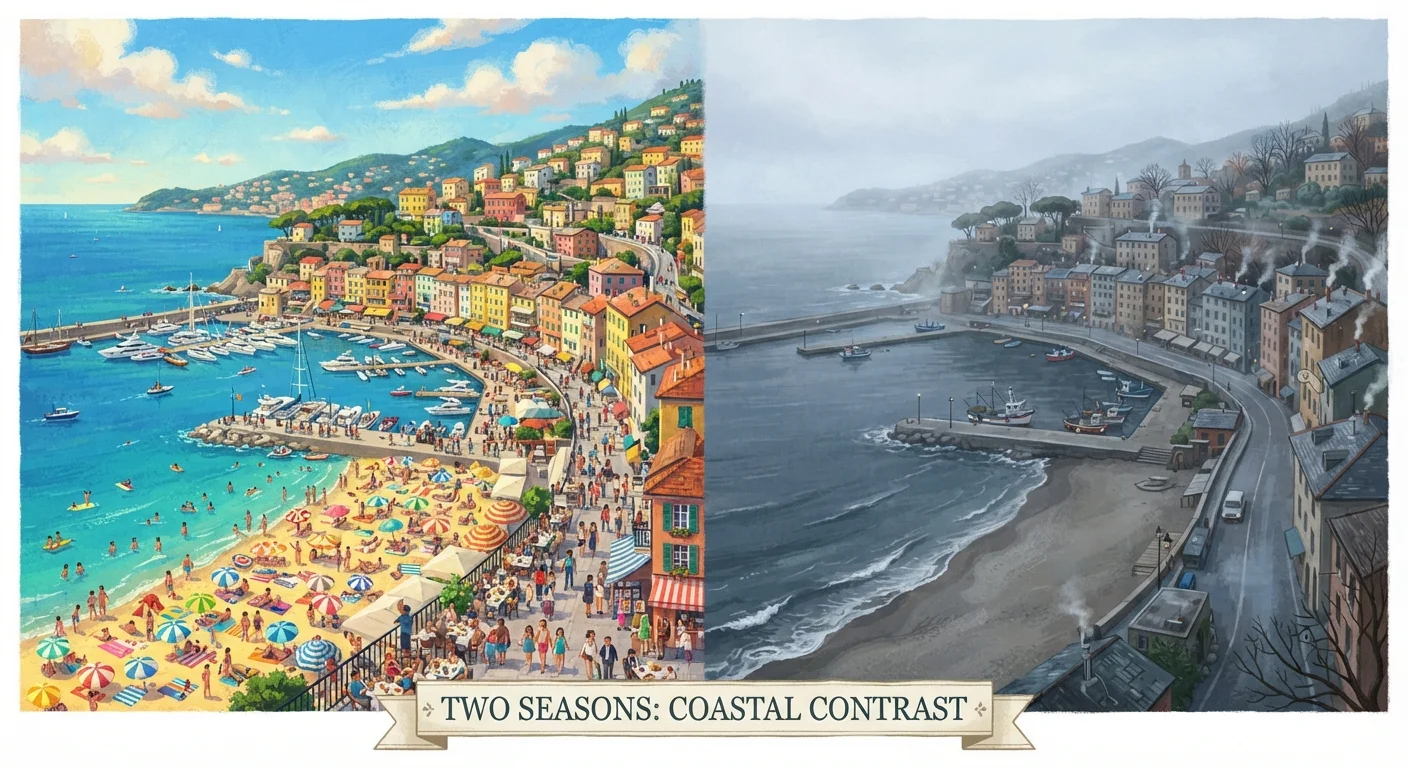
Key Takeaways
Option A
Peak Season Travel
The lively, fully-loaded experience — with trade-offs.
Best for: Travelers who want maximum access, predictable weather, and a buzzing atmosphere, and are comfortable navigating crowds.
Option B
Off-Season Travel
The quieter, more intimate side of any destination.
Best for: Flexible travelers who prioritize space, authenticity, and a slower pace over guaranteed conditions and full amenity access.
If you want iconic experiences without compromise
Peak Season Travel
Major attractions, tours, and transport all run at full capacity during peak season, meaning fewer disappointments and more predictable planning.
If you value space and slower-paced exploration
Off-Season Travel
Crowds thin dramatically in the off-season, letting you linger at landmarks, connect with locals, and experience destinations more authentically.
If weather reliability is a top priority
Peak Season Travel
Peak season typically aligns with optimal weather windows for most destinations, reducing the risk of disrupted plans.
If cultural immersion matters more than perfect conditions
Off-Season Travel
With fewer tourists around, local life becomes more visible — markets, festivals, and neighborhoods feel lived-in rather than staged.
If flexibility in booking is important to you
Off-Season Travel
Accommodation and activities are generally easier to book last-minute during quieter periods, supporting a more spontaneous approach.
More Than a Price Difference
When travelers debate peak versus off-season, conversations almost always circle back to cost. But the financial gap, while real, is one of the least interesting contrasts between the two. What actually changes is the texture of the trip — who you're traveling alongside, what's available, how locals interact with visitors, and what the destination even looks like.
Understanding those deeper differences helps you plan more deliberately. Whether you're weighing a beach escape or a city break, the calendar shapes the experience in ways that go far beyond your accommodation invoice. For a broader perspective on how spending choices affect travel quality, see our budget vs. splurge travel breakdown.
| Criterion | Peak Season | Off-Season |
|---|---|---|
| Crowd levels | High — popular sites are busy | Low — destinations feel spacious |
| Weather reliability | Generally optimal and predictable | More variable; research required |
| Attraction availability | Full hours, all tours running | Some closures or reduced schedules |
| Transport frequency | Maximum — all routes active | Reduced; some routes suspended |
| Booking flexibility | Low — book well in advance | Higher — last-minute often viable |
| Local atmosphere | Tourist-facing; vibrant but staged | Authentic; local life more visible |
| Accommodation cost | Typically higher | Typically lower |
Crowds, Atmosphere, and Access
Peak season concentrates visitors. At many iconic destinations — think national parks in summer or European old towns in August — the sheer volume of tourists changes the experience fundamentally. Queues stretch, viewpoints feel like car parks, and spontaneous decisions become difficult without advance reservations.
Off-season flips this entirely. You can stroll into museums, linger at restaurants without a wait, and photograph landmarks without staging around a crowd. The trade-off is that some attractions, seasonal tours, or local businesses may operate on reduced hours or close altogether during quieter months.
~30%
Drop in international arrivals at many European destinations in winter vs. summer
Tourism data from the European Travel Commission indicates significant seasonal visitor swings at popular Mediterranean destinations.
2–4x
Entry queue length increase at top US national parks in summer
The US National Park Service has noted dramatically longer vehicle wait times at high-traffic parks during peak summer months compared to shoulder periods.
Access also shifts in subtler ways. During peak season, transport links — ferries, scenic trains, tourist buses — run at full frequency. Off-season schedules often thin out, and some routes disappear entirely. It's worth researching transport options before you commit to dates, especially in island or rural destinations.
Weather, Safety, and Local Conditions
The reason destinations have a peak season is usually weather — and that logic holds. Summer in coastal Europe, dry season in Southeast Asia, spring in Japan: these windows align with reliably pleasant conditions. Traveling within them means fewer surprises and more time actually enjoying being outdoors.
Off-season doesn't necessarily mean bad weather, but it does mean more variability. A late-autumn trip to Tuscany might deliver golden light and harvested vineyards — or persistent rain and shuttered trattorias. A shoulder-season Caribbean visit could be peaceful and affordable, or it could fall in the middle of hurricane season. Always check regional weather patterns and, critically, verify current safety and entry conditions through official government travel advisory sources before booking.
Local conditions shift too. In some destinations, the off-season coincides with local holidays or festivals that attract domestic travelers — meaning the destination isn't quiet at all. Our guide on planning around local holidays explains how to research these nuances before you finalize dates.
Culture, Authenticity, and What Locals Experience
Perhaps the most underappreciated difference between seasons is the cultural atmosphere. During peak season, many destinations shift into a kind of performance mode — menus become tourist-friendly, prices adjust, and the parts of local life that exist for residents rather than visitors recede from view.
Off-season reveals a different layer. Restaurants cater to locals. Shop owners have time to talk. Neighborhoods settle back into their rhythms. For travelers drawn to genuine cultural connection rather than polished visitor experiences, the quieter calendar can be genuinely rewarding.
That said, off-season immersion requires flexibility. Not everything will be open. Not every planned activity will materialize. Travelers who find uncertainty uncomfortable — or who are traveling in a group with fixed itineraries — may find the unpredictability frustrating. See how planning dynamics shift when you're coordinating multiple people in our group vs. solo travel guide.
Shoulder Season: A Middle Ground Worth Considering
Many experienced travelers swear by shoulder season — the weeks just before or after peak. Conditions are often still favorable, crowds have thinned, and services remain largely open. It's not universally applicable (some destinations jump straight from busy to closed), but it's a useful concept to research for any destination you're considering. Check the Travel Tips hub for destination-specific planning guidance.
Booking Flexibility and Planning Depth
Peak season rewards early planners. Accommodation books out months in advance, popular tours sell through, and popular flight routes fill quickly. Arriving without confirmed bookings during high season can mean paying a significant premium — or doing without entirely.
Off-season tends to favor spontaneous travelers. Last-minute decisions carry less risk when demand is lower, and flexible vs. fixed booking approaches become a more meaningful strategic choice. That flexibility can be liberating, but it also asks you to accept uncertainty as part of the experience.
Flight timing plays into this too. Fare patterns don't always follow the simplest logic — our guide to flight booking timing walks through what research actually shows about when to book for different seasons. For any trip, understanding the planning depth required is key — something our short vs. extended travel guide covers in detail.
Travel conditions, schedules, and entry requirements change frequently. Always verify current information through official government and destination sources before booking or traveling.