

Key Takeaways
Option A
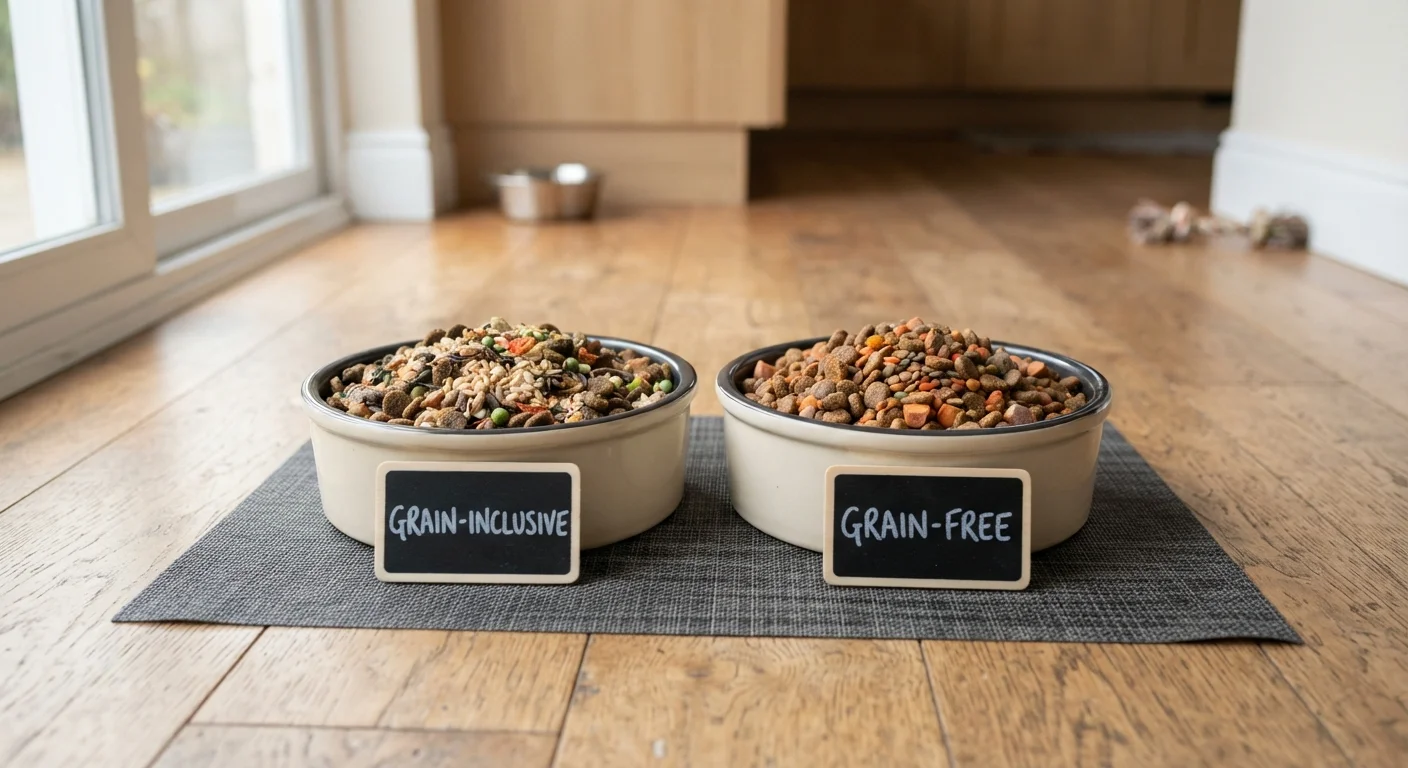
Grain-Free Pet Food
The newer, trending formulation that excludes cereal grains entirely.
Best for: Pets with confirmed grain allergies or intolerances, as determined by a veterinarian.
Option B
Grain-Inclusive Pet Food
The long-established standard formulation containing digestible cereal grains.
Best for: Most healthy dogs and cats without diagnosed dietary sensitivities.
If your pet has no diagnosed grain sensitivity or allergy
Grain-Inclusive Pet Food
Grain-inclusive foods have a long safety track record and provide digestible carbohydrates, fiber, and nutrients without the cardiac concerns currently under investigation.
If your veterinarian has confirmed a grain intolerance or allergy
Grain-Free Pet Food
In medically confirmed cases, a grain-free formulation may reduce gastrointestinal or skin symptoms — but always follow your vet's specific dietary recommendations.
If you have a large or giant breed dog with cardiac risk factors
Grain-Inclusive Pet Food
Given the ongoing FDA investigation into DCM and grain-free diets, cardiologist and veterinary nutritionist guidance generally favors grain-inclusive options for at-risk breeds.
If you want the most research-backed nutritional foundation for your pet
Grain-Inclusive Pet Food
Decades of feeding trials and nutritional research underpin grain-inclusive formulations, making them the better-supported baseline choice for most pets.
What Sets These Two Diet Types Apart
Grain-free pet foods exclude cereal grains — such as wheat, corn, rice, barley, and oats — entirely from their ingredient lists. In their place, manufacturers typically substitute legumes (like peas and lentils), chickpeas, or starchy vegetables like potatoes and sweet potatoes as carbohydrate sources. Grain-inclusive foods, by contrast, incorporate one or more cereal grains alongside protein sources, fats, vitamins, and minerals.
The marketing appeal of grain-free diets grew substantially in the 2010s, driven largely by an assumption that grains are "fillers" or inherently allergenic. This belief, while widespread among pet owners, is not well-supported by veterinary nutrition science. Grains like oats and brown rice are digestible and provide energy, fiber, and micronutrients that support gut and overall health.
To understand what's actually in any formula you're considering, it helps to decode the ingredients list and AAFCO statements on the packaging — not just the front-of-bag marketing claims.
| Criterion | Grain-Free | Grain-Inclusive |
|---|---|---|
| Primary carbohydrate source | Legumes, potatoes, sweet potatoes | Oats, brown rice, barley, corn, wheat |
| Protein content (general) | Often higher | Varies by formula |
| DCM cardiac concern | Under FDA investigation | No known association |
| Research history | Newer; less long-term data | Decades of feeding trials |
| True grain allergy cases | Appropriate when confirmed | Not suitable for grain-allergic pets |
| AAFCO adequacy available | Yes, on qualifying formulas | Yes, widely available |
The DCM Investigation: What Pet Owners Should Know
In 2018, the U.S. Food and Drug Administration (FDA) began investigating a potential association between certain grain-free diets and dilated cardiomyopathy (DCM) — a serious heart condition — in dogs. The investigation was triggered by an increase in DCM reports in breeds not typically predisposed to the condition, and a majority of the dogs involved were eating grain-free, legume-heavy diets.
As of the time of this writing, the FDA has not established a confirmed causal link, and research is still ongoing. The mechanism — whether it relates to legume levels, taurine bioavailability, or other factors — has not been conclusively identified. However, many veterinary cardiologists and board-certified veterinary nutritionists have noted that the signal is significant enough to warrant caution, particularly for large and giant breeds with known cardiac risk.
FDA Investigation Is Still Active
The FDA's investigation into grain-free diets and DCM has not reached a final conclusion. The agency has published multiple updates and continues to collect case data. Pet owners should check the FDA's official communications for the most current findings and discuss implications with their veterinarian rather than relying on secondhand summaries.
This is an actively evolving area of veterinary science. Owners of large-breed dogs — especially those already eating grain-free diets — should discuss the current state of the DCM research with their veterinarian at their next wellness visit.
Are Grain Allergies in Pets as Common as People Think?
Food allergies account for a relatively small share of allergic skin and gastrointestinal conditions in pets. Among those that do occur, veterinary dermatologists note that animal proteins — particularly chicken, beef, dairy, and eggs — are far more commonly implicated than cereal grains. True grain allergies in dogs and cats are uncommon, though not impossible.
If your pet shows signs of food sensitivity (chronic itching, recurrent ear infections, vomiting, or loose stools), a proper elimination diet trial — guided by your veterinarian — is the most reliable diagnostic method. Switching to a grain-free food without a confirmed diagnosis may not resolve the problem and could complicate future dietary investigations.
~1–2%
Estimated prevalence of true food allergies in dogs
Veterinary dermatology literature suggests food allergies are less common than environmental allergies, affecting a small fraction of the overall dog population.
~90%
Food allergy triggers that are animal proteins
Studies in veterinary dermatology indicate the vast majority of canine food allergies are caused by proteins like chicken, beef, or dairy — not grains.
Nutritional needs also shift significantly across a pet's life. For dogs especially, protein and calorie requirements change from puppyhood through senior years, which can affect which formula type is most appropriate at a given life stage.
How to Have a Productive Conversation With Your Vet
Before switching your pet's diet — in either direction — it's worth bringing a few targeted questions to your veterinarian. Consider asking: Has my pet shown any signs that suggest a dietary sensitivity? Is my pet's current food meeting AAFCO nutritional adequacy standards? Are there any breed-specific cardiac or metabolic concerns I should weigh? What does the current research say about DCM risk for my dog's size and breed?
For a broader perspective on how different diet formats compare — from dry kibble to fresh-cooked options — see our overview of fresh food, kibble, and raw diet trade-offs. And if portion management is on your mind, portion size has a greater impact on health outcomes than feeding schedule for most pets.
This article is for general informational and educational purposes only and is not a substitute for professional veterinary advice. Always consult a licensed veterinarian before making changes to your pet's diet.