

Key Takeaways
Why Portion Control Is the Foundation of Good Pet Nutrition
Many pet owners spend considerable energy deciding when to feed their pets — twice a day, free-choice, timed intervals — while paying far less attention to how much goes into the bowl. Yet veterinary nutrition guidance consistently points to portion size as the more consequential variable. Whether food is served once or three times daily matters far less than whether the total daily amount matches the animal's actual energy needs.
Overfeeding is the leading dietary contributor to obesity in companion animals, and obesity carries downstream risks including joint stress, metabolic disorders, and reduced life expectancy. Underfeeding carries its own risks: inadequate calories and nutrients can impair growth in young animals and weaken immune function at any age. Getting portions right is foundational — and it is also an area where even attentive owners make consistent, correctable mistakes.
For a deeper look at how caloric needs evolve across a dog's lifespan, see our guide to shifting nutritional needs from puppy to senior.
Common Portion-Control Mistakes — and How to Avoid Them
The errors below appear across household types, pet species, and experience levels. Recognizing them is the first step toward correction.
Using the feeding guideline on the packaging as a fixed prescription rather than a starting estimate.
Why it happens: Packaging guidelines are calculated for a broad population average and are often based on an unaltered, moderately active adult animal of that weight range. Many pets fall outside those assumptions.
Failing to adjust portions as a pet ages, gains or loses weight, or changes activity level.
Why it happens: Once a feeding routine is established, it often continues unchanged for months or years out of habit, even as the pet's physiology changes significantly.
Not accounting for treats, toppers, table scraps, or training rewards in the daily calorie budget.
Why it happens: These additions feel separate from 'real' meals and are easy to undercount. Owners often perceive treats as negligible when they can represent a substantial calorie surplus.
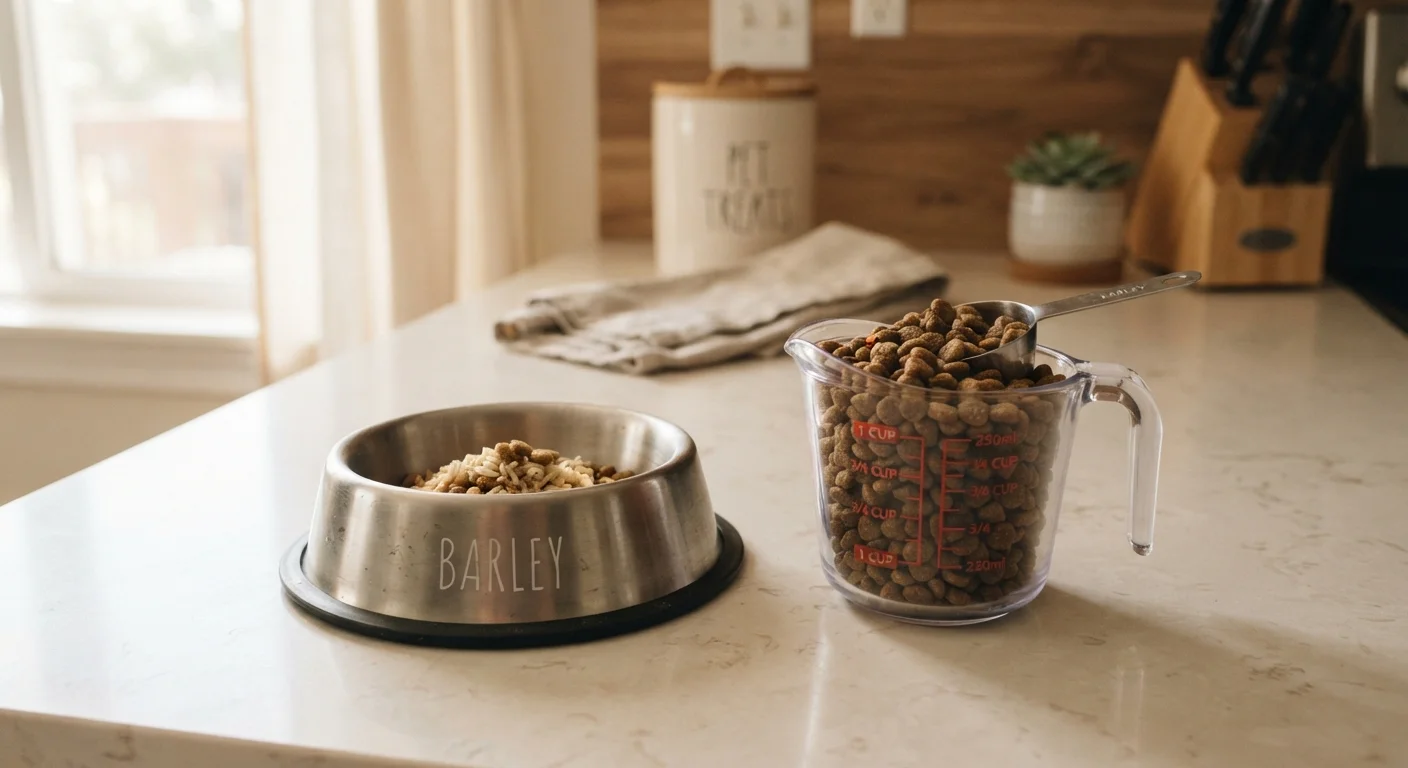
Measuring portions by eye or using an informal scoop rather than a standardized measuring tool.
Why it happens: Visual estimation feels accurate enough, especially with familiar routines. However, studies on human self-reporting of food portions consistently show significant underestimation — the same tendency applies when scooping pet food.
Feeding a puppy, kitten, or pregnant or nursing pet the same portion formula used for an adult at maintenance.
Why it happens: Many owners are unaware that growing and reproducing animals have significantly elevated caloric and nutrient needs that standard adult guidelines do not reflect.
Free-Choice Feeding and Weight Gain
Leaving food available at all times — sometimes called free-choice or ad libitum feeding — works for some pets with natural self-regulation, but it is a common pathway to gradual weight gain in others, particularly indoor cats and dogs with high food motivation. If your pet has access to food throughout the day, monitor body condition closely and consider transitioning to measured, scheduled meals if weight trends upward.
Putting It All Together: Practical Portion Habits
Building a reliable portion routine does not require specialized equipment or professional training, but it does require consistency and periodic reassessment. A kitchen scale or dedicated measuring cup kept near the food storage container removes guesswork at every meal. Recording your pet's weight monthly — most veterinary offices allow quick drop-in weigh-ins — gives you an objective check on whether the current portion is working.
~59%
U.S. dogs estimated overweight or obese
According to the Association for Pet Obesity Prevention's annual surveys, well over half of U.S. dogs are classified as overweight or obese by their veterinarians.
~69%
U.S. cats estimated overweight or obese
The same surveys indicate cats have an even higher prevalence of excess weight, often linked to free-choice feeding practices and calorie-dense diets.
Diet type also influences how portions are calculated. Kibble, wet food, fresh-cooked, and raw diets differ substantially in caloric density and moisture content, meaning the same volume of different foods can represent very different calorie totals. Our overview of kibble, fresh food, and raw diet trade-offs explains those differences in practical terms. Reading labels accurately is equally important — our article on what pet food labels actually tell you can help you decode guaranteed analysis panels and feeding guidelines with more confidence.
Finally, treat portions deserve the same discipline as meals. Treats should generally account for no more than 10 percent of a pet's total daily calorie intake — a threshold most owners significantly exceed without realizing it. Counting treats as part of the day's total, rather than in addition to it, is a simple habit that makes a measurable difference over time.
For a comprehensive view of all foundational care areas, including feeding, preventive health, and behavior, see Pet Care from Nose to Tail.
This article is for general informational purposes only and does not constitute veterinary or medical advice. Consult a licensed veterinarian for guidance specific to your pet's health and nutritional needs.