

Key Takeaways
Macronutrients
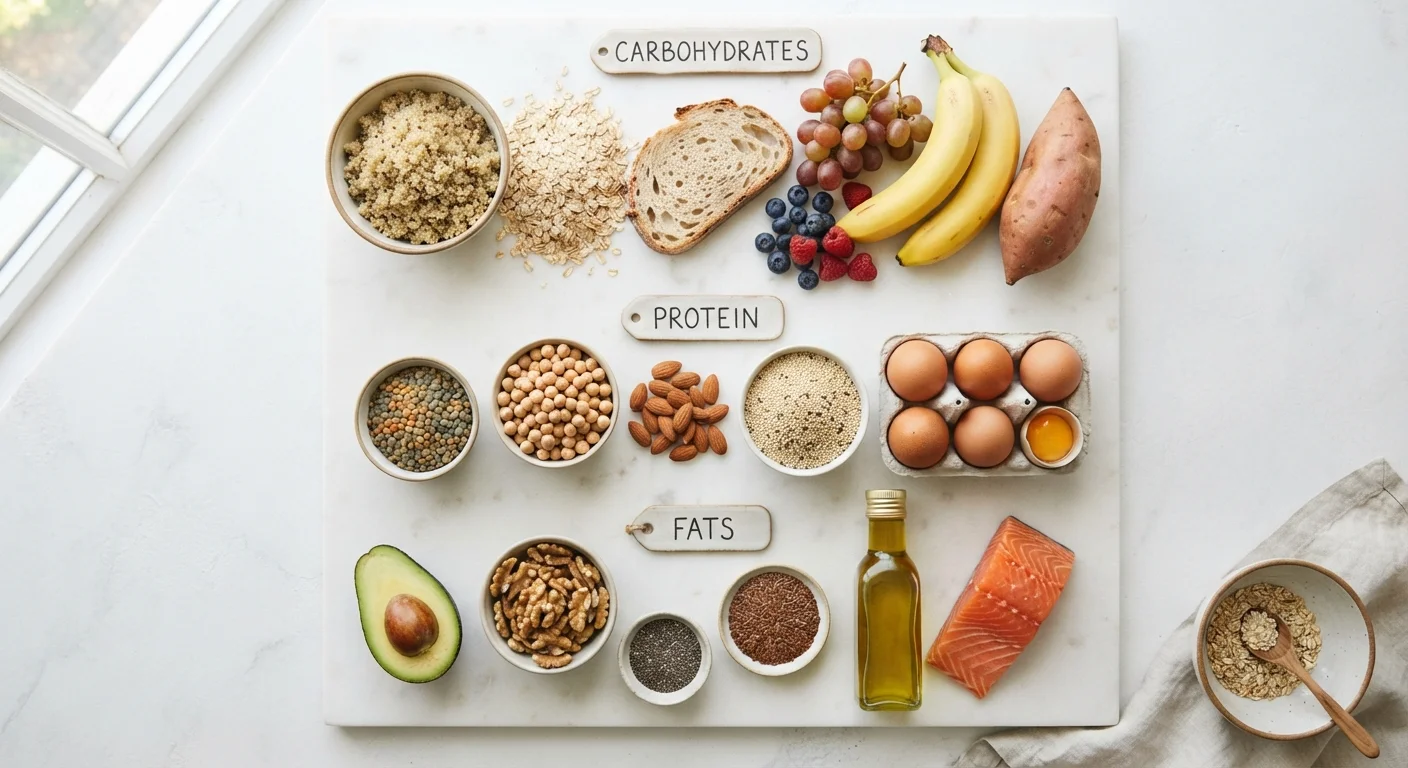
Macronutrients are the three main categories of nutrients your body needs in relatively large amounts to function: carbohydrates, protein, and fat. Each one provides energy (measured in calories) and carries out specific biological jobs — from fuelling your brain to rebuilding muscle tissue. Unlike vitamins and minerals, which are needed in smaller quantities, macronutrients form the structural foundation of your diet.
Carbohydrates and protein each provide 4 kilocalories per gram; fat provides 9 kilocalories per gram. Alcohol, though not a macronutrient, contributes 7 kilocalories per gram.
Carbohydrates: Your Body's First Choice for Fuel
Carbohydrates often get a bad reputation in diet culture, but they serve a critical biological role: they are the body's preferred and fastest source of energy. When you eat carbohydrates, your digestive system breaks them down into glucose, which cells use to power everything from muscle contractions to cognitive function.
There are two broad types worth understanding. Simple carbohydrates — found in fruit, milk, and added sugars — are digested quickly and raise blood glucose rapidly. Complex carbohydrates — found in whole grains, legumes, and starchy vegetables — are digested more slowly, providing steadier energy and greater satiety.
The brain is particularly dependent on glucose. While the body can adapt to use alternative fuels during prolonged restriction, carbohydrates remain the most efficient neurological energy source under normal conditions. Choosing carbohydrates that come packaged with fibre, vitamins, and minerals — whole grains, vegetables, and legumes — supports both energy levels and broader nutritional needs. See our guide to dietary fibre for a deeper look at why the fibre in carbohydrate-rich foods matters so much.
Choose Carbs With More to Offer
When selecting carbohydrate-rich foods, look for options that also deliver fibre, vitamins, and minerals — whole grains, legumes, fruits, and vegetables. These foods provide steady energy and additional nutritional benefits compared with highly refined alternatives. The goal isn't to avoid carbohydrates but to make them work harder for your health.
Protein: The Building Block Your Body Can't Skip
Protein does far more than build muscle — though that is one of its most well-known functions. Every cell in the body contains protein, and the body uses amino acids (protein's building blocks) to repair tissue, produce enzymes and hormones, support immune function, and transport oxygen in the blood.
There are 20 amino acids in total; nine are considered essential, meaning the body cannot synthesise them and must obtain them through food. Animal-based proteins — meat, fish, eggs, and dairy — typically contain all nine essential amino acids in sufficient quantities. Many plant-based sources do too, including soy, quinoa, and buckwheat. Others, like beans or rice, are best combined over the course of a day to cover the full spectrum.
Protein also plays a meaningful role in appetite regulation. It digests relatively slowly and influences hormones that signal fullness, which is one reason higher-protein meals tend to feel more satisfying.
~0.8g
Protein per kg of body weight daily (general adult baseline)
The Recommended Dietary Allowance (RDA) established by the National Academies of Medicine suggests approximately 0.8 grams of protein per kilogram of body weight per day for sedentary adults.
45–65%
Recommended calorie share from carbohydrates
The Dietary Guidelines for Americans suggest carbohydrates account for 45–65% of total daily calorie intake for most adults.
20–35%
Recommended calorie share from dietary fat
The National Academies of Medicine's Acceptable Macronutrient Distribution Range (AMDR) places dietary fat at 20–35% of total daily calories for adults.
Fat: Essential, Not the Enemy
For decades, dietary fat was cast as a dietary villain — a narrative that nutrition research has largely moved beyond. Fat is essential for life. It insulates organs, forms the structural layer of every cell membrane, and enables the absorption of fat-soluble vitamins A, D, E, and K.
Fat also supports hormone production, including sex hormones and those that regulate inflammation. The brain itself is roughly 60% fat by dry weight, making dietary fat critical to neurological health across the lifespan.
Not all fats behave the same way in the body. Unsaturated fats — found in olive oil, avocados, fatty fish, and nuts — are generally associated with cardiovascular benefit. Saturated fats, found in red meat and full-fat dairy, are best consumed in moderation based on current dietary guidance. Trans fats, largely produced through industrial hydrogenation, are associated with increased cardiovascular risk and are now largely restricted in US food manufacturing.
For a broader look at how these and other nutrients appear on food packaging, see our article on reading a nutrition label.
Balance, Not Elimination: How to Think About Macros
Eliminating any one macronutrient entirely is rarely necessary and often counterproductive for long-term health. Each serves functions the others cannot fully replace. The goal for most people is not perfecting a ratio, but rather eating a varied, whole-food diet that naturally includes all three in reasonable proportions.
Dietary guidelines generally suggest that adults get the majority of their calories from carbohydrates, a moderate share from fat, and a meaningful portion from protein — though individual needs vary based on age, activity level, health status, and personal goals. A registered dietitian can help translate general guidance into a plan that fits your specific circumstances.
For context on how macronutrients fit within a broader nutritional framework, the plain-language reference on food groups and dietary guidelines is a useful companion. And if you're curious about how popular diet trends measure up against the science, our piece on diet myths nutrition science has moved on from offers grounded context.
“There are no superfoods, and there are no poison foods. The overall dietary pattern matters far more than any single nutrient or meal.”
— Walter Willett, Professor of Epidemiology and Nutrition, Harvard T.H. Chan School of Public Health
This article is for informational purposes only and does not constitute medical or nutritional advice. Consult a qualified healthcare provider or registered dietitian for guidance specific to your health needs.