

Key Takeaways
Dietary Fibre
Dietary fibre is a type of carbohydrate found in plant foods that the body cannot fully digest. Unlike other nutrients, it passes through the digestive system largely intact, performing important functions along the way. There are two main types — soluble and insoluble — and both matter for health.
Fibre is classified as a non-digestible polysaccharide. It resists enzymatic breakdown in the small intestine and is either fermented by gut bacteria in the colon (soluble fibre) or excreted largely unchanged (insoluble fibre).
Why Fibre Gets Overlooked
In a nutrition landscape dominated by protein counts and carbohydrate debates, fibre rarely gets the attention it deserves. It provides no usable calories, it doesn't build muscle, and it isn't marketed with the same enthusiasm as vitamins or superfoods. Yet public health researchers consistently identify low fibre intake as one of the most widespread dietary shortfalls in the United States.
Fibre is a type of carbohydrate — but one the body cannot break down for energy the way it does sugars or starches. Instead, it travels through the digestive system performing structural and functional roles that affect far more than just bowel regularity. Understanding what carbohydrates actually do in the body helps clarify why fibre, though technically a carb, behaves so differently.
~7%
US adults meeting daily fibre recommendations
Research published in the American Journal of Lifestyle Medicine found that fewer than 1 in 10 US adults meet recommended fibre intake targets.
25–38g
Recommended daily fibre intake for adults
The Dietary Guidelines for Americans recommend approximately 25g/day for women and 38g/day for men, with needs varying by age and caloric intake.
~15g
Average daily fibre intake among US adults
National dietary surveys consistently estimate average US adult fibre consumption at roughly half the recommended amount.
Soluble vs. Insoluble Fibre: What's the Difference?
Not all fibre works the same way. The two main categories — soluble and insoluble — have distinct properties and serve different functions.
Soluble Fibre
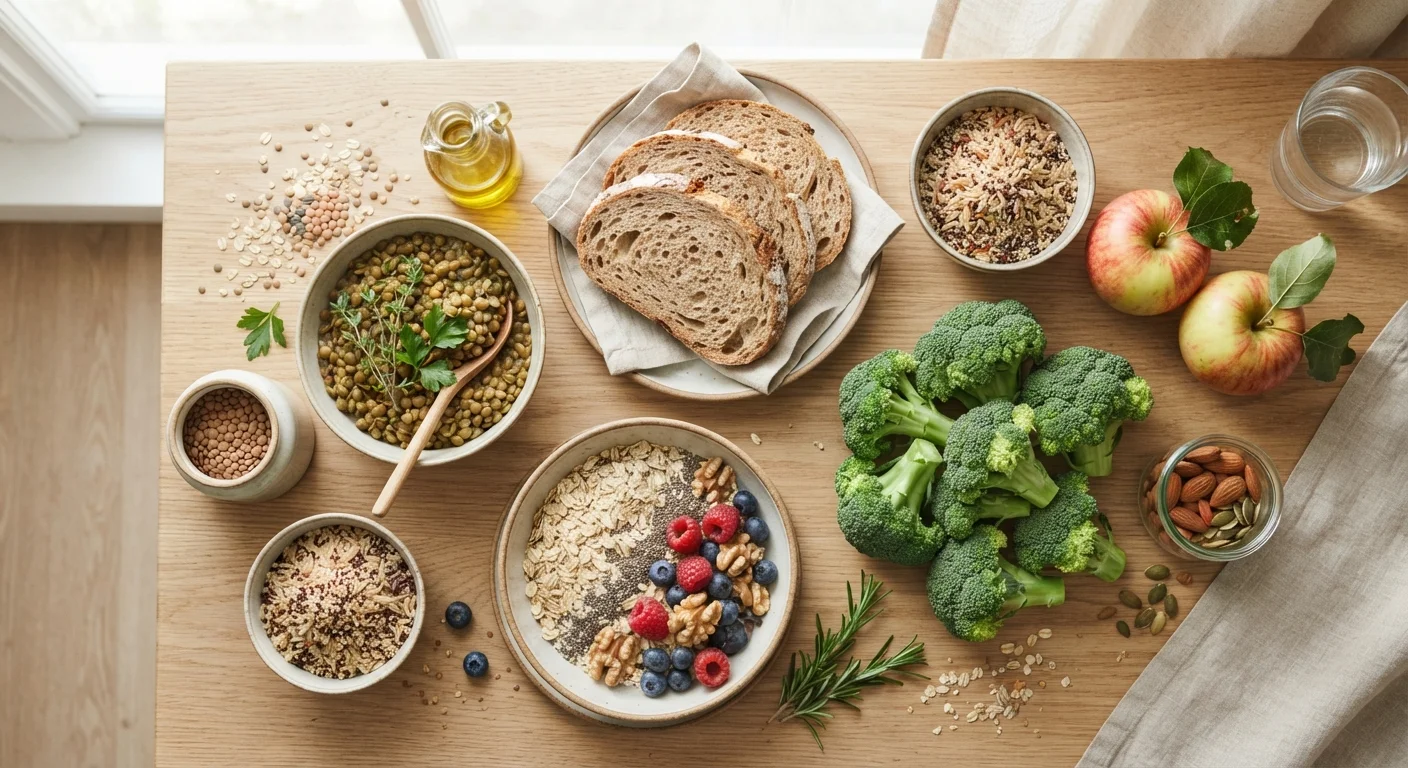
Soluble fibre dissolves in water to form a gel-like substance in the digestive tract. This slows digestion, which can help moderate blood sugar spikes after meals and is associated with supporting healthy cholesterol levels. Good sources include oats, barley, legumes, apples, and psyllium husk.
Insoluble Fibre
Insoluble fibre does not dissolve in water. It adds bulk to stool and helps material move through the intestines more efficiently, supporting regular bowel movements and reducing the risk of constipation. Whole wheat, bran, nuts, and many vegetables are rich in insoluble fibre.
Most whole plant foods contain a mix of both types, which is one reason dietary variety tends to deliver better outcomes than relying on a single fibre source or supplement.
Increase Fibre Intake Gradually
If your current diet is low in fibre, adding large amounts at once can cause temporary bloating and gas. Increase fibre-rich foods steadily over two to four weeks and drink plenty of water alongside — fibre works best when well hydrated. Hydration and digestion are closely linked.
Fibre's Role Beyond Digestion
The benefits of adequate fibre intake extend well beyond digestive comfort. Research has consistently linked higher dietary fibre consumption to a reduced risk of several chronic conditions, including type 2 diabetes, cardiovascular disease, and certain colorectal cancers. These are associations observed in population-level studies — not guarantees for any individual — but they reflect a meaningful pattern.
One increasingly studied mechanism involves the gut microbiome. Soluble fibre acts as a prebiotic — essentially food for the beneficial bacteria living in the colon. These bacteria ferment fibre into short-chain fatty acids, which play a role in maintaining the gut lining and regulating immune responses. For a closer look at what science currently understands about this relationship, see our article on gut health and diet.
“Dietary fibre is one of the most underappreciated components of a healthy diet. The evidence linking higher fibre intake to reduced risk of chronic disease is among the most consistent in nutritional science.”
— Walter Willett, Professor of Epidemiology and Nutrition, Harvard T.H. Chan School of Public Health
Practical Ways to Eat More Fibre
Closing the fibre gap doesn't require dramatic dietary overhauls. Small, consistent swaps tend to be more sustainable than sudden high-fibre eating plans, which can cause temporary bloating and discomfort if the gut isn't accustomed to the load.
- Switch refined grains for whole grains: Swapping white bread, white rice, or regular pasta for whole grain versions adds fibre without changing meal structure.
- Add legumes regularly: Lentils, chickpeas, and black beans are among the densest fibre sources available. Adding them to soups, salads, or grain bowls is straightforward.
- Eat fruit and vegetables with their skins: Much of the fibre in apples, potatoes, and pears sits in or just beneath the skin.
- Increase intake gradually: Jumping from very low to very high fibre too quickly often causes gas and cramping. Increasing intake over several weeks, paired with adequate hydration, gives the gut time to adapt.
When checking packaged foods, reading a nutrition label can help you identify which products contribute meaningfully to your daily intake versus those with very little fibre despite healthy-sounding names.
This article is for general informational and educational purposes only and is not a substitute for professional medical or dietary advice. Consult a qualified healthcare provider or registered dietitian for personalised guidance.