

Key Takeaways
Why Nutrition Labels Feel Confusing — and How to Change That
The Nutrition Facts panel has been required on most packaged foods sold in the US since the early 1990s, and it was significantly updated in 2016 to reflect current nutritional science. Despite this, many people find the label either overwhelming or easy to misread. The confusion usually comes from one of three places: not anchoring on serving size first, misreading % Daily Value, or treating any single number as the whole picture.
This guide walks through the label section by section so that reading one becomes a quick, confident habit rather than a guessing game. You can also see how these skills connect to building a balanced plate day to day.
What you will need
Packaged food item with a Nutrition Facts panel
The primary object you're learning to read — any US-sold packaged food works for practice.
Smartphone or calculator
Useful for scaling nutrient values when you eat more or less than the listed serving size.
How to Read a Nutrition Label: Step-by-Step
Follow these steps the next time you pick up a packaged food. With practice, the whole process takes under a minute.
Start with serving size — before anything else
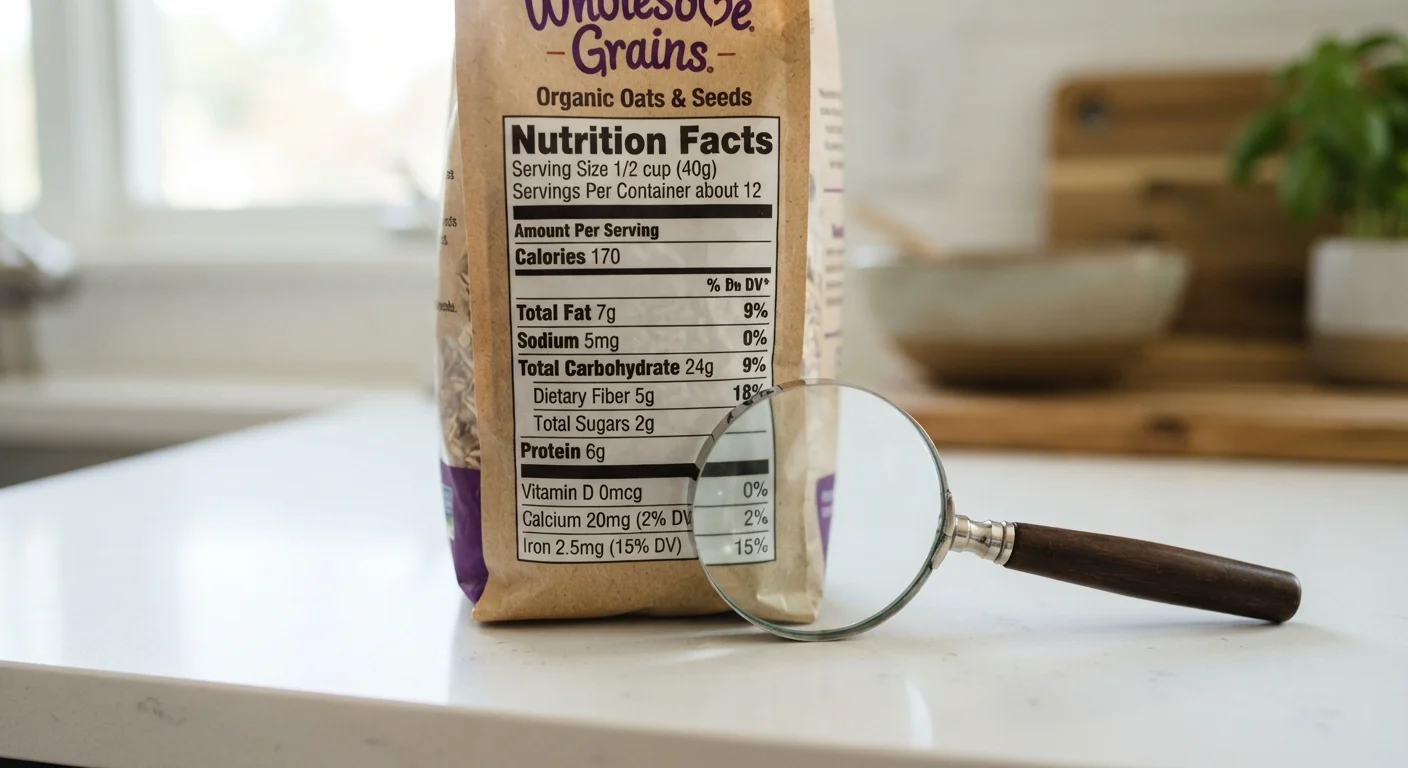
Every number on a Nutrition Facts label is calculated per serving, not per package. The serving size is printed at the very top of the panel and reflects a standardized reference amount set by the FDA — it's not necessarily what you should eat, just a consistent unit for comparison.
If a bag of chips lists a serving size as 28g (about 15 chips) but you eat twice that, every value on the label doubles. Always check how many servings are in the container too — this appears directly beneath or alongside the serving size.
Read the calorie count in context
Calories measure the total energy a serving provides. The calorie count appears prominently near the top of the label. While calories matter for overall energy balance, they don't tell you about nutritional quality — 200 calories from almonds and 200 calories from a cookie contain very different nutrient profiles.
Use the calorie figure as a reference point, not a verdict on whether a food is healthy.
Understand % Daily Value (%DV)
The % Daily Value (%DV) column on the right side of the label tells you what percentage of a nutrient's recommended daily intake one serving provides, based on a general 2,000-calorie reference diet. It's the fastest way to judge whether a nutrient is present in a meaningful amount.
- 5% DV or less is generally considered low for a nutrient.
- 20% DV or more is generally considered high.
For nutrients you want to limit — like saturated fat, sodium, and added sugars — aim for lower %DV per serving. For nutrients you want more of — like fiber, calcium, and iron — a higher %DV is beneficial. See our plain-language guide to vitamins and minerals for what each micronutrient does in the body.
Check the nutrients to limit
Three nutrients appear prominently because most people in the US consume them in excess:
- Saturated fat: Associated with cardiovascular health considerations when consumed in large amounts. Aim for a low %DV across the day.
- Sodium: High intake is linked to elevated blood pressure in some individuals. Many packaged foods are surprisingly high in sodium.
- Added sugars: This line, listed under total sugars, reflects sugars added during processing — not those naturally present in fruit or milk. The distinction matters because added sugars contribute calories without accompanying nutrients.
You don't need to avoid these entirely, but monitoring them across your daily intake is worthwhile. For a broader picture of how food processing affects nutrient content, see our article on the whole foods vs. processed foods spectrum.
Look for nutrients to prioritize
The lower section of the label lists nutrients that many people don't get enough of:
- Dietary fiber: Supports digestive health and has associations with sustained satiety and blood sugar regulation. Our deep dive on dietary fiber covers why it matters more than most people realize.
- Potassium, calcium, iron, and vitamin D are required to appear on updated US labels because of their public health significance.
A higher %DV for these nutrients in a food you eat regularly is a positive sign.
Scan the ingredient list
Ingredients are listed in descending order by weight — the first ingredient makes up the largest proportion of the product. A quick scan of the first three to five ingredients gives you a reliable sense of what the food is primarily made of.
A long ingredient list isn't automatically a red flag, but if added sugars, refined flours, or sodium appear near the top, that's worth noting. Ingredients also reveal allergens and additives that the nutrition panel doesn't explicitly call out. If you're navigating food intolerances or allergies, the ingredient list is essential reading — see our article on food intolerances vs. allergies for guidance.
Compare Labels Before You Buy
When choosing between two similar products — two brands of yogurt, for example — the %DV column makes side-by-side comparison straightforward. Focus on the nutrients most relevant to your goals, whether that's more protein, less sodium, or higher fiber. Small differences compound over time.
Putting It All Together
No label reading happens in isolation. A single food's label tells you about that product; what matters more is the pattern across everything you eat in a day. A food high in sodium can fit into a diet where other meals are low in sodium. A food with added sugar isn't automatically harmful if the rest of your intake is nutrient-dense.
Use the label as one useful data point, not a pass/fail judgment. The plain-language dietary guidelines reference is a helpful companion for understanding how individual nutrients fit into broader eating patterns.
Labels Have Limits: Context Still Matters
Nutrition labels reflect standardized serving sizes that may not match how you actually eat. They also don't capture everything about a food's quality — preparation method, how a food is combined with others, and individual health factors all influence how nutrients are used by the body. If you have a specific health condition or dietary requirement, a registered dietitian can help you interpret labels in the context of your overall needs.
This article is for general informational and educational purposes only and is not a substitute for personalized nutrition or medical advice. Consult a registered dietitian or qualified healthcare professional for guidance specific to your health needs.