

| Pedestrian right of way | Required at marked and most unmarked crosswalks (Uniform Vehicle Code; state vehicle codes vary) |
| Minimum passing distance (cyclists) | 3 feet in most states; some require more (Bicycle Alliance of the United States; state statutes) |
| States with 3-foot passing laws | Over 35 states (League of American Bicyclists) |
| Cyclist lane rights | Entitled to full use of a traffic lane in most states (Uniform Vehicle Code) |
| Bike lane blocking | Prohibited for motor vehicles in most jurisdictions (State vehicle codes) |
| Distracted driving role | A leading contributing factor in pedestrian and cyclist collisions (National Highway Traffic Safety Administration (NHTSA)) |
The Legal Standing of Pedestrians and Cyclists
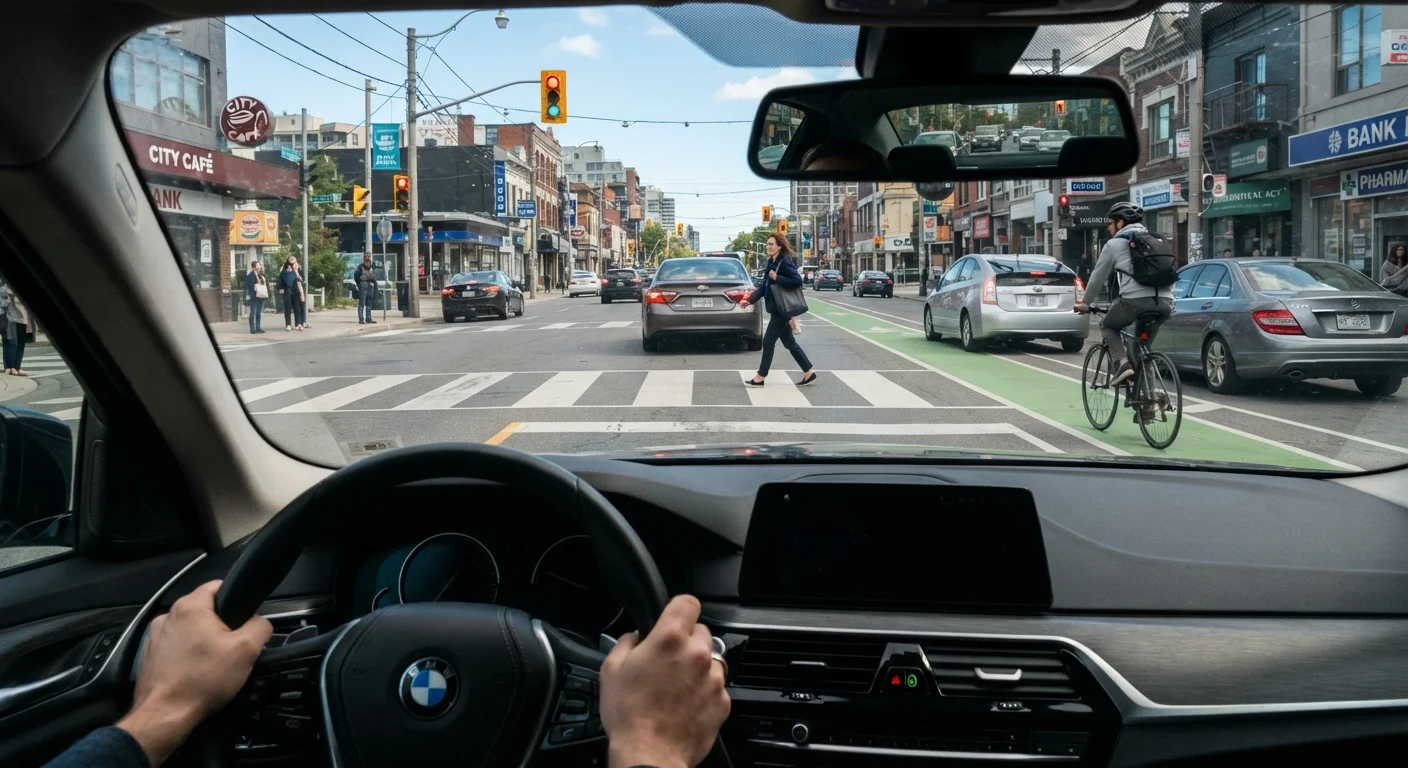
Traffic law in the United States doesn't exist solely to govern motor vehicles. Pedestrians and cyclists hold clearly defined legal rights on public roads, and drivers who fail to recognize those rights face both legal liability and the risk of causing serious injury.
| Pedestrian right of way | Required at marked and most unmarked crosswalks (Uniform Vehicle Code; state vehicle codes vary) |
| Minimum passing distance (cyclists) | 3 feet in most states; some require more (Bicycle Alliance of the United States; state statutes) |
| States with 3-foot passing laws | Over 35 states (League of American Bicyclists) |
| Cyclist lane rights | Entitled to full use of a traffic lane in most states (Uniform Vehicle Code) |
| Bike lane blocking | Prohibited for motor vehicles in most jurisdictions (State vehicle codes) |
| Distracted driving role | A leading contributing factor in pedestrian and cyclist collisions (National Highway Traffic Safety Administration (NHTSA)) |
State laws vary in their specific language, but a common framework applies nationwide: pedestrians generally have the right of way in marked and unmarked crosswalks, and cyclists are typically entitled to the same road rights and responsibilities as motor vehicles when riding in a traffic lane. For a broader look at how these rules interact at intersections and roundabouts, see Right-of-Way Rules Every US Driver Should Understand.
Understanding these protections isn't optional for drivers — it is a legal and ethical responsibility that begins the moment you take the wheel.
Key Driver Obligations Toward Pedestrians
Most states require drivers to yield to pedestrians at any marked crosswalk, and in many jurisdictions, this obligation also extends to unmarked crosswalks at intersections. "Yielding" means coming to a complete stop — not merely slowing — until the pedestrian has fully cleared the driver's lane and, in many states, the adjacent lane as well.
Marked crosswalk
A pedestrian crossing that is physically marked on the roadway with painted lines or other pavement markings. Drivers are generally required by law to yield to pedestrians in marked crosswalks.
Unmarked crosswalk
The implied crossing area at any intersection where two roads meet, even without painted markings. Many states extend pedestrian right-of-way protections to these locations as well.
Safe passing distance
The legally required lateral space a driver must maintain when overtaking a cyclist on the road. Most states mandate a minimum of three feet between the vehicle and the cyclist.
Bike lane
A portion of the roadway designated exclusively for bicycle travel, typically marked with painted lines and symbols. Motor vehicles are generally prohibited from driving or parking in bike lanes.
Right of way
The legal right of one road user to proceed before another in a given situation. Right-of-way rules govern who must yield at intersections, crosswalks, and other conflict points.
Additional duties drivers commonly carry include:
- No passing in crosswalks: Overtaking a stopped vehicle at a crosswalk is illegal in most states, because a stopped driver may be yielding to a pedestrian you cannot yet see.
- School zone heightened care: Extra caution is legally required near schools and playgrounds. Learn more from our coverage of school zone and work zone laws.
- Visibility impairment does not excuse fault: Claiming you "didn't see" a pedestrian in a crosswalk rarely absolves legal liability. Drivers are expected to anticipate pedestrian presence at intersections.
Distracted driving is a leading factor in pedestrian collisions. Reviewing hands-free phone laws in your state is a practical step every driver should take.
Sharing the Road with Cyclists
Cyclists operating in a traffic lane are generally entitled to the full use of that lane under state vehicle codes. Drivers must not crowd, cut off, or aggressively pass a cyclist as though the lane were partially theirs to claim.
7,522
Pedestrian traffic deaths in one recent year
According to the National Highway Traffic Safety Administration (NHTSA), pedestrian fatalities have remained at elevated levels in recent years.
Over 35
States with mandatory 3-foot bicycle passing laws
The League of American Bicyclists tracks state-by-state adoption of minimum safe-passing distance legislation.
~1 in 5
Pedestrian fatalities involving a turning vehicle
NHTSA data consistently shows turning maneuvers as a significant factor in pedestrian-vehicle collisions at intersections.
The most important driver obligations when passing a cyclist include:
- Safe passing distance: The majority of US states have enacted laws requiring drivers to maintain a minimum lateral clearance when passing a cyclist — commonly three feet, though some states require more.
- Reduced speed when passing: Many state laws require drivers to slow to a reasonable speed before passing, particularly on narrow roads.
- Bike lane awareness: Drivers must not drive, park, or stop in a designated bike lane except where specifically permitted (such as a right-turn approach). Blocking a bike lane forces cyclists into traffic.
Improper lane behavior often puts cyclists at risk. Lane discipline errors that seem minor for motor-vehicle traffic can be genuinely dangerous for cyclists sharing the same roadway.
Cyclists are also required to follow traffic laws — stopping at red lights, signaling turns, and riding in the correct direction. Shared legal responsibility doesn't reduce the driver's duty of care, but it does mean both parties are accountable on the road.
Practical Awareness Tips for Drivers
Legal knowledge translates into safer driving only when applied consistently. A few habits that meaningfully reduce risk include:
- Scan intersections for pedestrians before accelerating on a green light — turning vehicles are a leading source of pedestrian conflicts.
- Check your mirrors and blind spots for cyclists before changing lanes or opening a car door ("dooring" a cyclist is a recognized hazard and can carry legal consequences).
- Slow down in areas with high pedestrian and cyclist activity — residential streets, school zones, and multi-use paths adjacent to roadways.
- Maintain safe following distance behind cyclists, as they may need to swerve around road hazards without much warning.
Staying current with traffic law fundamentals matters at every experience level. New Driver Essentials offers a grounded overview of the US traffic law framework, including road sharing principles.
This article provides general educational information about US traffic laws as they commonly apply to pedestrians and cyclists. Laws vary by state and locality. Consult your state's vehicle code or a qualified legal professional for guidance specific to your jurisdiction.