

Key Takeaways
Prepare Before You Arrive
The most confident city navigators do their homework before touching down. Spend thirty minutes with a reliable mapping app — download the city's offline map so you're not dependent on data or signal. Screenshot or note your accommodation address in the local language and script; this single habit eliminates the most common arrival panic.
Research the city's transit system in advance: metro lines, bus payment methods, and whether ride-share apps operate there. Knowing the transit landscape lets you move independently without fumbling at ticket machines during rush hour. If you're tackling a destination with a rich neighborhood scene — like diving into Lisbon's distinct quarters or New Orleans beyond the French Quarter — read enough to understand which areas are lively, which are quiet after dark, and which are best walked during daylight.
Use 'Street View' Before You Arrive
Many mapping apps offer a street-level photo mode. Spend five minutes virtually walking from your arrival station to your accommodation before you travel. When you step off the train in real life, the surroundings will feel immediately familiar — reducing disorientation and boosting confidence from the first moment.
Core Practices for Urban Navigation
Effective city navigation relies on a handful of habits practiced consistently — not heroic improvisation. The following approaches are used by experienced travelers worldwide.
Orient yourself using landmarks, not just GPS arrows
Digital directions can fail at the worst moments — low battery, no signal, or a wrong turn that confuses the app. Building a mental map anchored by visible landmarks (a distinctive church, a river, a hilltop) helps you self-correct without technology.
Share your daily itinerary with a trusted contact at home
A contact who knows your rough plans can flag a missed check-in and alert someone if needed. This costs almost nothing but dramatically raises your safety net.
Carry a minimalist wallet and distribute valuables
Keeping all your cash, cards, and ID in one place creates a single point of failure. Spreading essentials reduces the impact of any one item being lost or stolen.
Learn a few key phrases in the local language
Even minimal effort in the local language signals respect and often generates genuine goodwill from residents. It also makes asking for directions far more productive.
Identify safe reference points in each new area
Knowing where a police station, hospital, or open business is located in an unfamiliar neighborhood gives you options in an unexpected situation.
Situational Awareness Without Anxiety
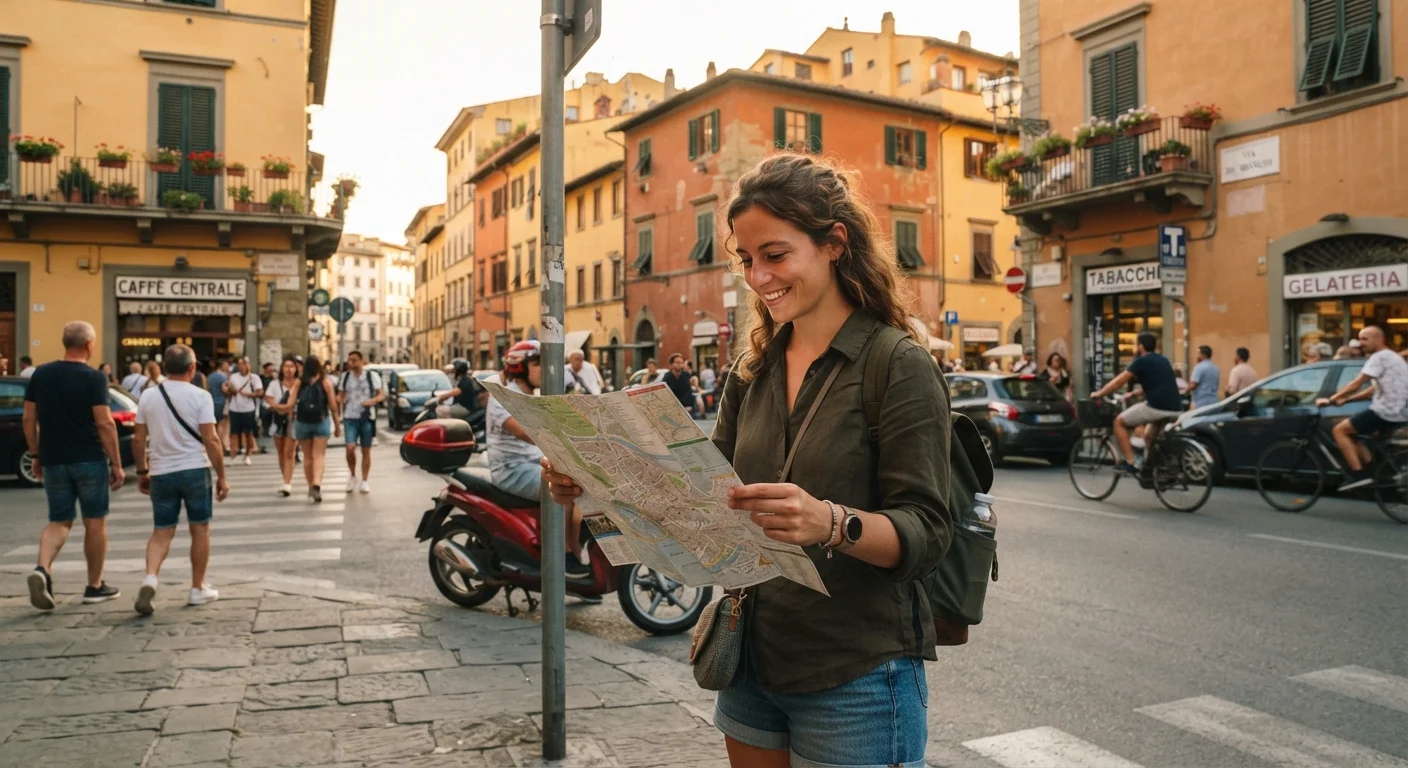
Staying aware of your surroundings doesn't mean being tense or suspicious — it means being present. Keep your phone pocketed when walking through crowded areas; looking down at a screen signals distraction and limits your peripheral vision. Walk with a purposeful pace even when you're unsure, and pause to check your map inside a café or shop rather than on the sidewalk.
72%
Travelers who felt safer using offline maps
A traveler survey by the Global Rescue organization found the majority of respondents cited reliable navigation tools as their top safety confidence factor.
1 in 3
Solo travelers who experienced petty theft abroad
Surveys by travel insurance providers consistently show opportunistic theft — pickpocketing and bag-snatching — as the most common incident reported by independent travelers in urban areas.
Trust your instincts without letting them tip into fear. If a block or situation feels genuinely uncomfortable, simply walk toward a busier street or step into a business. For new solo travelers especially, this kind of calibrated awareness is central to a confident experience — our overview of solo travel for first-timers covers additional safety framing.
Verify Local Safety Conditions Officially
Neighborhood safety conditions change over time and vary widely by city. Always check your government's official travel advisory website (such as travel.state.gov for U.S. citizens) before and during your trip for the most current guidance. Do not rely solely on general travel articles — including this one — for real-time security information.
Quick Wins to Start Today
You don't need to overhaul your travel style to move through cities more confidently. A few small changes before and during your trip make a measurable difference right away.
For a deeper dive into structuring your journey around these habits, see the anatomy of a well-planned trip and building an itinerary that actually works.
“The traveler who is lost is the one who never looked up from the map long enough to notice where they actually were.”
— Pico Iyer, Travel writer and essayist