

Key Takeaways
Why the French Quarter Is Just the Beginning
Ask most first-time visitors what they know about New Orleans, and "French Quarter" and "Bourbon Street" come up immediately. And yes — the Quarter's wrought-iron balconies, beignets, and brass bands are genuinely thrilling. But settle into this city for more than a day and you'll sense something pulling you toward quieter blocks, stranger murals, and the smell of a neighbor's red beans and rice drifting through a screen door.
New Orleans is a city of distinct neighborhoods, each shaped by a particular history, community, and rhythm. The good news: most of them are close together and remarkably walkable. If you want a deeper read on moving through unfamiliar city terrain with confidence, see our guide to navigating unfamiliar cities safely. Now, let's go district by district.
Tremé: The Oldest African American Neighborhood in the U.S.
Just one block from the French Quarter but worlds apart in feel, Tremé (pronounced treh-MAY) is widely regarded as the birthplace of jazz and a cornerstone of African American cultural life in America. Its streets have produced legendary musicians for over two centuries, and that legacy is still very much alive.
The neighborhood anchors around Armstrong Park and the Backstreet Cultural Museum, which documents Mardi Gras Indian traditions and second-line parade culture with moving authenticity. On Sunday afternoons, second-line parades — community brass band processions led by social aid and pleasure clubs — still wind through these streets. Joining the crowd, even briefly, is one of the most joyful experiences New Orleans offers.
Tremé's second-line parades are living celebrations of community, music, and resilience.
Bywater: Creative Energy and Colorful Cottages
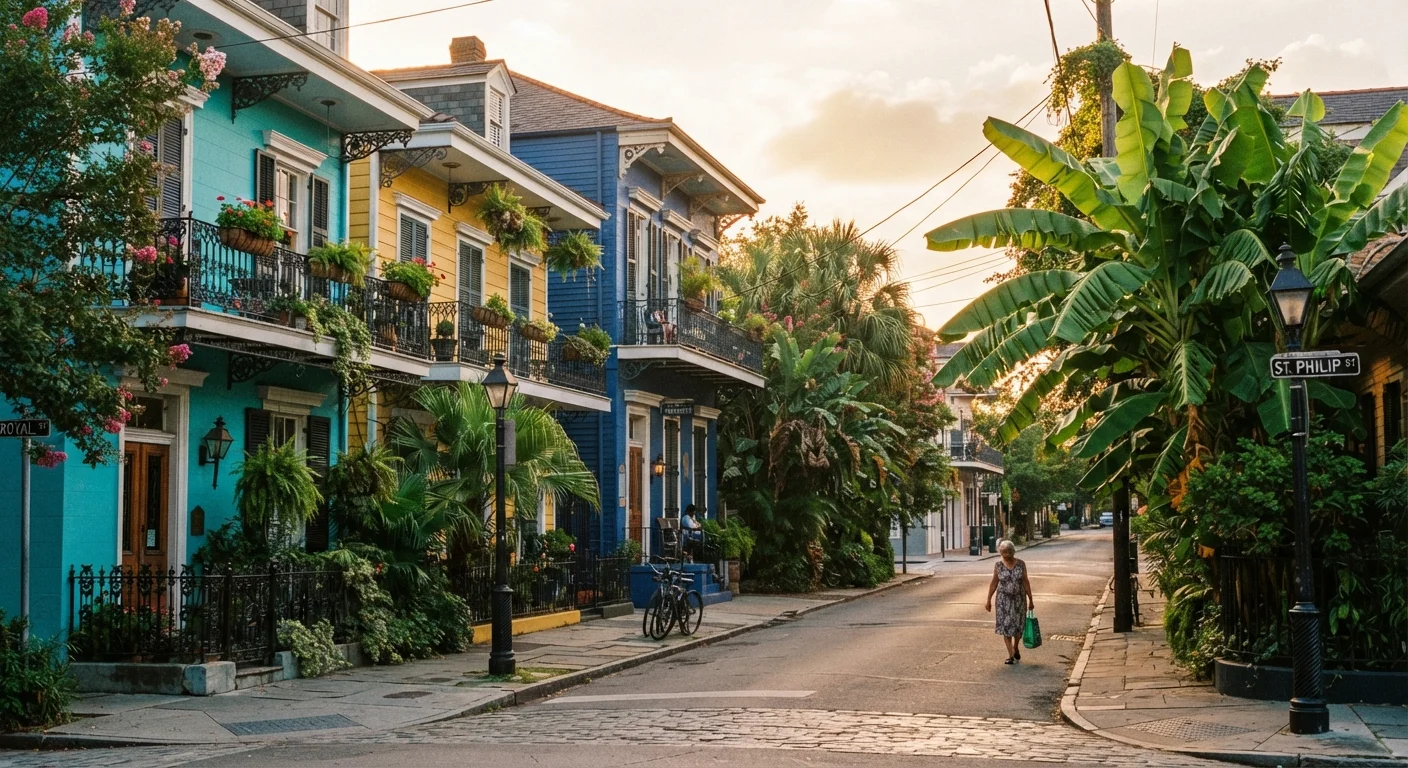
Downriver from the French Quarter, Bywater has become home to artists, musicians, and independent makers drawn by its affordable shotgun houses, community gardens, and genuinely eclectic spirit. The neighborhood's main drag along Dauphine and Royal Streets is studded with coffee shops, bookstores, and galleries that feel nothing like tourist traps.
Crescent Park, a ribbon of green space along the Mississippi River, offers stunning water views and a favorite local gathering spot at sunset. Bywater's food scene — from inventive po'boy counters to natural wine bars — reflects the neighborhood's mix of deep-rooted locals and creative newcomers. It's the kind of place where you stumble into a courtyard concert by accident and stay for an hour.
Stumble into a Bywater courtyard concert by accident and you might stay for an hour.
Magazine Street and the Garden District: Grandeur Meets Everyday Life
The Garden District is famous for its magnificent antebellum mansions — Greek Revival and Italianate homes set behind massive oaks along Prytania Street. The architecture is genuinely extraordinary, and the neighborhood is walkable from the Canal Street streetcar line, which is itself a historic experience worth savoring.
Running parallel, Magazine Street stretches for miles through several Uptown neighborhoods, lined with independent boutiques, vintage shops, neighborhood restaurants, and hardware stores. This is where locals actually shop and eat. Picking a stretch of Magazine Street, walking it slowly, and ducking into whatever catches your eye is a reliable way to spend an afternoon without any agenda at all.
Walking Magazine Street with no agenda is one of the most pleasantly local things you can do.
Mid-City: Bayou, Greenspace, and Genuine Neighborhood Soul
Mid-City sits roughly at the geographic center of the city and is anchored by City Park — one of the largest urban parks in the United States, home to ancient live oaks draped in Spanish moss, the New Orleans Museum of Art, and miles of walking and cycling paths. Bayou St. John runs through the neighborhood, and the bayou's banks are a popular local hangout for picnics and kayaking.
The main commercial corridor along Carrollton and Canal offers some of the city's most beloved neighborhood restaurants — places with no national profile but long lines of devoted regulars. Mid-City also sustained significant flooding during Hurricane Katrina, and the community's resilience and recovery are woven into its present-day fabric in ways worth understanding before you visit.
City Park's ancient live oaks create one of the most atmospheric green spaces in any American city.
Marigny: Where the Music Doesn't Stop
Directly downriver from the French Quarter, the Faubourg Marigny is the neighborhood most likely to keep you out until 3 a.m. — willingly. Frenchmen Street is the anchor: a two-block stretch of live music venues where jazz, funk, brass bands, and Americana spill out onto the sidewalk most nights of the week. Unlike Bourbon Street, the music here is performed by serious working musicians for an audience that actually listens.
The surrounding blocks of colorful Creole cottages and corner bars give Marigny the feeling of a neighborhood that happens to have a world-class music scene rather than a music scene that has swallowed a neighborhood. Grab a spot on a bar stool, order something local, and let the evening unfold on its own terms.
Frenchmen Street's live music scene is where serious musicians play for audiences who actually listen.
Plan Your Neighborhood Explorations Wisely
A few practical notes before you lace up your shoes: New Orleans neighborhoods vary significantly in walkability and character depending on the block, and conditions can change. Always check current local advisories, travel light in the heat (summers are intense and humid), and carry water. Neighborhood maps from local visitor centers are genuinely useful here — the grid isn't always as logical as it looks.
Use the Streetcar to Connect Neighborhoods
The St. Charles streetcar line runs from the CBD through the Garden District and into Uptown — it's one of the oldest continuously operating streetcar lines in the world and a genuinely practical way to move between neighborhoods. The Rampart-St. Claude line links the French Quarter edge to Tremé and Marigny. Single rides are inexpensive, and the routes double as a moving window onto the city's architecture.
For travelers who love exploring cities neighborhood by neighborhood, the format will feel familiar — much like the approach described in our piece on Lisbon's distinct quarters, where each district rewards curiosity over itinerary-ticking. New Orleans operates on the same principle: slow down, and the city reveals itself.