

Key Takeaways
Exceptional transit connectivity across the city
Japan's urban rail systems are among the most reliable in the world, making it easy to visit multiple neighborhoods or attractions in a single day without a car.
Incredible density of food, culture, and entertainment
A single city block in Osaka or Tokyo can contain experiences that would take days to replicate elsewhere — street food, design shops, shrines, and live music all within walking distance.
Strong multilingual infrastructure for visitors
English signage, translation apps, and English-speaking hotel staff are far more available in cities, reducing stress for first-time visitors to Japan.
Authentic ryokan and onsen experiences
Traditional Japanese inns in rural areas offer an immersive cultural experience — multi-course kaiseki meals, yukata robes, and communal hot spring baths — that urban hotels rarely replicate.
Far fewer crowds than major tourist corridors
Rural Japan often sees a fraction of the visitor numbers that Tokyo or Kyoto attract, meaning you can experience temples, trails, and festivals at a genuinely unhurried pace.
Deeper connection to living Japanese traditions
Craft workshops, rural festivals, and agricultural communities in the countryside preserve practices that have largely disappeared from urban life, offering meaningful cultural encounters.
Urban crowds peak intensely during holiday seasons
Golden Week, cherry blossom season, and autumn foliage periods bring enormous visitor volumes to popular city sites, making spontaneous exploration significantly more challenging.
City accommodation costs can be high
Well-located hotels in central Tokyo or Osaka can command substantial nightly rates, particularly during peak travel windows, which may strain tighter travel budgets.
Rural transit is infrequent and complex to plan
Many rural towns are served by a handful of trains or buses daily, and services often end by early evening — requiring careful itinerary planning or a rental car.
Limited English language support in countryside areas
Outside major cities, English menus, signage, and staff are far less common, making offline translation tools and some advance Japanese phrase preparation genuinely useful.
Premium ryokans represent a significant expense
Many of the most celebrated rural accommodation experiences include multi-course dinners and are priced accordingly; budget options exist but are less widely available in remote areas.
Our Verdict
Neither urban nor rural Japan is the objectively better choice — they simply deliver different experiences. Cities like Tokyo and Osaka reward visitors who want cultural intensity, convenience, and variety packed into every day. Rural regions like the Kiso Valley, Tohoku, or the Noto Peninsula offer something harder to manufacture: quiet, authenticity, and a connection to a Japan that many travelers never see.
First-time visitors or those with limited time are often best served by urban Japan, while repeat visitors or travelers craving slower, deeper immersion will find rural Japan genuinely transformative.
The Case for Urban Japan
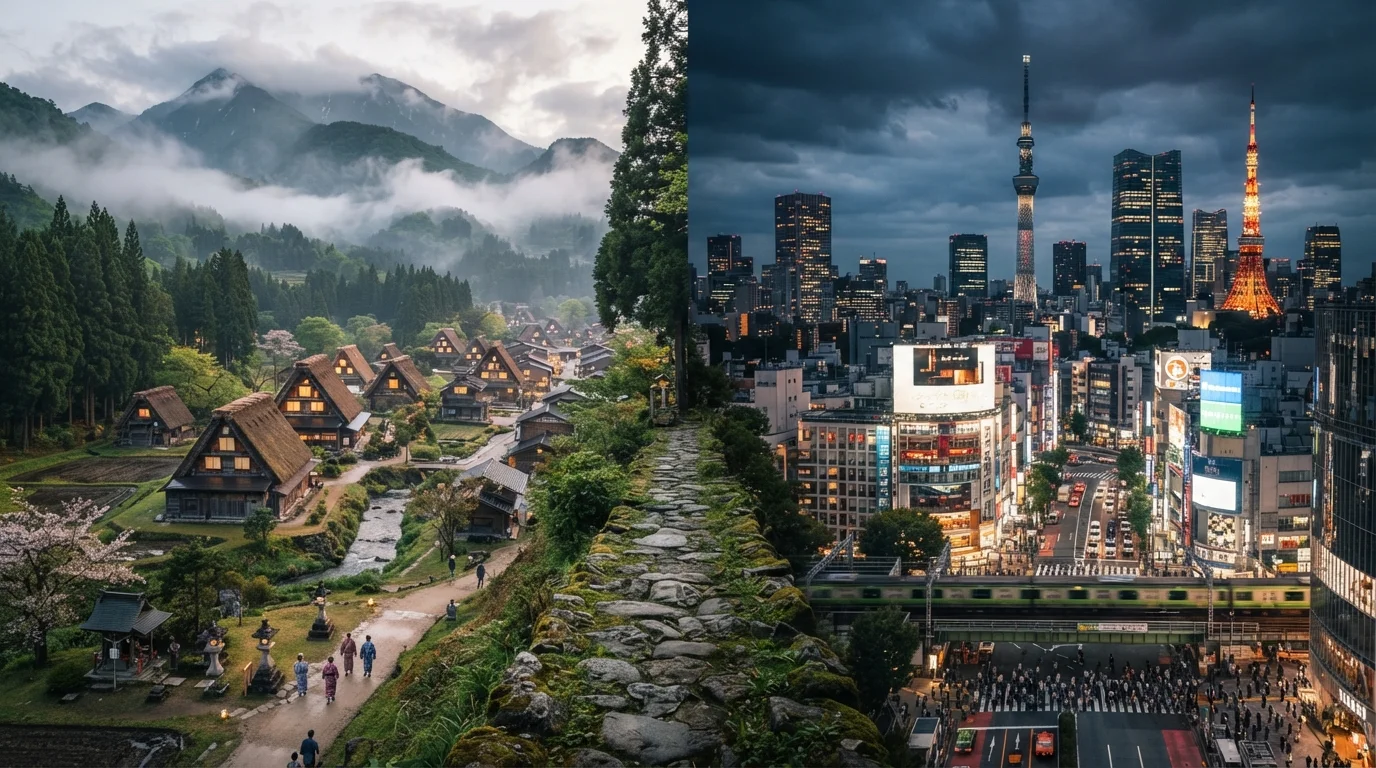
Japan's cities — Tokyo, Osaka, Kyoto, and Hiroshima among them — are travel destinations in a class of their own. The sheer density of things to do, eat, and discover makes urban Japan feel almost inexhaustible. A single neighborhood in Tokyo can contain Michelin-starred ramen shops, century-old temples, cutting-edge art galleries, and late-night jazz bars. For travelers with limited time, this concentration of experience is extraordinarily efficient.
Transit is another major advantage. Japan's urban rail networks are famously reliable, comprehensive, and easy to navigate even without Japanese language skills. IC cards like Suica or Pasmo work across buses, subways, and most train lines, reducing friction to nearly zero. That accessibility means you can cover enormous ground in a short trip without ever renting a car or decoding a rural bus schedule.
Urban Japan also tends to be more accessible for travelers with dietary restrictions, mobility considerations, or a need for multilingual support. English signage, international ATMs, and English-speaking staff are far more common in major cities.
Exceptional transit connectivity across the city
Japan's urban rail systems are among the most reliable in the world, making it easy to visit multiple neighborhoods or attractions in a single day without a car.
Incredible density of food, culture, and entertainment
A single city block in Osaka or Tokyo can contain experiences that would take days to replicate elsewhere — street food, design shops, shrines, and live music all within walking distance.
Strong multilingual infrastructure for visitors
English signage, translation apps, and English-speaking hotel staff are far more available in cities, reducing stress for first-time visitors to Japan.
Authentic ryokan and onsen experiences
Traditional Japanese inns in rural areas offer an immersive cultural experience — multi-course kaiseki meals, yukata robes, and communal hot spring baths — that urban hotels rarely replicate.
Far fewer crowds than major tourist corridors
Rural Japan often sees a fraction of the visitor numbers that Tokyo or Kyoto attract, meaning you can experience temples, trails, and festivals at a genuinely unhurried pace.
Deeper connection to living Japanese traditions
Craft workshops, rural festivals, and agricultural communities in the countryside preserve practices that have largely disappeared from urban life, offering meaningful cultural encounters.
For a deeper comparison of how Kyoto and Tokyo each express Japan's urban character, see our article on Kyoto vs. Tokyo.
The Case for Rural Japan
Step away from the Shinkansen corridor and Japan transforms. Rural regions — from the thatched-roof villages of Shirakawa-go to the cedar forests of the Kumano Kodo pilgrimage trail — offer an atmosphere that urban travel simply cannot replicate. The pace slows. Crowds thin. And the experience of staying in a traditional ryokan (Japanese inn), soaking in an outdoor onsen (hot spring), and eating a multi-course kaiseki meal prepared from local seasonal ingredients becomes the entire point of the day.
There's also the matter of cultural depth. Many of Japan's rural festivals, craft traditions, and farming communities have remained largely unchanged for generations. Visiting a sake brewery in Niigata or watching a washi papermaker work in Echizen offers a kind of living-history immersion that a city museum — however excellent — can't fully match.
Urban crowds peak intensely during holiday seasons
Golden Week, cherry blossom season, and autumn foliage periods bring enormous visitor volumes to popular city sites, making spontaneous exploration significantly more challenging.
City accommodation costs can be high
Well-located hotels in central Tokyo or Osaka can command substantial nightly rates, particularly during peak travel windows, which may strain tighter travel budgets.
Rural transit is infrequent and complex to plan
Many rural towns are served by a handful of trains or buses daily, and services often end by early evening — requiring careful itinerary planning or a rental car.
Limited English language support in countryside areas
Outside major cities, English menus, signage, and staff are far less common, making offline translation tools and some advance Japanese phrase preparation genuinely useful.
Premium ryokans represent a significant expense
Many of the most celebrated rural accommodation experiences include multi-course dinners and are priced accordingly; budget options exist but are less widely available in remote areas.
Rural travel does ask more of its visitors: more planning, more patience, and sometimes more budget for the high-end accommodations that anchor many countryside itineraries. For guidance on managing those trade-offs, our piece on budget vs. splurge travel covers how spending decisions shape the overall experience.
Combining Both in One Trip
Many travelers find that the most satisfying Japan itinerary blends urban and rural experiences. A common approach is to anchor in a city like Tokyo or Osaka for fast transit access, then take day trips or overnight stays into nearby rural areas such as Nikko, the Izu Peninsula, or the Kii Peninsula. This structure lets you enjoy city convenience while still experiencing the quieter Japan that exists beyond the Shinkansen stops. Always verify transportation schedules and ryokan booking windows in advance, as rural accommodations often have more limited availability.
Where Each Experience Falls Short
Urban Japan's greatest strengths can also be its friction points. Crowds at peak travel times — particularly during cherry blossom season and Golden Week — can make even beloved neighborhoods feel overwhelming. Accommodation in major cities commands premium prices, and the constant stimulation of a metropolis like Tokyo can genuinely exhaust travelers who weren't expecting it.
13.96M
Residents in Greater Tokyo metropolitan area
Tokyo is one of the world's most populous metropolitan areas, which shapes both its extraordinary variety and its peak-season crowd intensity.
~70%
Of Japan's land classified as forested or mountainous
Japan's predominantly rural and mountainous geography means vast swathes of the country remain lightly visited compared to its iconic urban centers.
Rural Japan's challenges are more logistical. Many rural areas are served by infrequent local trains or single-route buses that stop running by early evening. A car rental dramatically expands access but adds planning complexity and cost, and driving in Japan requires an International Driving Permit. Some ryokans also operate dinner and check-in on fixed schedules, which means the spontaneous travel style that works well in cities needs to be set aside.
Language barriers, while manageable in rural areas with preparation, are more pronounced outside urban centers. Apps like Google Translate and offline maps are genuinely useful tools to download before leaving city coverage areas.