

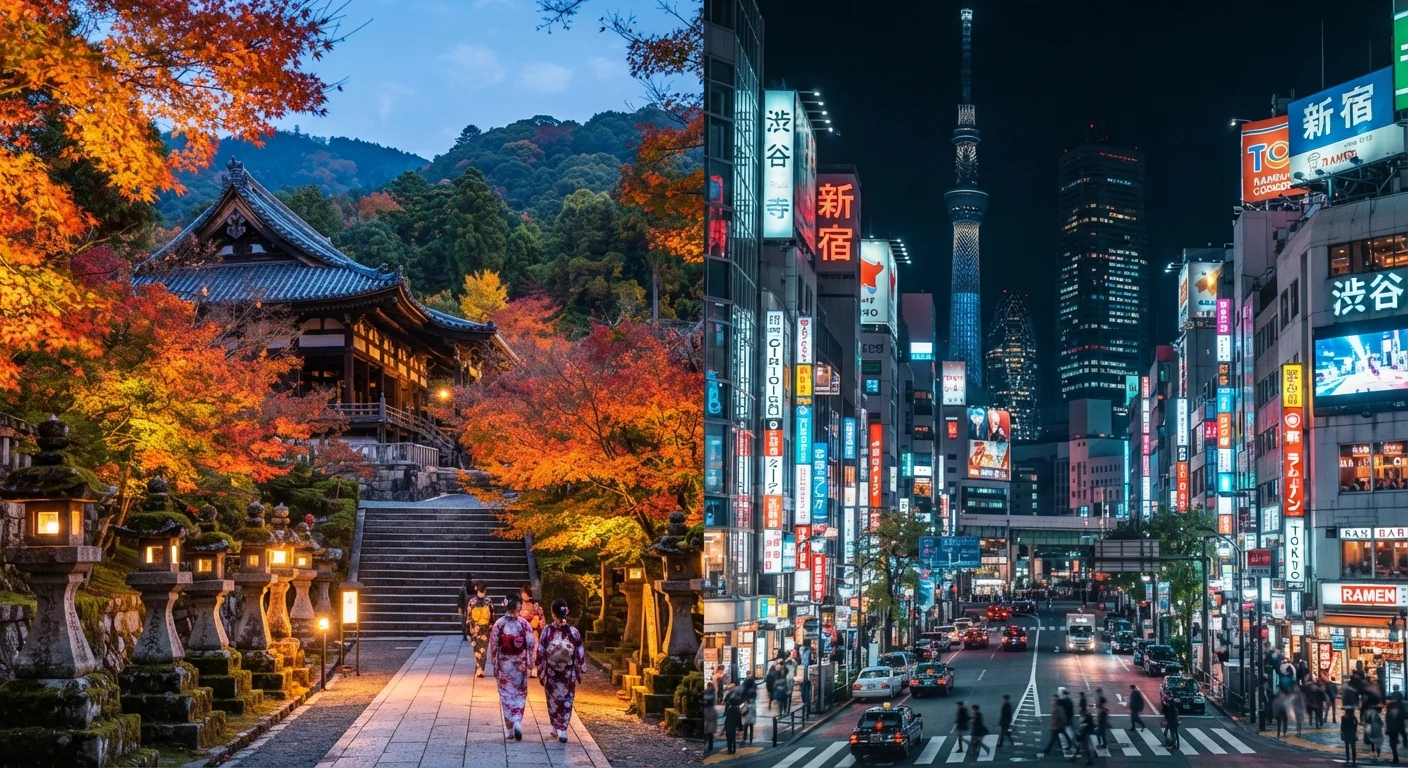
Key Takeaways
Option A
Kyoto
The ancient soul of Japan, preserved and deeply contemplative.
Best for: Travelers drawn to traditional culture, historic temples, tea ceremonies, and a slower, meditative pace.
Option B
Tokyo
The electrifying, ever-evolving pulse of modern Japan.
Best for: Travelers who thrive on world-class food, cutting-edge pop culture, neighborhoods with distinct personalities, and relentless energy.
If you want to experience traditional Japanese culture and history
Kyoto
Kyoto's temples, geisha districts, and preserved machiya townhouses offer an immersive window into centuries of Japanese heritage that is hard to match anywhere else.
If you crave world-class food, nightlife, and urban exploration
Tokyo
Tokyo's staggering density of Michelin-starred restaurants, themed cafés, and distinct neighborhood identities makes it one of the most rewarding cities in the world to simply wander.
If this is your first trip to Japan
Tokyo
Tokyo's extensive English signage, highly efficient transit, and sheer variety make it an approachable and awe-inspiring entry point for first-time visitors to Japan.
If you want a quieter, more reflective travel experience
Kyoto
Kyoto's bamboo groves, moss gardens, and early-morning temple visits create moments of genuine stillness that are increasingly rare in global travel.
If you want to experience the full spectrum of Japan in one trip
Kyoto
Using Kyoto as your cultural anchor and Tokyo as your urban base — or vice versa — gives you the most complete portrait of what Japan offers, old and new.
The Spirit of Each City
Japan is a country of remarkable contrasts, and nowhere is that contrast more vivid than between Kyoto and Tokyo. These two cities sit roughly 280 miles apart, connected by the iconic Shinkansen bullet train in about two and a half hours — yet they inhabit entirely different emotional registers.
Kyoto was Japan's imperial capital for over a thousand years, and that legacy saturates every cobblestone lane and moss-covered gate. Wandering through the Higashiyama district at dawn or watching maiko (apprentice geisha) glide through Gion feels like stepping through time. The city moves deliberately, as if it understands its own cultural weight.
Tokyo, by contrast, is relentless in the best possible way. As one of the largest metropolitan areas on Earth, it pulses with creative energy — from the anime-soaked alleys of Akihabara to the fashion-forward boutiques of Harajuku. It is a city that constantly reinvents itself while quietly honoring deep-rooted customs like seasonal cherry blossom celebrations and neighborhood matsuri (festivals). For a broader look at how urban and rural Japan compare as travel experiences, see our guide to rural vs. urban Japan.
Landmarks, Neighborhoods, and Atmosphere
Kyoto's must-see landmarks are works of profound beauty. The thousands of vermilion torii gates at Fushimi Inari Shrine wind up a forested mountain. The Zen gardens of Ryoanji challenge you toward silence. Arashiyama's bamboo grove — best experienced early on a weekday morning — offers a genuinely otherworldly few minutes of green light and rustling sound.
Tokyo's highlights operate on a different scale. The panoramic views from the Tokyo Skytree, the sensory overload of Shibuya Crossing at peak hour, and the intimate back alleys of Yanaka — an old shitamachi (low city) neighborhood that survived wartime bombing — reveal just how many Tokyos exist within Tokyo.
| Criterion | Kyoto | Tokyo |
|---|---|---|
| Primary appeal | Traditional culture and heritage | Modern urban energy and variety |
| Pace | Slower, contemplative | Fast-paced, dynamic |
| Iconic landmarks | Temples, shrines, bamboo groves | Skyscrapers, crossing, distinct neighborhoods |
| Food identity | Refined kaiseki, tofu, matcha | Global variety, ramen, sushi, street food |
| Getting around | Buses, walking, bicycle | Extensive subway network |
| Best season to visit | Spring and autumn for foliage | Year-round; spring for cherry blossoms |
| Crowd intensity | Busy at top sites, quieter off-hours | Consistently busy, especially weekends |
Both cities reward slow exploration over checklist sightseeing. In Kyoto, that might mean following a canal path through Fushimi or sitting with a bowl of matcha in a centuries-old tea house. In Tokyo, it might mean getting happily lost between the vintage clothing markets of Shimokitazawa and a jazz bar tucked beneath the train tracks.
Practical Considerations for Travelers
Navigating either city is genuinely manageable for international visitors. Japan's public transit is extraordinarily reliable, well-signed in English, and efficient. Kyoto's bus network is the primary way to move between major sites, though some areas are highly walkable. Tokyo's subway system is more expansive and may feel overwhelming at first, but apps and IC cards like Suica make it accessible quickly.
Visa and Entry Requirements
Entry requirements for Japan — including visa rules, vaccination documentation, and customs declarations — can change. Always verify current requirements with the official Japanese government sources and your home country's foreign affairs agency well before your travel dates. Do not rely on third-party summaries for up-to-date entry rules.
Accommodation ranges from international-style hotels to traditional ryokan guesthouses in both cities, though authentic ryokan experiences are easier to find in and around Kyoto. Costs vary widely depending on timing — cherry blossom season (late March to April) and autumn foliage season (November) bring peak crowds and prices to both cities. Traveling in shoulder seasons like June or early December often means a more spacious and atmospheric experience.
Food is exceptional in both destinations, though their strengths differ. Kyoto's cuisine — kaiseki multi-course dining, yudofu (tofu hot pot), and fresh nishiki market snacks — tends toward refined subtlety. Tokyo's food scene is overwhelming in its variety, encompassing everything from standing ramen counters to globally acclaimed tasting menus.
1,600+
Buddhist temples in Kyoto
Kyoto's historic monuments are collectively recognized as a UNESCO World Heritage Site, comprising 17 individual properties.
37 million
People in Greater Tokyo metro area
The Greater Tokyo Area is widely cited as the world's most populous metropolitan area, according to United Nations urban agglomeration data.
2.5 hrs
Shinkansen travel time between cities
The Tokaido Shinkansen line connects Kyoto and Tokyo, making a dual-city itinerary straightforward for most travelers.