

The Three Core Types of Speed Limits
Not all speed limits work the same way. US traffic law recognizes three distinct categories, and understanding each one matters for staying both legal and safe.
Posted Speed Limits
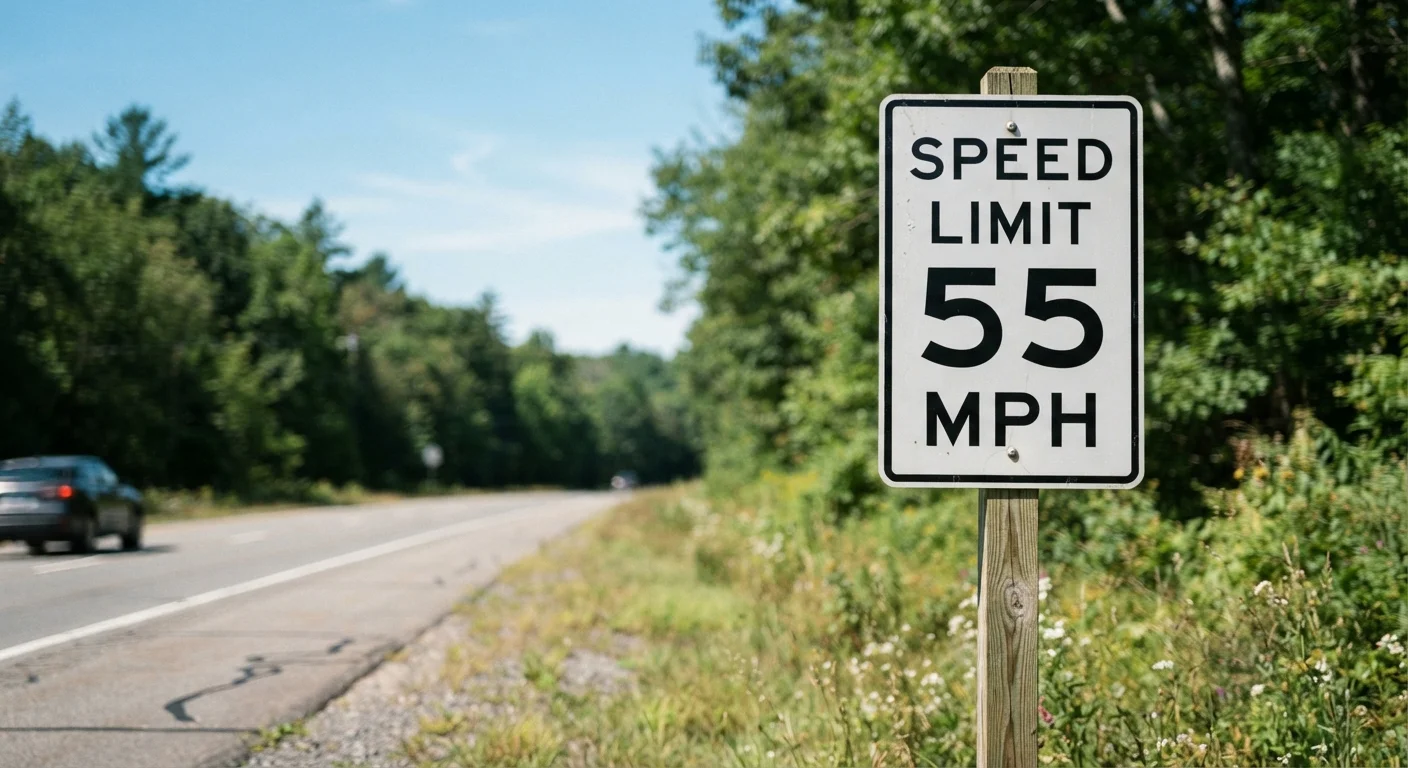
These are the numeric limits displayed on white regulatory signs — the most familiar form of speed control. A posted limit is an absolute legal maximum: driving above it is a violation regardless of road conditions, traffic volume, or driver skill. Posted limits are set by state and local authorities and are enforceable the moment you pass the sign.
Prima Facie Speed Limits
A prima facie limit (Latin for "at first appearance") defines a speed that is presumed unsafe under normal conditions — but it can be challenged in court. If you exceed a prima facie limit, you are presumed to be driving unlawfully, but you may argue that you were nonetheless driving safely given the specific circumstances. California is the most prominent state using this system. However, even a successful defense requires strong evidence; courts generally give this argument limited weight.
Statutory (Absolute) Speed Limits
Some states set statewide statutory maximums that apply even where no sign is present. These function as legal defaults for specific road types — for example, 25 mph in residential areas or 15 mph in alleys. Drivers are legally responsible for knowing these defaults, whether or not a sign is visible.
What Common Speed Limit Signs Actually Require
Different signs carry different legal obligations. Here is what each type means in practice.
Posted Speed Limit
A legally enforceable maximum speed displayed on a white regulatory sign. Exceeding it is a violation regardless of conditions.
Prima Facie Speed Limit
A presumed-unsafe speed that can theoretically be rebutted in court by showing actual driving was safe. Common in California.
Statutory Speed Limit
A statewide default speed set by law for a class of road, applicable even when no sign is posted.
Advisory Speed
A recommended (not legally required) speed shown on yellow signs near curves or ramps, based on engineering safety assessments.
Variable Speed Limit
An electronically displayed, real-time enforceable limit that changes based on traffic, weather, or road conditions.
Minimum Speed Limit
A legally enforceable lower bound on speed, typically on high-volume roads, designed to prevent hazardous slow-moving traffic.
Standard Speed Limit Signs
White rectangular signs with black numerals are regulatory signs — they carry the full force of law. Violating a posted limit can result in a fine, points on your license, and in cases of extreme excess speed, criminal charges in some states.
Advisory Speed Signs
Yellow diamond-shaped signs with a recommended speed — often seen before sharp curves or highway ramps — are not legally enforceable limits. They are engineering recommendations indicating the speed at which a feature can be safely navigated under normal conditions. Ignoring them is not itself a violation, but if a crash results, it may factor into a negligence determination.
Minimum Speed Limit Signs
Some high-speed roads post a minimum speed, displayed on a white sign with a lower numeral. Driving significantly below this threshold — particularly on interstates — can itself be a traffic violation and a hazard to other road users.
Variable Speed Limit Signs
Electronic signs that change based on real-time conditions — weather, congestion, or incidents — display speeds that are legally enforceable in the same way posted limits are. These are increasingly common in states such as Washington, Utah, and Michigan. The displayed number at the time you pass the sign is the applicable limit.
For additional context on how speed intersects with broader traffic law obligations, see our guide on right-of-way rules every US driver should understand. Speed and right-of-way interact frequently at intersections and merging situations.
Speed Limits Are a Floor — Not a Safety Guarantee
Posted limits reflect the maximum legal speed under ideal conditions. Drivers are legally expected to reduce speed for rain, fog, heavy traffic, or other hazards — even below the posted limit. Most states codify this as a 'basic speed law,' meaning you can be cited for driving unsafely even at or under the posted limit.
Drivers in school and construction zones face a distinct legal framework — school zone and work zone laws carry mandatory penalties in most states, including fines that are often doubled regardless of whether workers or children are present.