

Key Takeaways
Graduated Driver Licensing (GDL)
Graduated Driver Licensing is a system that introduces new teen drivers to full driving privileges in stages rather than all at once. Each stage comes with specific restrictions — such as limits on nighttime driving or passenger counts — that are gradually lifted as the driver gains experience. The goal is to reduce crash risk during the highest-risk learning period.
GDL systems typically follow a three-stage framework — learner's permit, restricted license, and full license — with stage requirements set individually by each state.
Why Graduated Licensing Exists
Teen drivers are statistically among the most at-risk groups on the road. According to the Centers for Disease Control and Prevention (CDC), motor vehicle crashes are a leading cause of death for teenagers in the United States. Inexperience — not recklessness alone — is a primary factor. New drivers lack the split-second hazard recognition that builds over years behind the wheel.
Graduated Driver Licensing programs address this by structuring the learning process. Rather than handing a 16-year-old a full license after a single road test, GDL systems introduce driving privileges incrementally, pairing each new freedom with enough time and supervised practice to build genuine competence.
Research consistently supports GDL effectiveness. Studies by the Insurance Institute for Highway Safety (IIHS) have found that strong GDL laws are associated with meaningful reductions in teen driver fatal crash rates. The evidence has driven widespread adoption — every U.S. state now has some version of a GDL program, though the specific rules differ considerably.
50%
Crash rate reduction linked to strong GDL laws
The Insurance Institute for Highway Safety (IIHS) has reported that comprehensive GDL programs are associated with reductions in fatal crash rates among 16-year-old drivers of around 40–50%.
16
Most common minimum age for a learner's permit
The majority of U.S. states set 15 or 16 as the minimum permit age, with 16 being the most common threshold according to IIHS state law data.
40–65 hrs
Supervised practice hours required across states
State DMV requirements for supervised driving hours during the learner's permit stage range widely, from approximately 30 hours in some states to 65 or more in others.
The Three-Stage Framework
Most GDL systems follow a three-stage structure, each designed to build on the last.
Stage 1: Learner's Permit
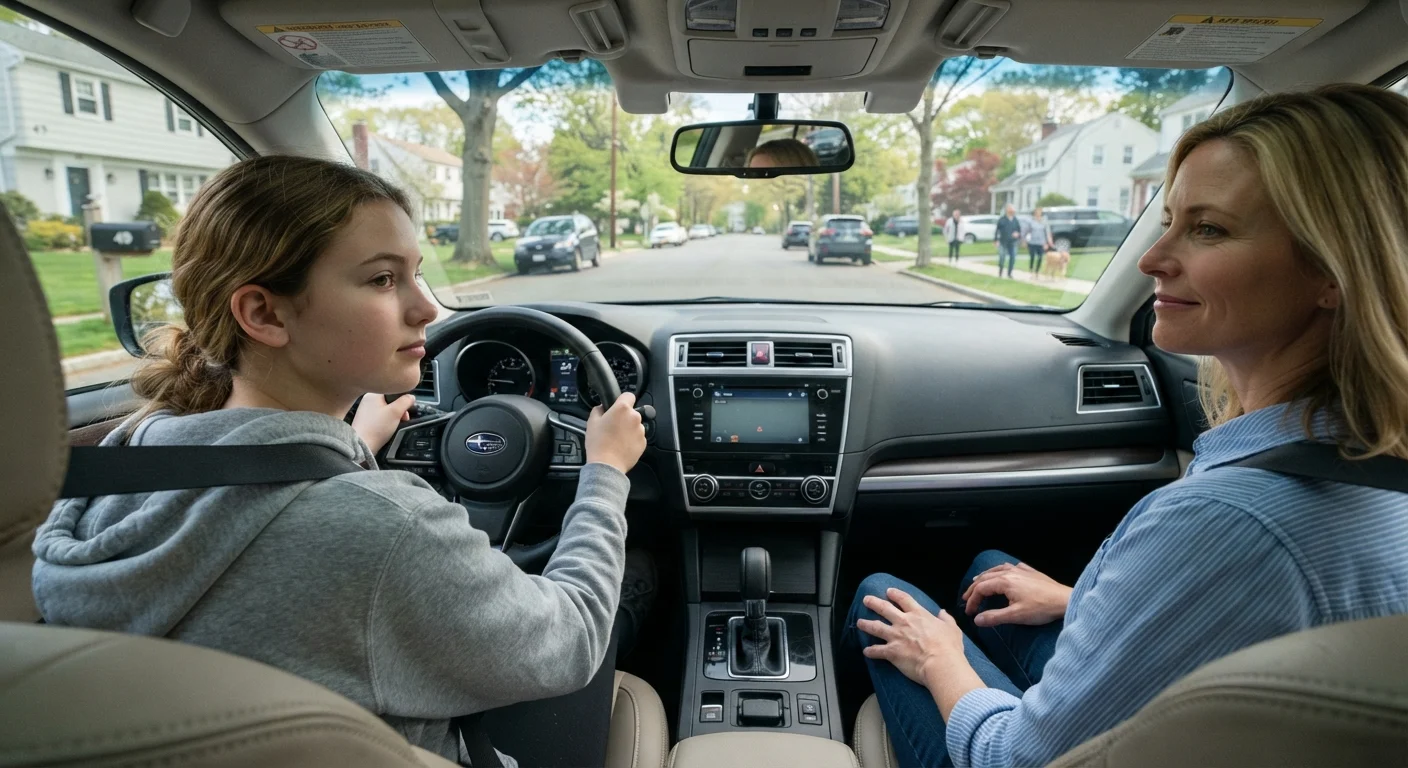
A learner's permit allows a teen to drive only when supervised by a licensed adult — typically a parent, guardian, or certified instructor. Most states require the supervising driver to be at least 21 years old and seated in the front passenger seat. During this stage, teens are expected to log a minimum number of supervised practice hours, often ranging from 40 to 65 hours depending on the state, with some hours required at night.
Stage 2: Restricted (Provisional) License
After meeting the permit requirements and passing a road skills test, teens advance to a restricted or provisional license. This allows independent driving but with significant limitations. The most common restrictions include no driving between certain nighttime hours (often 11 p.m. to 5 a.m.) and limits on the number of teen passengers allowed in the vehicle. These restrictions target the two conditions most strongly linked to teen crashes: low-light driving and peer distraction.
Stage 3: Full License
Once a teen has held the restricted license for a qualifying period — typically six months to a year without violations — they become eligible for a full, unrestricted license. In most states, this occurs at age 17 or 18. At this point, all GDL-specific restrictions are lifted, and the driver operates under the same rules as any adult motorist.
How State Laws Differ
While the three-stage framework is nearly universal, the details embedded in each stage vary significantly from state to state. Consider a few examples of how requirements differ:
- Permit age: Most states set 15 or 16 as the minimum permit age, but some allow permits at 14 for rural residents.
- Supervised hours: Required supervised practice hours range from as few as 30 hours in some states to 65 or more in others.
- Passenger limits: Many states restrict teen drivers from carrying more than one non-family passenger under 18. Others allow no teen passengers at all during the first several months of restricted driving.
- Nighttime curfews: Cutoff times range from 9 p.m. to midnight, depending on the state and the teen's age.
- Cell phone rules: Most states ban all handheld and hands-free phone use for drivers under 18, even in states where adult hands-free use is permitted. See how those rules stack up in our look at hands-free vs. handheld phone laws.
Because state rules change and nuances matter, parents and teens should verify current requirements directly through their state's Department of Motor Vehicles (DMV) or equivalent licensing agency.
GDL Rules Change — Always Verify Current Law
State GDL laws are updated periodically by legislatures and DMV rulemaking. The details in this article reflect general patterns across states, not any single state's current statute. Always check directly with your state's DMV or official government website for the most accurate and up-to-date requirements before making licensing decisions.
What Parents and Teens Should Know
Understanding GDL laws isn't just about avoiding fines — it's about managing real risk during a high-stakes learning period. Teens who violate GDL restrictions don't just face legal consequences; they may also face delays in earning their full license. Many states reset or extend the restricted license holding period after a violation. For a deeper look at how violations accumulate on a driving record, see our explainer on how points systems on driving licenses work.
Parents play a direct role in GDL compliance. During the learner's permit stage, a parent or guardian is legally required to be present. Setting consistent house rules that mirror or exceed state GDL restrictions — even after the restricted license is earned — is widely recommended by road safety researchers.
Teen drivers should also be aware that other road safety laws apply to them just as they do to adults. Speed limits in school zones and work zones carry the same weight regardless of age or license stage. And zero-tolerance alcohol laws mean that any detectable blood alcohol content can trigger a DUI charge for an underage driver — a point covered in our overview of DUI and DWI laws.
Set House Rules That Go Beyond State Law
Many road safety experts recommend that families establish driving rules stricter than what state GDL law requires — for example, limiting passengers during the first year even after restrictions are officially lifted. Consistent reinforcement at home extends the protective effect of the GDL framework beyond its legal minimums.