

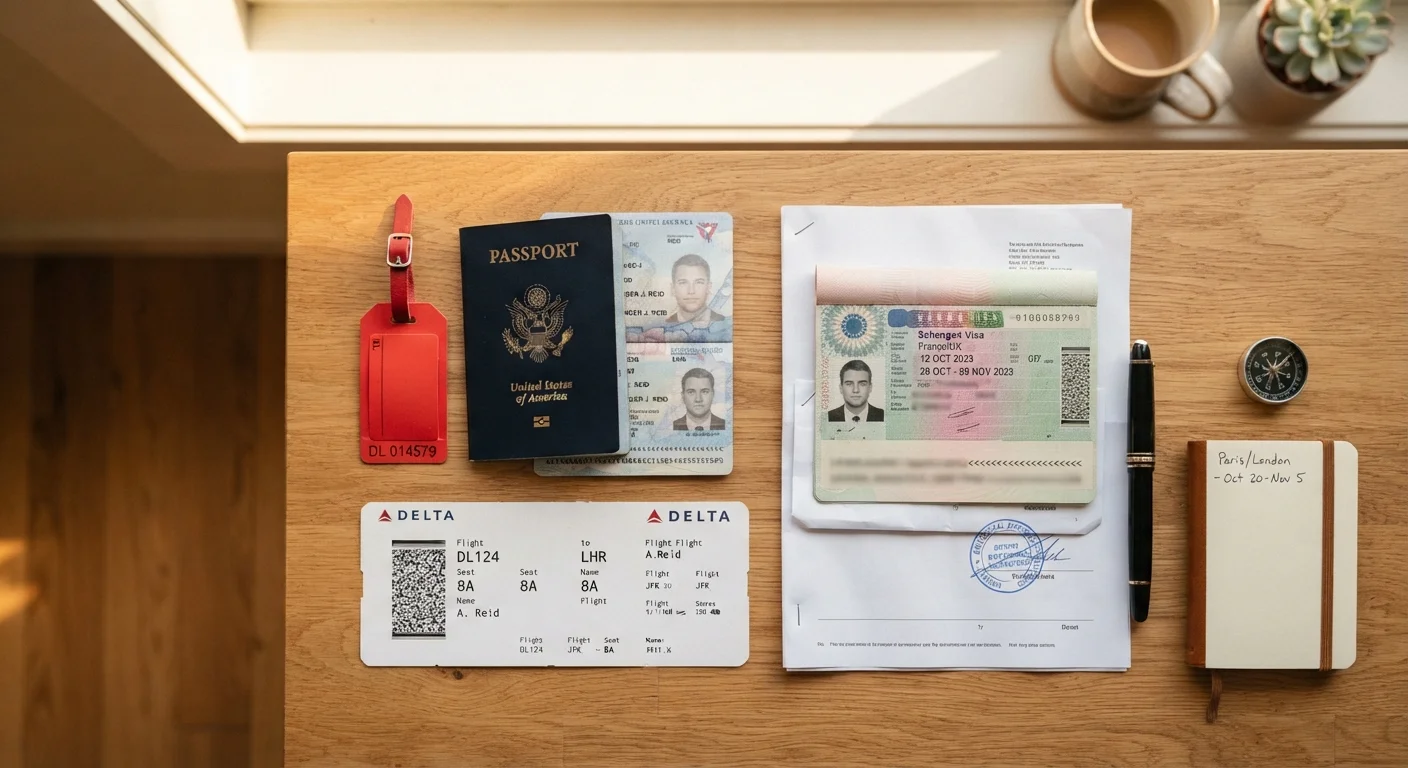
Why Entry Requirements Exist — and Why They Change
Every country controls who crosses its borders, and the rules reflect a mix of diplomatic agreements, security policies, and public health considerations. That means entry requirements aren't universal — what's needed for a US citizen visiting Portugal differs significantly from what's needed for the same traveler heading to India or Brazil.
Requirements also shift over time in response to political changes, reciprocal agreements, and global events. A visa-free arrangement that existed last year may no longer apply today. That's why this guide focuses on categories of documents and where to verify current rules — rather than listing country-specific details that can quickly become outdated.
For a broader view of pre-trip preparation, see our complete trip-planning framework.
Core Documents: What They Are and What They Do
Understanding the purpose of each document type helps you identify exactly what you need before booking flights.
Passport
A government-issued identity document that certifies citizenship and enables international travel. It must typically be valid well beyond your travel dates.
Visa
An official authorization, stamped or affixed in a passport or issued digitally, that allows entry to a foreign country for a specified purpose and duration.
E-Visa
An electronic visa linked to your passport number and issued online before travel. It eliminates the need to visit an embassy but still carries the same legal weight as a traditional visa.
Electronic Travel Authorization (ETA)
A lightweight digital entry permission required by some countries for travelers who don't need a full visa. It's applied for online and tied to your passport electronically.
Visa on Arrival
A visa issued at the port of entry rather than at an embassy beforehand. Eligibility is determined by your nationality and you typically still need supporting documents.
Arrival Card
A paper or digital form completed before or upon arrival declaring your travel purpose, in-country address, and sometimes health information. Required by many countries.
Passport Validity
Many countries require your passport to be valid for at least six months beyond your intended departure date — not just your arrival date. Check your passport's expiration before making any bookings. Renewing a passport can take several weeks, so build in lead time.
Visas: Advance vs. Arrival
A visa obtained in advance (typically through an embassy or consulate) is required for many destinations. An e-visa is processed entirely online before travel, while a visa on arrival is issued at the port of entry — though you usually still need to meet eligibility criteria in advance. Not all nationalities qualify for every option, so confirming your specific eligibility matters.
Electronic Travel Authorizations (ETAs)
Countries including Canada and the United Kingdom use ETAs — lightweight digital permissions for visa-exempt travelers. They're typically low-cost and processed quickly online, but they are mandatory and you can be denied boarding without one.
For a detailed breakdown of each document type, see our essential travel documents guide.
Additional Documents Often Required at the Border
Beyond a valid passport and visa, border officers may ask for supporting documents that prove you meet a country's entry conditions.
- Proof of onward travel: A return ticket or evidence of travel to a third country, showing you don't intend to overstay.
- Proof of sufficient funds: Bank statements or a credit card, to demonstrate you can financially support your stay.
- Accommodation confirmation: A hotel booking, rental agreement, or letter from a host.
- Travel insurance documentation: Some countries — particularly within the Schengen Area — require proof of travel medical insurance meeting minimum coverage thresholds.
- Arrival or health declaration cards: Paper or digital forms completed before landing, covering your trip purpose, address in-country, and sometimes health status.
Rules Differ for Special Traveler Categories
Dual citizens, minors traveling without both parents, travelers with prior criminal records, and those carrying certain medications may face different or additional requirements. General entry rules don't always cover these situations. If any of these apply to you, consult the destination country's embassy or consulate directly for guidance specific to your circumstances.
Before any international departure, use the checklist in Before You Board to confirm you have everything in order.
Where to Verify Requirements Before You Travel
The only authoritative sources for entry requirements are official government bodies — not travel blogs, booking platforms, or word of mouth. Here's where to look:
- Your government's travel advisory site: The US State Department's travel.state.gov publishes destination-specific entry requirements, advisories, and visa information for US citizens.
- The destination country's embassy or consulate website: The most direct source for visa categories, fees, and application procedures.
- Your airline: Airlines are responsible for ensuring passengers have valid documentation and may deny boarding to travelers who don't — many use third-party verification tools aligned with official data.
- IATA Travel Centre: Airlines and travel agents use this database, and some of its information is accessible to travelers as a secondary reference.
Verify requirements at least 8–12 weeks before departure — longer if you need to apply for a visa through an embassy. Requirements for specific groups (dual citizens, minors traveling alone, travelers with criminal records) can differ from the general rules. Always verify your individual situation with official sources.
For everything else to double-check before you leave, see Everything You Should Verify Before Departure.
This article provides general travel information only. Entry requirements change frequently. Always verify current rules with your government's official travel advisory and the destination country's embassy or consulate before you travel.