

Key Takeaways
Jet Lag
Jet lag is a temporary sleep disorder that occurs when your body's internal clock — known as the circadian rhythm — falls out of sync with the local time at your destination. It typically happens after flying across three or more time zones. Symptoms can include fatigue, difficulty sleeping, poor concentration, digestive discomfort, and general irritability.
Circadian rhythms are regulated by the suprachiasmatic nucleus (SCN) in the brain's hypothalamus, which responds primarily to light exposure. Disrupting the light-dark cycle through rapid time-zone travel forces this internal clock to re-synchronize, a process that takes time.
Why Your Body Struggles After a Long Flight
Think of your circadian rhythm as an internal clock set to your home time zone. It governs when you feel alert, when you get hungry, when your body temperature dips, and when you grow sleepy. Cross several time zones in a matter of hours, and that clock is suddenly running hours ahead or behind the local day.
The primary signal your brain uses to keep this clock accurate is light — specifically, the presence and absence of sunlight. Cells in your eyes detect light and send signals to the brain's suprachiasmatic nucleus, which then coordinates the release of hormones like melatonin (which promotes sleep) and cortisol (which promotes wakefulness). When you land in a new time zone, these hormonal cycles are still calibrated to home, creating the disorienting mix of fatigue and wakefulness that defines jet lag.
Eastward flights — say, New York to Paris — force your clock to advance, making it harder to fall asleep at the local bedtime. Westward flights — Los Angeles to Tokyo — delay your clock, which most people tolerate slightly better. Neither direction is symptom-free on trips spanning five or more time zones.
Jet Lag vs. Travel Fatigue
It's worth distinguishing jet lag from general travel fatigue. Travel fatigue — exhaustion from long journeys, uncomfortable seats, and disrupted routines — can occur even on short domestic trips. Jet lag specifically refers to the circadian misalignment caused by crossing multiple time zones. Both can overlap and compound each other on long-haul international trips.
Evidence-Based Strategies That Can Actually Help
The research on jet lag management has grown meaningfully over recent decades, and a few strategies stand out for having genuine support.
Strategic Light Exposure
Light is the most powerful circadian cue available to travelers. Seeking morning sunlight at your destination encourages your clock to advance (helpful after eastward travel), while evening light delays it (helpful after westward travel). Apps and online calculators based on circadian research can suggest specific windows for light-seeking and light-avoidance based on your route — these can be a useful planning tool.
Melatonin Timing
A substantial body of research, including systematic reviews, supports the judicious use of melatonin for jet lag. The key word is timing: taking melatonin at your destination's local bedtime — rather than whenever you happen to feel tired — appears to provide the most benefit. Dosage and suitability vary by individual, so consult a healthcare professional before adding any supplement to your routine.
Adjusting Sleep Patterns Before Departure
Gradually shifting your sleep and wake times by 30 to 60 minutes per day in the days before a long trip can give your body a head start on adapting. Even two or three days of gradual shifting can reduce the shock of a large time-zone difference. For deeper trip planning, building a realistic travel itinerary that includes adequate rest time on arrival days is worth considering.
Start Adjusting Before You Board
Shifting your bedtime and wake time by 30–60 minutes per day in the two or three days before departure gives your circadian rhythm a running start. It's a low-effort strategy that can meaningfully reduce how disoriented you feel on arrival — especially for eastward trips spanning five or more hours of time difference.
In-Flight Habits That Set You Up for a Smoother Landing
What you do in the air matters as much as what you do on the ground. A few practical habits have solid rationale behind them.
- Hydration: Airplane cabins maintain humidity levels far below what we experience on the ground — often below 20%. Drinking water regularly helps offset this, keeping you more comfortable and supporting better sleep quality on arrival.
- Alcohol and caffeine: Both can fragment sleep and worsen dehydration, so it's worth moderating intake during long flights, especially if you want to sleep strategically.
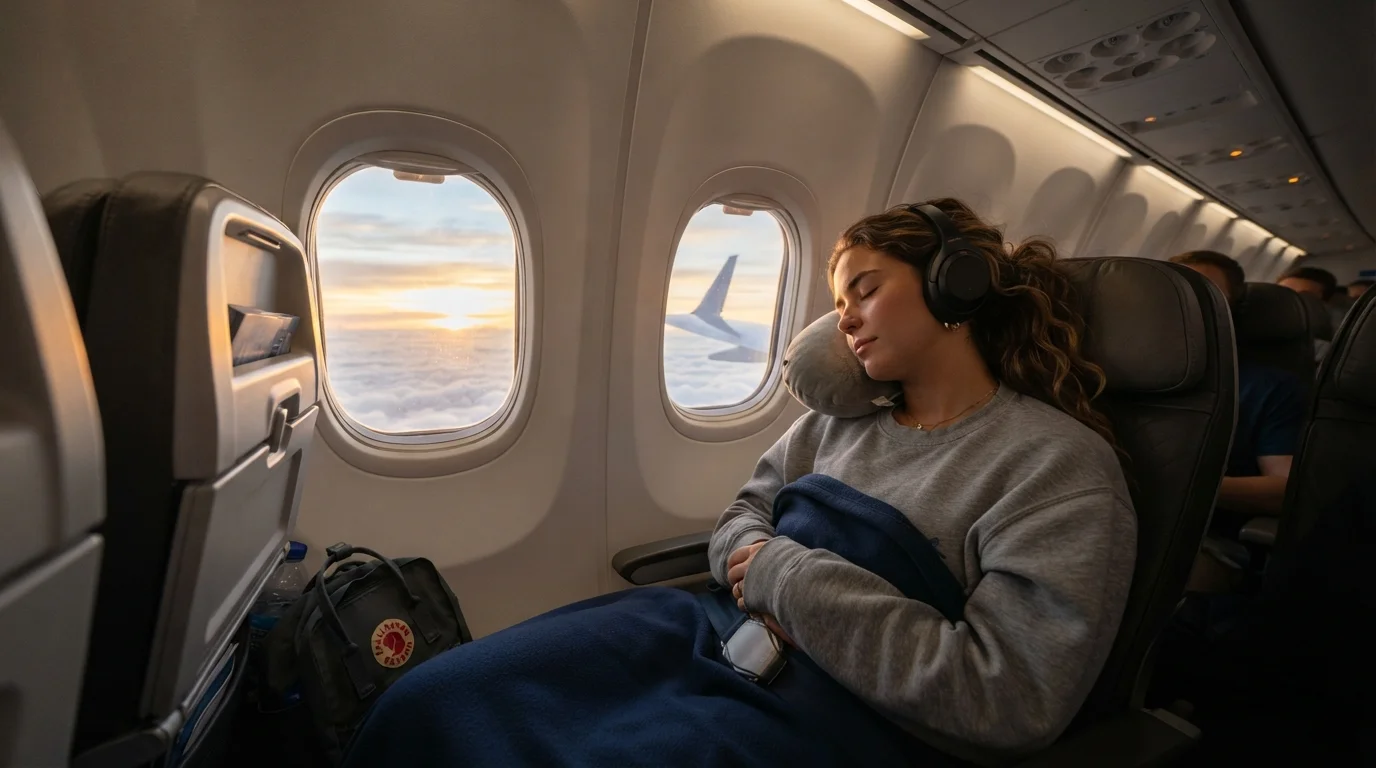
- Sleep strategy: Aim to sleep on the plane when it aligns with nighttime at your destination. If you land in the morning, staying awake on arrival and pushing through to local bedtime — however tough that feels — helps your clock reset faster.
Long layovers add another layer of complexity to this picture. Our layover survival guide covers how to stay rested and strategic during extended connections.
Good sleep habits in general form the foundation of effective recovery. Our look at sleep hygiene practices offers additional context on how environment and routine shape rest quality — relevant whether you're at home or in a hotel room abroad.
~1 day
Recovery time per time zone crossed
A commonly cited general estimate used by sleep researchers, though individual recovery varies based on age, health, and travel direction.
6+
Time zones needed for significant jet lag
Research generally suggests jet lag becomes meaningfully disruptive after crossing roughly six or more time zones, though symptoms can appear with fewer.
20%
Typical cabin humidity level
Aircraft cabin air is considerably drier than most indoor environments, contributing to dehydration that can worsen fatigue and recovery.