

Key Takeaways
Why Sleep Hygiene Actually Matters
Sleep hygiene refers to the collection of habits, behaviours, and environmental conditions that influence how easily you fall asleep, how long you stay asleep, and how restorative that sleep actually is. Unlike a single intervention, it works cumulatively — small, consistent adjustments add up over time.
The link between sleep and broader wellbeing is well established. As explored in our overview of the sleep–mental health connection, disrupted sleep and mental health challenges reinforce each other in a cycle that's difficult to break without addressing both. Sleep hygiene offers a practical entry point — one that doesn't require a prescription or a clinical setting.
The goal isn't perfection. Most people won't achieve ideal conditions every night. The aim is to shift the odds in your favour through habits that are sustainable rather than demanding.
Keep a consistent sleep and wake time — including weekends.
Your circadian rhythm is anchored by regularity. Shifting your schedule significantly on weekends (often called 'social jet lag') disrupts this anchor, making Monday mornings feel harder and degrading overall sleep quality across the week.
Reserve your bed primarily for sleep and rest.
The brain learns associations between environments and states. Working, watching television, or scrolling in bed trains your brain to treat that space as an active, alert zone — making it harder to switch off when you want to sleep.
Limit caffeine intake in the afternoon and evening.
Caffeine blocks adenosine receptors — the neurochemical that builds sleep pressure throughout the day. Its half-life means that a mid-afternoon coffee can still be active in your system at bedtime, reducing sleep depth even if it doesn't prevent you from falling asleep.
Get morning light exposure within an hour of waking.
Morning light signals the suprachiasmatic nucleus (your brain's master clock) to suppress melatonin and start the day's alertness cycle. This also sets the timer for when melatonin will rise again in the evening — helping you feel naturally sleepy at a consistent time.
Manage evening screen use, particularly bright or backlit devices.
Blue-wavelength light from screens delays melatonin release, pushing back your sleep window. Reducing screen brightness or using warm-light settings in the evening hours can reduce this effect, though limiting use altogether is more reliable.
Your Environment Sets the Stage
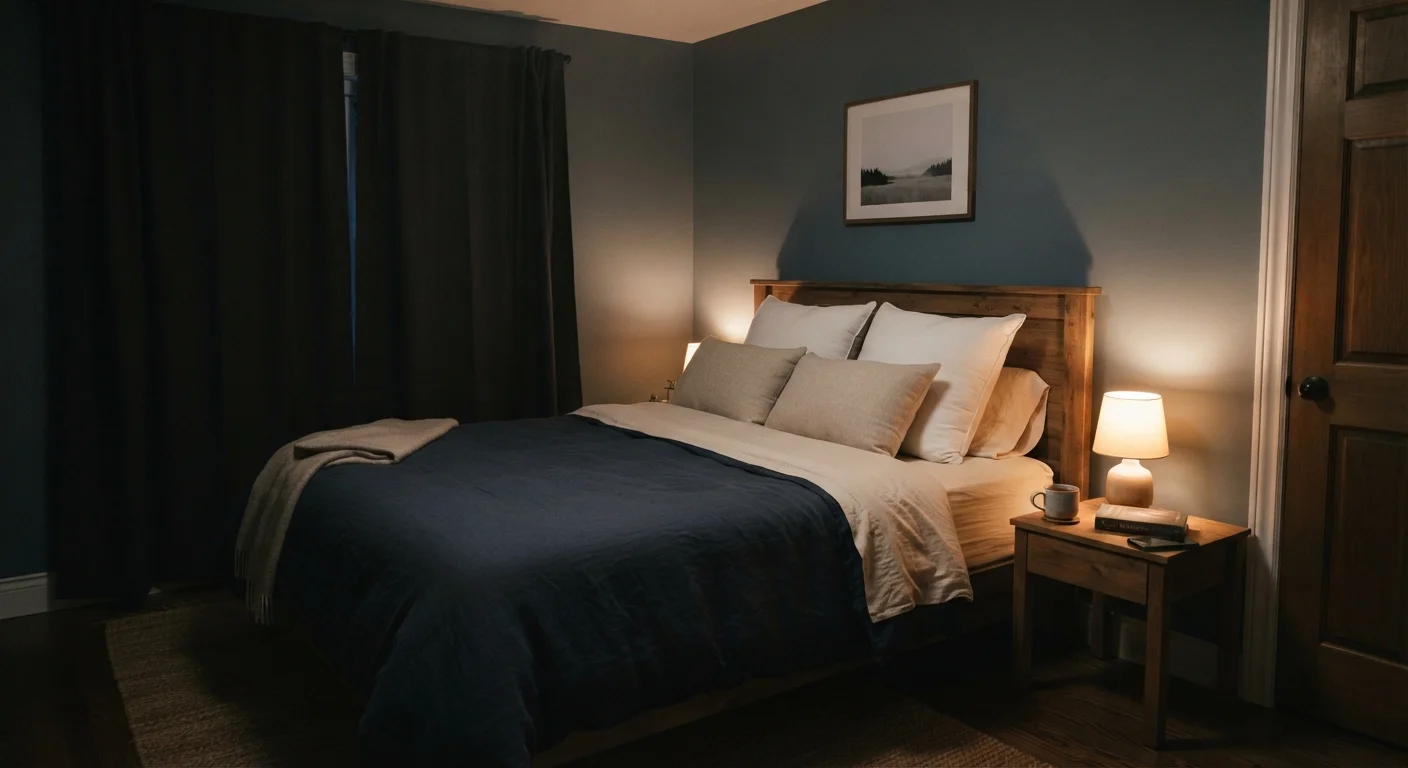
Before addressing behaviour, it's worth examining your physical sleep environment. The bedroom conditions that tend to support sleep are cooler temperatures (most sleep researchers point to a range somewhere in the mid-60s Fahrenheit as broadly conducive, though individual preference varies), low noise levels, and as much darkness as possible.
Darkness Makes a Measurable Difference
Even low-level ambient light (from streetlights, standby indicators, or under-door gaps) can interfere with melatonin release. Blackout curtains or a sleep mask are inexpensive changes worth considering if your room isn't fully dark. Addressing light before investing in more complex sleep interventions is a logical first step.
Light is particularly important. Exposure to bright or blue-spectrum light in the hours before bed suppresses melatonin production — the hormone that signals your body it's time to sleep. This is one of the reasons that scrolling through a phone or tablet in bed can delay sleep onset. Our article on digital habits that undermine mental wellbeing examines these mechanisms in broader detail.
Conversely, getting natural light exposure in the morning helps anchor your circadian rhythm (your body's internal 24-hour clock), making it easier to feel alert during the day and sleepy at the right time at night.
Building a Wind-Down Routine
The transition from wakefulness to sleep isn't a switch — it's a gradual process that your body needs cues to initiate. A consistent pre-sleep routine gives your nervous system those cues reliably.
What you include matters less than consistency. Reading, light stretching, a warm shower, or a brief journaling practice can all work — the common thread is that they're low-stimulation and happen at roughly the same time each night. Pairing this kind of wind-down with a broader daily structure is a theme also covered in our guide to building a daily wellbeing routine.
When Hygiene Alone Isn't Enough
Sleep hygiene is effective general-population guidance, but it isn't a treatment for sleep disorders such as insomnia disorder, sleep apnea, or restless leg syndrome. If you've applied these habits consistently for several weeks without meaningful improvement, or if your sleep difficulties are significantly affecting your daily functioning, speaking with a healthcare provider is the appropriate next step. Cognitive Behavioral Therapy for Insomnia (CBT-I) is a well-evidenced clinical option that goes beyond hygiene practices.
This article provides general health information and is not a substitute for professional medical advice. If you experience persistent sleep difficulties, excessive daytime sleepiness, or symptoms that concern you, consult a qualified healthcare professional.