

Key Takeaways
Why Southern Portugal Gets Misread
Say "Algarve" to most American travelers and they picture one thing: the dramatic limestone arches of Ponta da Piedade, a cold beer, and warm sand. That image isn't wrong — it's just radically incomplete. Southern Portugal is a region of surprising depth, where Moorish-era walled cities, ancient cork forests, and some of Europe's least-touched Atlantic shoreline all exist within an hour's drive of those famous coves.
The Alentejo, Portugal's vast interior plain that also kisses the coast near the Spanish border, is perhaps even more misunderstood. Covering roughly one-third of Portugal's land area, it draws a fraction of the visitor attention that Lisbon or the Algarve receives. That imbalance is the traveler's loss — and, increasingly, a correctable one. If you've already explored Lisbon's distinct neighborhoods, heading south into the Alentejo is a natural and rewarding next step.
Treating the Algarve as purely a beach destination and never leaving the coast.
Why it happens: Marketing imagery for the Algarve almost exclusively shows sea stacks and golden sand, so travelers naturally anchor their itinerary there.
Skipping the Alentejo entirely because it isn't on the coast.
Why it happens: Travelers flying into Faro or Lisbon often perceive the Alentejo as a detour rather than a destination, when in fact it borders the coast at Vicentina.
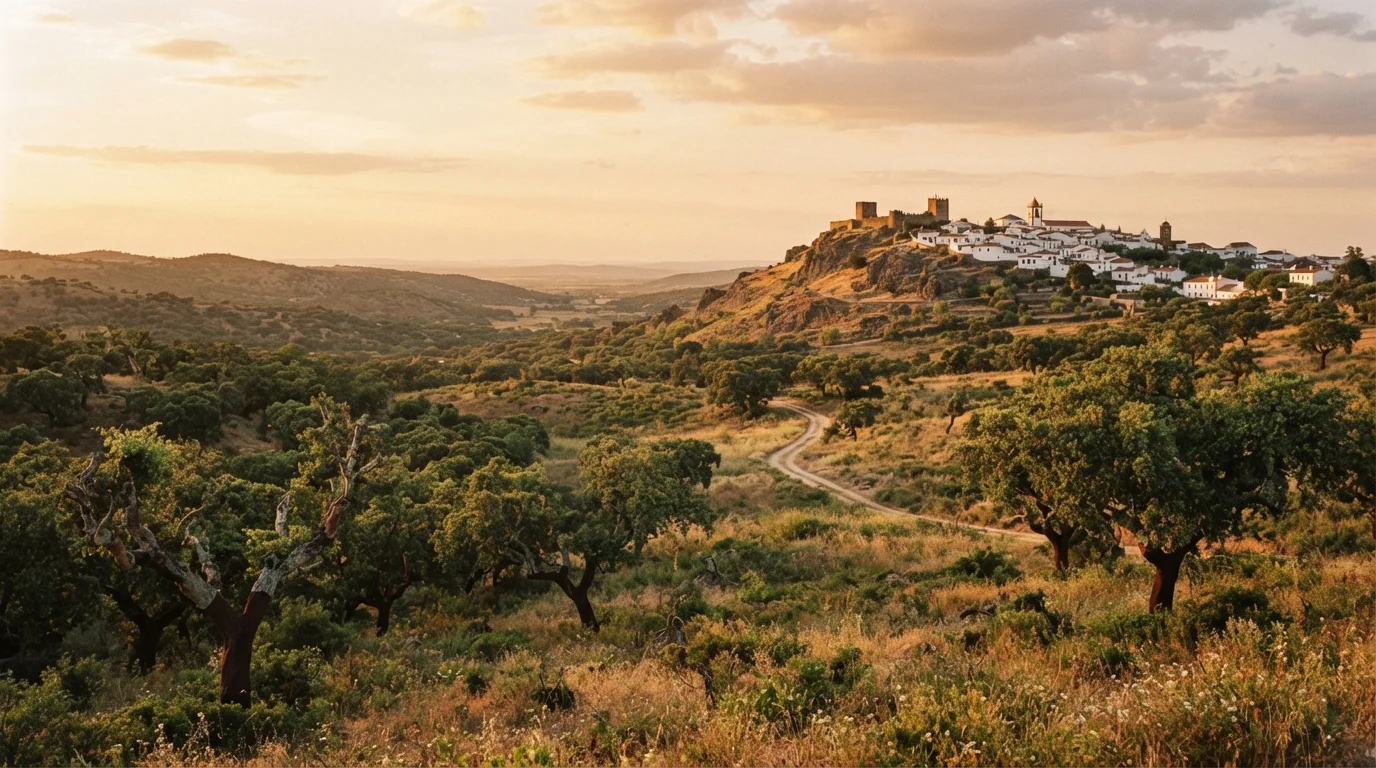
Dismissing cork oak forests as scenically uninteresting agricultural land.
Why it happens: Without context, the stripped red trunks of harvested cork oaks can look barren to a first-time visitor rather than ecologically remarkable.
Only eating at beachside restaurants and missing the Alentejo's distinct food tradition.
Why it happens: Convenience and seafood familiarity pull travelers toward coastal eateries, and inland towns can feel harder to navigate for dining.
Planning no transport beyond trains and assuming all key sites are accessible.
Why it happens: Portugal's rail network is excellent between major cities, which gives travelers a false sense of coverage across the south.
How to Build a Trip That Goes Beyond the Obvious
The good news is that correcting these common missteps doesn't require a radical overhaul of your itinerary — it mostly requires building in flexibility and resisting the pull of the beachfront default.
~75%
Global cork supply from Portugal
Portugal produces roughly three-quarters of the world's cork, much of it harvested from Alentejo montado forests, according to APCOR (the Portuguese Cork Association).
320 km
Length of Costa Vicentina shoreline
The Alentejo and Algarve's protected southwest Atlantic coast stretches approximately 320 kilometers, much of it within the Southwest Alentejo and Vicentine Coast Natural Park.
A practical structure: spend two or three nights on the Algarve coast, then dedicate a full day to the Serra de Monchique or the eastern towns of Tavira and Cacela Velha. From there, drive north into the Alentejo and base yourself in Évora or the smaller town of Monsaraz, a medieval village perched above the Alqueva reservoir. The reservoir itself — one of Europe's largest artificial lakes — supports a Dark Sky Reserve, making it one of the few places in southern Europe where the Milky Way is genuinely visible on a clear night.
For coastal variety without the crowds, the Costa Vicentina rewards those willing to trade manicured resort beaches for wide, wind-sculpted bays where the Atlantic feels genuinely raw. The contrast with the eastern Algarve is striking — and it's the kind of discovery that tends to define a trip in memory long after the beach days blur together. If you enjoy exploring underappreciated Atlantic coastlines, the same instinct applies further north — see how the Canadian Maritimes reward curious travelers willing to look past the headline destinations.
Verify Entry and Travel Requirements First
Visa rules, health entry requirements, and local regulations can change. Always check current guidance from the U.S. Department of State and Portugal's official tourism authorities before booking. This article provides general travel context, not legally binding entry information.
Summer Heat Inland Is Intense
The Alentejo interior regularly exceeds 100°F (38°C) in July and August. Hiking or driving long distances between villages without adequate water, sun protection, and air-conditioned breaks carries real health risks. If you plan inland exploration in peak summer, start before 9 a.m. and rest during midday. Spring and autumn are considerably more forgiving.
Southern Portugal rewards the curious traveler who treats each landscape — coastal, forested, or ancient — as part of a single, layered story rather than a backdrop for lounging. The mistakes above are easy to avoid once you know they exist. The harder challenge is simply believing that a hillside cork forest or a Bronze Age standing stone can be just as memorable as the perfect beach. In this region, they genuinely can be.