

Key Takeaways
Our Verdict
No single Caribbean island is the definitive choice — the right destination depends entirely on the kind of experience a traveler is seeking. French islands deliver culinary sophistication and European sensibility; Spanish islands offer history and nightlife; English islands balance accessibility with Afro-Caribbean culture; and Dutch islands bring an eclectic cosmopolitan twist. Understanding these cultural and geographic distinctions turns a generic beach trip into a genuinely memorable journey.
| Best for | Recommended |
|---|---|
| Travelers who want rich culinary and French-Creole culture | French Caribbean (Martinique, Guadeloupe, St. Martin) |
| Those seeking vibrant nightlife, history, and urban energy | Spanish Caribbean (Puerto Rico, Dominican Republic, Cuba) |
| First-time visitors wanting English-speaking ease and reggae culture | English Caribbean (Jamaica, Barbados, Trinidad) |
| Travelers who want a cosmopolitan, multicultural island mix | Dutch Caribbean (Aruba, Curaçao, St. Maarten) |
Why the Caribbean Isn't One Destination
Ask ten travelers about the Caribbean and you'll get ten different descriptions — and they're all correct. The region spans more than 700 islands, islets, and cays across the Greater and Lesser Antilles, stretching from the Bahamas in the north to Trinidad just off the South American coast. What binds them is a shared tropical climate and the sea. Everything else — language, food, music, architecture, even the pace of daily life — can differ sharply from island to island.
That diversity is the Caribbean's greatest underappreciated asset. A traveler planning their first visit is essentially choosing between mini-continents, each shaped by a distinct colonial legacy, indigenous heritage, and African diaspora tradition. Understanding those differences makes all the difference in choosing where to go. For a broader look at how destination variety shapes trip planning, see our guide to navigating distinct regional identities in a very different context.
The English-Speaking Islands: Afro-Caribbean Soul
Jamaica, Barbados, Trinidad and Tobago, St. Lucia, Antigua, and the Cayman Islands are among the islands shaped by British colonial history. English is the official language, but the real cultural language is a vibrant Creole — heard in reggae and soca rhythms, felt in the warmth of community life, and tasted in jerk seasoning, roti, and flying fish. Terrain ranges from Jamaica's Blue Mountains (rising above 7,400 feet) to Barbados's relatively flat coral landscape, making these islands suitable for both hiking enthusiasts and beach-focused visitors.
The travel feel tends to be accessible for American and Canadian visitors, with a well-established tourism infrastructure. That said, smaller islands like Grenada or Dominica offer a dramatically quieter experience with dense rainforest, waterfalls, and minimal crowds.
Smaller Islands Often Deliver More
Well-known islands like Jamaica and Barbados have robust infrastructure, but lesser-visited spots like Dominica, Carriacou (Grenada), or Tobago can offer more authentic interactions and untouched natural scenery. If you have flexibility in your itinerary, consider adding a smaller island as a secondary stop — ferry routes and small regional airlines connect many neighbors.
The French Islands: Elegance and Creole Fusion
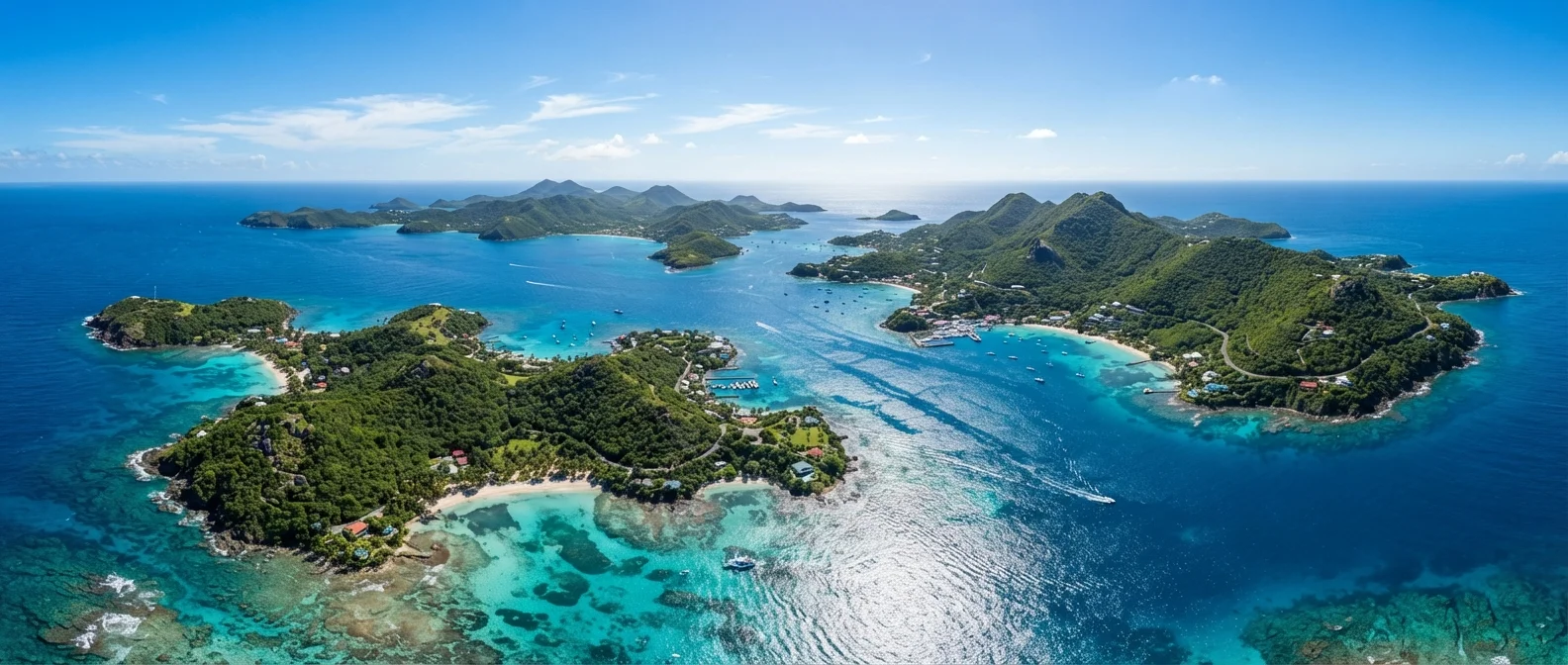
Martinique, Guadeloupe, St. Barthélemy (St. Barts), and the French side of St. Martin are overseas territories of France — meaning they're technically part of the European Union. Travelers arrive expecting a beach holiday and discover bistros serving accras de morue (salt cod fritters), roadside markets stocked with rum agricole, and hilltop villages that look lifted from Provence.
The terrain on Martinique and Guadeloupe is notably dramatic: active volcanoes, lush rainforest interiors, and black-sand beaches contrast with the calm turquoise lagoons. St. Barts skews toward an upscale, yacht-oriented experience with chic boutiques and refined dining. The French islands reward travelers who want cultural texture alongside their sun and sea.
700+
Islands, islets, and cays in the Caribbean
The Caribbean Sea contains more than 700 individual landmasses, spanning vastly different cultures, languages, and ecosystems.
4
Dominant colonial language traditions
English, French, Spanish, and Dutch colonial histories each left distinct cultural imprints still visible in architecture, cuisine, and daily life.
7,402 ft
Height of Jamaica's Blue Mountain Peak
Blue Mountain Peak is the highest point in Jamaica and among the highest in the English-speaking Caribbean, illustrating the dramatic terrain variation across islands.
The Spanish-Speaking Islands: History, Heat, and Nightlife
Puerto Rico, the Dominican Republic, and Cuba carry the longest and most layered colonial histories in the Caribbean, shaped by Spanish rule that began in the late 15th century. Puerto Rico's Old San Juan features centuries-old Spanish fortresses and a thriving arts scene — all within a US territory, meaning no passport is required for American citizens. The Dominican Republic pairs stunning beach resorts in Punta Cana with interior highlands, waterfalls, and the country's fascinating Taíno and African heritage.
Cuba remains a singular experience: vintage American cars, crumbling Baroque architecture in Havana, and a music culture built on son, jazz, and salsa. Entry requirements and travel guidelines for US citizens visiting Cuba change periodically — always verify current rules through official US government sources before planning. Across all three, the energy is exuberant, food is deeply flavorful, and nightlife is genuinely legendary.
| English Islands | French Islands | Spanish Islands | Dutch Islands | |
|---|---|---|---|---|
| Primary language | English + local Creole | French + Antillean Creole | Spanish | Dutch, Papiamentu, English |
| Typical terrain | Volcanic peaks to coral flats | Volcanic, lush rainforest | Mountains, plains, beaches | Arid, flat, reef-fringed |
| Cultural vibe | Reggae, Afro-Caribbean warmth | French-Creole elegance | Historic, vibrant, musical | Cosmopolitan, multilingual |
| Food highlights | Jerk, roti, flying fish | Accras, rum agricole, boudin | Mofongo, sancocho, ropa vieja | Keshi yena, fresh seafood |
| Crowd level | Moderate to high | Moderate | High in resort zones | Moderate |
| Best for | Culture & beach balance | Culinary & scenic exploration | History & nightlife | Diving & architecture |
The Dutch Islands: Cosmopolitan and Surprising
Aruba, Curaçao, Bonaire, St. Maarten, and a handful of smaller islands constitute the Dutch Caribbean. Curaçao's capital, Willemstad, is a UNESCO World Heritage Site — its rainbow-painted Dutch colonial buildings along the waterfront are unlike anything else in the region. Bonaire is celebrated among divers worldwide for pristine coral reefs that can be reached directly from shore. Aruba, sitting outside the hurricane belt, offers consistent sunshine and reliable winds that make it a haven for windsurfers and kite surfers.
The cultural mix here is particularly layered: Papiamentu, a Creole language blending Portuguese, Spanish, Dutch, and African languages, is spoken on Aruba, Curaçao, and Bonaire alongside Dutch and English. Whether you're traveling solo or coordinating a group itinerary, the Dutch islands reward flexible planners — for inspiration on structuring multi-destination trips, see our guide to solo versus group travel planning.