

Key Takeaways
What Is the Ring Road?
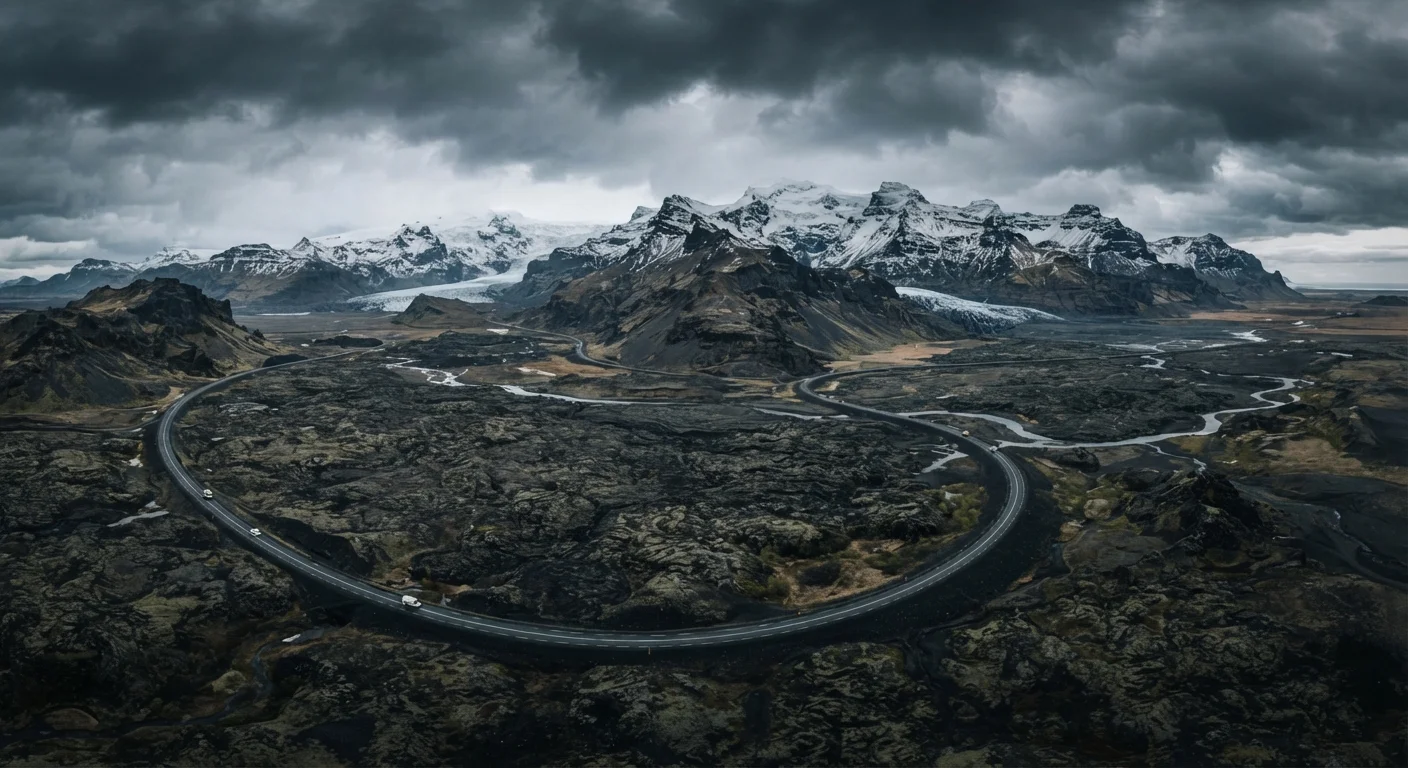
Iceland's Route 1 — universally known as the Ring Road — is a single highway that loops around the entire island, connecting coastal towns, lava fields, glaciers, and fishing villages in one continuous circuit. At approximately 1,332 kilometers (about 828 miles), it's one of the world's most celebrated road trips, not because it's the longest, but because almost every kilometer delivers a genuinely different landscape.
Unlike many scenic drives that peak early then fade, the Ring Road maintains its drama from start to finish. You'll cross black sand deserts, skirt the edges of active volcanic zones, navigate tight fjord passes, and pull over — repeatedly — for waterfalls you simply didn't expect. Iceland sits on the Mid-Atlantic Ridge, which means the geology is alive and constantly reshaping what visitors see. If you're intrigued by how tectonic forces sculpt entire countries, it's worth reading about New Zealand's equally dramatic geological story for comparison.
1,332 km
Total length of Iceland's Ring Road
Route 1 circles the entire island; the exact figure varies slightly by source and seasonal detours taken.
10–14 days
Recommended time for a full circuit
Most experienced Ring Road travelers suggest this window for a comfortable, unhurried loop with key detours.
~2 million
Tourists visiting Iceland annually
Iceland Tourism data has recorded visitor numbers in this range in recent pre-pandemic and recovery years.
The West & Snæfellsnes Peninsula
Most travelers begin the Ring Road in Reykjavík, heading north or west. The western stretch to the Snæfellsnes Peninsula is technically a detour off Route 1, but it's one many drivers refuse to skip. The peninsula terminates at Snæfellsjökull glacier — the volcanic cone Jules Verne chose as the entrance to the Earth's interior in his famous novel. On clear days, the glacier is visible from Reykjavík across the bay.
Back on Route 1 heading north, the landscape opens into wide lava plains dotted with sheep farms and tiny turf-roofed churches. The town of Borgarnes sits at the edge of a fjord and offers an excellent cultural museum dedicated to the Icelandic sagas. This western corridor tends to be quieter than the south, giving drivers a chance to settle into the rhythm of the road before the more dramatic scenery ahead.
Combine West Iceland With the Peninsula
If your schedule allows, add at least two days to explore the Snæfellsnes Peninsula as a loop before rejoining Route 1 northward. The glacier, lava fields, and small fishing villages here are among Iceland's most rewarding detours. The roads are well-maintained and the scenery is far less crowded than the south coast.
The North: Waterfalls, Whales, and Geothermal Wonders
The northern arc of the Ring Road is anchored by Akureyri, Iceland's second-largest city and a surprisingly lively hub with botanical gardens that bloom in summer despite the latitude. From here, the road arcs past Lake Mývatn, an area of such concentrated geothermal activity that it feels like another planet — steaming vents, bubbling mud pools, and lava formations called pseudocraters line the lakeside.
Just off the northern coast, Húsavík is widely regarded as one of Europe's premier whale-watching ports, where humpbacks and minkes feed in the nutrient-rich waters of Skjálfandi Bay. Further east, Dettifoss — accessible via a short detour — is Europe's most powerful waterfall by volume, a thundering curtain of glacial meltwater that sends spray visible from hundreds of meters away.
When driving the northern section near Mývatn, visit the geothermal areas early in the morning — the steam and mist create extraordinary light, and crowds are a fraction of what they are by midday.
Morning visits to geothermal sites consistently offer better photography conditions and a more immersive, less congested experience, especially during peak summer months.
Book accommodations in the East Fjords well in advance even though it's quieter — the villages are small and lodging options are genuinely limited, particularly in summer.
The East Fjords' lower tourism infrastructure means that even modest demand can fill available rooms quickly, catching unprepared travelers off guard.
The East Fjords: Iceland's Quiet Side
After the geothermal theatrics of the north, the East Fjords (Austurland) offer a striking change of pace. The road winds through a series of deep, narrow fjords where reindeer graze on hillsides and small fishing villages — some with just a few hundred residents — cling to the water's edge. Towns like Seyðisfjörður, with its colorful wooden houses and cascading waterfall backdrop, have attracted a small but vibrant arts community.
The East Fjords receive significantly fewer visitors than the south or north, which means more open roads, more wildlife sightings, and a more authentic slice of Icelandic rural life. The driving here is slower — the fjord roads are narrower and curve frequently — but that's exactly the point. Allow more time than you think you'll need.
F-Roads Are Off-Limits for Standard Rentals
Many scenic inland shortcuts and highland routes branching off the Ring Road are designated F-roads, which legally require a four-wheel-drive vehicle. Driving a standard rental car on an F-road typically voids your insurance entirely, even if the road appears passable. Check your rental agreement carefully and plan your route using road.is before setting out each day.
The South Coast: Iceland's Most Iconic Stretch
The southern Ring Road is the most photographed segment, and it earns every frame. Starting at the Jökulsárlón glacial lagoon in the southeast — where icebergs calved from the Vatnajökull ice cap drift quietly toward the sea — the road sweeps westward through almost relentless spectacle. The nearby Diamond Beach scatters translucent ice chunks across jet-black sand in an image that seems almost artificially beautiful.
Continuing west, Skaftafell offers hiking into glacier tongues and canyon waterfalls, while Reynisfjara beach near Vík presents towering basalt columns and black sand that stretches for kilometers. The waterfalls of Seljalandsfoss and Skógafoss are both directly accessible from the road and remain two of the most visited natural sites in the country. The Eyjafjallajökull volcano — which disrupted European air traffic in 2010 — looms quietly above this same corridor, a reminder that Iceland's landscape is never entirely dormant.
Sneaker Waves at Black Sand Beaches
Beaches like Reynisfjara are genuinely dangerous — sneaker waves arrive without warning and have been responsible for serious accidents involving visitors who stood too close to the water. Always observe posted warning signs and maintain a significant distance from the shoreline. Never turn your back on the ocean at black sand beaches in Iceland.
Practical Tips for Driving the Full Circuit
A comfortable full circuit of the Ring Road takes most drivers 10–14 days, though some complete it in 7 days by limiting detours. The road itself is paved for its entire length, but F-roads (mountain interior roads) that branch off are unpaved and require a 4WD vehicle — conventional rental cars are not permitted on them, and doing so voids insurance coverage.
Weather changes fast in Iceland. A sunny morning can become a whiteout within an hour in certain seasons. The official road conditions website, road.is, is an essential daily resource. Fill your tank whenever you pass a petrol station in rural areas — stretches of 100 kilometers or more without fuel are common in the east and north.
Regarding timing: the Ring Road is drivable year-round in principle, though winter driving requires significant experience with icy roads and reduced daylight. Summer (June–August) offers near 24-hour daylight and open highland detours but also peak crowds, particularly on the south coast. Spring and autumn offer a middle ground that many experienced Iceland travelers prefer.
This article provides general travel information about Iceland's Ring Road. Road conditions, entry requirements, and regulations can change. Always verify current conditions at road.is and check your country's official travel advisory and Iceland's official immigration resources before your trip.