

Key Takeaways
Start here
Why Southeast Asia Captivates First-Time Visitors
Explore destinations
A Quick Country-by-Country Snapshot
Plan smart
Climate, Seasons, and When to Go
Handle logistics
Practical Realities: Visas, Health, and Getting Around
Put it together
Building Your First Southeast Asia Itinerary
Why Southeast Asia Captivates First-Time Visitors
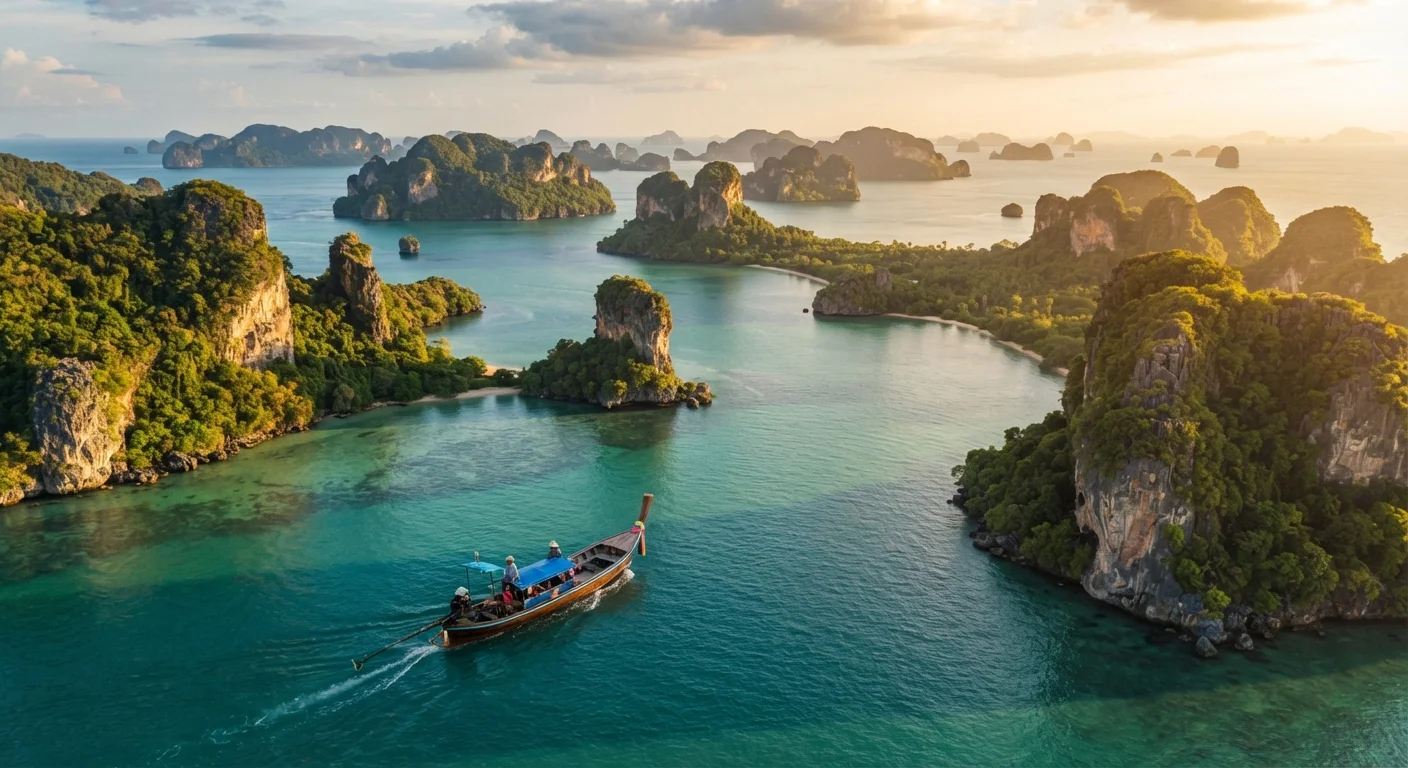
Few regions on earth pack such dizzying variety into one geographic space. Southeast Asia offers ancient temple complexes and cutting-edge megacities, emerald rice terraces and neon-lit night markets, welcoming locals and street food so good it redefines what a meal can be. For American travelers venturing abroad for the first time, this part of the world delivers culture shock in the most exhilarating sense — completely manageable, endlessly rewarding.
The region also meets travelers at nearly every budget level. Affordable guesthouses, inexpensive local transit, and exceptionally low-cost street food make multi-week trips realistic for people who couldn't sustain the same length of trip in Western Europe or Japan. That accessibility has made Southeast Asia a launchpad for a generation of independent travelers.
If you're building your first international itinerary from scratch, our travel planning primer walks through every stage of the process in plain language before you dive into destination specifics.
Start With One Country, Go Deep
First-time visitors often overestimate how much ground they can cover comfortably. Rather than chasing six countries in two weeks, pick one or two and allow yourself the luxury of lingering. You'll eat better, connect more genuinely with locals, and return home with richer memories than a country-hopping sprint would ever produce.
A Quick Country-by-Country Snapshot
Southeast Asia's eleven countries each have a distinct personality. Here's a condensed orientation:
Monsoon season
A seasonal shift in wind patterns that brings heavy, prolonged rainfall to much of Southeast Asia. In most mainland countries, the wet monsoon season runs roughly May through October.
Visa on arrival
A visa issued at the port of entry — airport or border crossing — rather than arranged in advance at an embassy. Eligibility depends on your passport and the specific country's current rules.
Budget airline
A low-cost carrier that offers shorter flights at reduced fares, often with fees for extras like checked luggage. Several regional budget airlines connect major Southeast Asian cities.
UNESCO World Heritage Site
A location recognized by the United Nations Educational, Scientific and Cultural Organization as having outstanding cultural, historical, or natural significance worth preserving globally.
Travel medicine clinic
A medical practice specializing in health preparation for international travel, including recommended vaccinations and preventive advice tailored to specific destinations and itineraries.
Ride-hailing app
A smartphone application — similar to Uber — that lets you book a car, motorcycle, or tuk-tuk from a local driver. Apps like Grab are widely used across Southeast Asian cities.
- Thailand — Temples, beaches, and some of the world's most celebrated street food. Bangkok is an outstanding urban introduction; Chiang Mai offers a slower northern pace; the Gulf and Andaman coasts provide island escapes.
- Vietnam — A dramatically long country with a well-worn north-to-south (or reverse) travel corridor. Hanoi's old quarter, Halong Bay's karst scenery, Hoi An's lantern-lit lanes, and Ho Chi Minh City's energy each feel like separate worlds.
- Cambodia — Home to Angkor Wat, one of humanity's greatest architectural achievements. Beyond Siem Reap, Phnom Penh offers a sobering and important historical education, and the southern coast is far less visited.
- Indonesia — The world's largest archipelago spans over 17,000 islands. Bali is the most visited and easiest entry point; Java holds Borobudur and Yogyakarta; Lombok and the Gili Islands offer quieter alternatives.
- Malaysia — Kuala Lumpur punches well above its weight as a multicultural city. Penang's Georgetown is a UNESCO-listed heritage gem and food paradise. Borneo's rainforests are among the planet's most biodiverse.
- Myanmar, Laos, Philippines, Singapore, Brunei, Timor-Leste — Each adds its own layer. Singapore functions as a smooth regional hub; Laos rewards slow travel; the Philippines' 7,000-plus islands are famous for diving and beaches.
Climate, Seasons, and When to Go
Southeast Asia sits in the tropics, which means heat and humidity are constants — but rainfall is not. The region operates on monsoon cycles, and the wet and dry seasons shift by latitude and coastline. Broadly speaking, the dry season (roughly November through April) is the most popular travel window for mainland destinations like Thailand, Vietnam, and Cambodia. However, Vietnam's long north-south span means weather varies significantly along the country at any given time.
Indonesia and the Philippines follow different patterns, and some island groups have microclimates that defy regional generalizations. Bali's dry season typically runs May through September. The Philippines' typhoon season generally peaks July through October, though the eastern and western coasts experience weather differently.
No Single 'Best Season' for the Whole Region
Because Southeast Asia spans such a wide geographic area, no single travel window is ideal for every destination simultaneously. Vietnam's north and south can experience opposite weather conditions in the same month. When planning a multi-country itinerary, map out the weather patterns for each stop individually rather than applying a single regional rule.
Shoulder seasons — the transitional weeks before and after peak rains — often offer a compelling balance: fewer crowds, lower accommodation costs, and manageable weather. A bit of afternoon rain rarely ruins a well-planned day. Always check current seasonal conditions for each specific destination rather than relying solely on regional averages.
Practical Realities: Visas, Health, and Getting Around
Visa requirements across the region change periodically and vary by passport. US citizens currently receive visa-free or visa-on-arrival access to many Southeast Asian countries, but some destinations require advance e-visas or embassy applications. Always verify current entry requirements directly with the relevant embassy or official government source before booking any travel.
For health preparation, consult a licensed travel medicine clinic at least four to six weeks before departure. A clinician can review your itinerary and health history to advise on any recommended vaccinations or preventive measures. This content is general information only — it is not a substitute for personalized medical advice from a qualified professional.
Getting around within and between countries is easier than many first-timers expect. Budget airlines such as regional low-cost carriers connect major hubs efficiently. Overnight trains and buses are viable options in countries with developed rail networks. Within cities, ride-hailing apps have transformed urban navigation and are widely available across the region.
If you're considering traveling solo, our solo travel overview covers safety, connectivity, and building confidence as a first-time independent traveler.
Check Travel Advisories Before You Fly
Political situations, health conditions, and natural disaster risks can change with little warning. Always consult the U.S. Department of State's official travel advisory page for each country on your itinerary before departing and again shortly before travel. Information in this article is general and educational — it does not substitute for current official guidance.
Building Your First Southeast Asia Itinerary
Resist the urge to pack in every country on a first trip. A focused two- to three-week itinerary built around one or two destinations lets you travel meaningfully rather than simply collect passport stamps. A popular and logical starter loop for US travelers is Bangkok–Chiang Mai–a Thai island, or Ho Chi Minh City–Hoi An–Hanoi along Vietnam's spine.
Cluster your destinations geographically to minimize transit time, and build in at least one or two unscheduled days per week. Southeast Asia rewards wandering — the best meal you'll eat may be from a cart you discover by accident. Rigid scheduling leaves no room for those moments.
Research local customs before you arrive. Temple dress codes (covered shoulders and knees are commonly required), etiquette around religious sites, and awareness of local laws all contribute to being a respectful visitor. Travel that enriches both the traveler and the destination is always the goal.
For a broader comparison with international adventure travel in other parts of the world, our guide on planning a first safari visit illustrates how destination-specific research looks in a very different context.