

Key Takeaways
Remote control via smartphone from anywhere
Adjusting your home's temperature before you arrive — or turning down heating after an unexpected late night — eliminates wasted energy without requiring manual intervention.
Learning algorithms adapt to your routine
Most models build a schedule based on observed patterns over the first week or two of use, reducing the need for manual programming that many households never completed with older thermostats.
Energy usage reports improve awareness
Monthly or weekly usage summaries give households a clearer picture of when and how much energy their HVAC system consumes, which can prompt behavioral changes.
Integrates with other smart home devices
Many smart thermostats work alongside occupancy sensors, smart speakers, and home automation platforms, allowing heating and cooling to respond to broader household activity — not just a fixed clock schedule.
Geofencing reduces heating idle time
Geofencing uses your phone's location to detect when you've left a set radius around your home and adjusts the thermostat accordingly, reducing energy use during unplanned absences.
Compatibility with older HVAC systems is not guaranteed
Homes with multi-stage systems, radiant heating, or proprietary wiring may require professional assessment before installation, adding both cost and complexity.
Learning features require consistent household schedules
Households with irregular routines — shift workers, frequent travelers, variable school schedules — may find the algorithm struggles to establish useful patterns, limiting automation value.
Cloud dependency creates potential points of failure
Full functionality relies on both your home Wi-Fi and the manufacturer's cloud infrastructure; service outages can temporarily disable remote access and scheduling features.
Behavioral data is collected and stored remotely
Occupancy patterns, temperature preferences, and schedule data are processed on manufacturer servers, raising privacy considerations that vary by company policy and jurisdiction.
Upfront cost may not recover quickly in mild climates
In regions where heating and cooling loads are modest, the energy savings may take considerably longer to offset the device and installation costs.
Our Verdict
Smart thermostats deliver genuine convenience and meaningful energy savings for households with predictable routines and compatible HVAC systems. For renters, those with irregular schedules, or homes with older heating systems, the benefits may be overstated relative to the cost and complexity involved.
Homeowners with regular schedules, compatible HVAC equipment, and an interest in monitoring their energy use over time.
What Smart Thermostats Actually Do
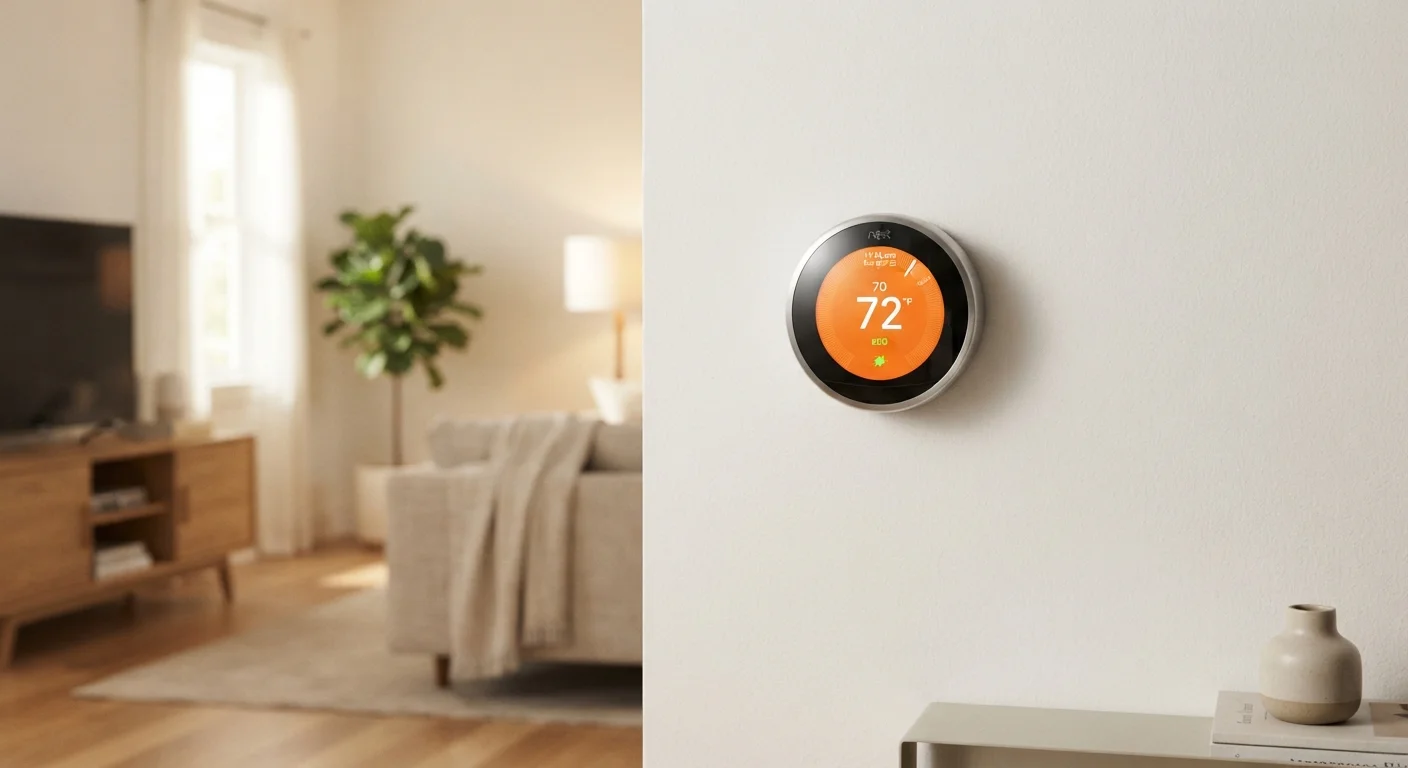
A smart thermostat replaces a conventional programmable thermostat and connects to your home Wi-Fi, allowing you to control heating and cooling remotely via a smartphone app. Most models also include motion sensors and learning capabilities that build a schedule based on when you're home, asleep, or away.
The pitch is straightforward: less energy wasted on an empty house, more comfort when you're actually there. But the technology involves trade-offs that marketing materials rarely surface — from compatibility constraints to data collection habits. Understanding both sides helps you make a more informed decision about whether the upgrade makes sense for your situation.
For context on how these devices fit into a broader connected home, see our guide on how smart home ecosystems work — particularly if you're weighing multiple devices at once.
Remote control via smartphone from anywhere
Adjusting your home's temperature before you arrive — or turning down heating after an unexpected late night — eliminates wasted energy without requiring manual intervention.
Learning algorithms adapt to your routine
Most models build a schedule based on observed patterns over the first week or two of use, reducing the need for manual programming that many households never completed with older thermostats.
Energy usage reports improve awareness
Monthly or weekly usage summaries give households a clearer picture of when and how much energy their HVAC system consumes, which can prompt behavioral changes.
Integrates with other smart home devices
Many smart thermostats work alongside occupancy sensors, smart speakers, and home automation platforms, allowing heating and cooling to respond to broader household activity — not just a fixed clock schedule.
Geofencing reduces heating idle time
Geofencing uses your phone's location to detect when you've left a set radius around your home and adjusts the thermostat accordingly, reducing energy use during unplanned absences.
Where Smart Thermostats Fall Short
The limitations of smart thermostats are less visible in the sales cycle but become apparent after installation. The most common issues center on compatibility, connectivity, and behavioral assumptions baked into the software.
Many older HVAC systems — particularly those with multi-stage heating, heat pumps, or proprietary wiring — may not be compatible with popular smart thermostat models. Checking compatibility before purchasing is essential and often requires identifying specific wire configurations inside your current thermostat housing.
Wi-Fi dependency is another underappreciated constraint. If your router goes down or the manufacturer's cloud service experiences an outage, remote control and scheduling features can become temporarily unavailable. While the thermostat typically retains basic manual function, it undermines the core appeal. Our article on security habits for shared home networks covers related risks worth considering.
Compatibility with older HVAC systems is not guaranteed
Homes with multi-stage systems, radiant heating, or proprietary wiring may require professional assessment before installation, adding both cost and complexity.
Learning features require consistent household schedules
Households with irregular routines — shift workers, frequent travelers, variable school schedules — may find the algorithm struggles to establish useful patterns, limiting automation value.
Cloud dependency creates potential points of failure
Full functionality relies on both your home Wi-Fi and the manufacturer's cloud infrastructure; service outages can temporarily disable remote access and scheduling features.
Behavioral data is collected and stored remotely
Occupancy patterns, temperature preferences, and schedule data are processed on manufacturer servers, raising privacy considerations that vary by company policy and jurisdiction.
Upfront cost may not recover quickly in mild climates
In regions where heating and cooling loads are modest, the energy savings may take considerably longer to offset the device and installation costs.
The Privacy and Data Question
Smart thermostats collect occupancy data — specifically, when people are home, their sleep patterns, and how often schedules change. This information is used to refine the learning algorithm, but it also resides on manufacturer servers.
Thermostat Data and Your Privacy
Smart thermostats infer occupancy patterns from motion sensors and schedule behavior, storing this data on manufacturer servers. This is distinct from audio capture but still constitutes behavioral profiling. Privacy policies differ between manufacturers — some allow data sharing with third parties for analytics or advertising purposes. Reviewing these terms before setup is advisable, and most devices offer the option to delete stored data through the companion app.
Unlike smart speakers, thermostats don't capture audio, but their behavioral data can still paint a detailed picture of your daily routines. Reviewing the privacy policy of any thermostat you're considering is a worthwhile step, particularly around data retention and third-party sharing. For a broader look at what smart home devices actually record, see common misconceptions about smart home privacy.
Energy Savings: Realistic Expectations
Studies suggest smart thermostats can reduce HVAC energy consumption, but the range of reported savings is wide. The U.S. Department of Energy notes that setback strategies — reducing heating or cooling when a home is unoccupied — can produce meaningful reductions in energy use, though actual figures depend on climate, home insulation, and baseline usage habits.
~8%
Estimated average heating energy reduction
The U.S. Department of Energy estimates that turning a thermostat back 7–10°F for eight hours per day can save around 8% annually on heating costs, a benchmark smart thermostats aim to automate.
45%
Share of US home energy use from HVAC
According to the U.S. Energy Information Administration, heating and cooling account for the largest single share of residential energy consumption in most American homes.
Households that already use programmable thermostats diligently may see little additional benefit from switching. The largest gains tend to come from homes that previously ran heating or cooling continuously regardless of occupancy. If your home has significant structural heat loss, no thermostat — smart or otherwise — will fully compensate. Improving your home's insulation and draught-proofing typically offers more durable efficiency gains than upgrading the thermostat alone.
Smart plugs can complement a thermostat strategy by managing other high-draw appliances on a schedule — our overview of practical uses for smart plugs explains how.