

Key Takeaways
Why Bath Routine Matters More Than You Think
For many dog owners, bath time is a wrestling match — water everywhere, a panicked pet, and a soaked bathroom floor. But a chaotic bath isn't inevitable. How you prepare for and conduct a bath shapes how your dog feels about water for years to come.
Regular bathing removes dirt, allergens, and loose hair, and gives you a chance to check your dog's skin for lumps, redness, or parasites. It's a key part of the broader grooming picture covered in our daily grooming habits guide. Done calmly and consistently, bath time can become something your dog tolerates — and sometimes even enjoys.
Make Treats Work Harder for You
Use high-value treats — small pieces of boiled chicken or commercial soft treats — specifically during bath time and for nothing else. This exclusivity reinforces the bath as an especially rewarding event. Pair treats with calm verbal praise rather than excited tones, which can increase arousal and make a nervous dog harder to manage.
If you've recently brought a dog home, it's generally wise to wait at least a week before the first bath, allowing your pet to settle. See our new pet's first week guide for more on easing a dog into a new home routine.
What You'll Need Before You Start
Gathering supplies before your dog is in the tub prevents the scramble that triggers anxiety — yours and theirs.
Handheld showerhead or bath pitcher
Allows controlled water flow to wet and rinse the coat without startling the dog.
Dog-formulated shampoo
Maintains the dog's skin pH balance; human shampoo can disrupt it and cause irritation.
Non-slip bath mat
Gives the dog secure footing in the tub, reducing panic caused by slipping.
Absorbent towels (2–3)
Used immediately after the bath to remove most of the moisture from the coat.
Dog-safe blow dryer or low-heat pet dryer
Finishes drying dense or double coats that towels alone cannot fully dry.
Treats
Used throughout to create positive associations with each stage of the bath.
Cotton balls
Placed loosely at the ear opening to help reduce water entry during rinsing.
What you will need
Step-by-Step: Bathing Your Dog Calmly
Follow these steps in order. Rushing any stage — especially the introduction and rinse — is the most common cause of a difficult bath.
Desensitize before the water runs
Bring your dog into the bathroom or outdoor bathing area without turning on the water. Let them sniff the tub, the showerhead, and the bottles. Offer treats and calm praise. Do this for a few sessions before bath day if your dog is bath-averse. The goal is to break the association between the space and immediate stress.
Wet the coat gradually
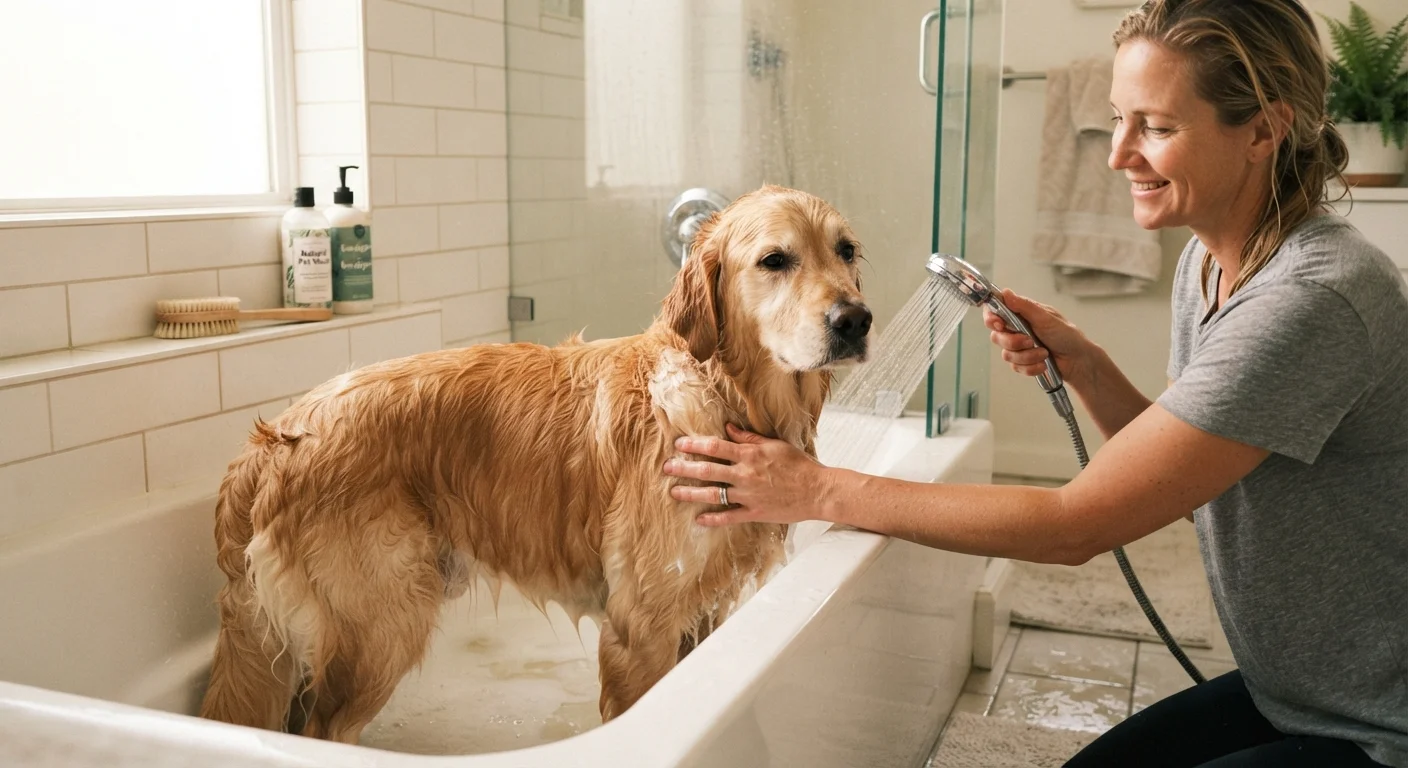
Start at the neck and work toward the tail, keeping the spray low-pressure and angled downward. Avoid spraying directly at the face, ears, or eyes at this stage. Use your hand to guide water into the coat if your dog startles at the showerhead noise. Ensure water penetrates all the way to the skin, especially on double-coated breeds.
Apply and lather shampoo
Dispense a small amount of dog shampoo into your hands and work it into the coat from neck to tail. Use your fingertips in gentle circular motions to work the lather down to the skin — this is also when you can feel for any unusual lumps, bumps, or skin changes. For the face, use a damp cloth with a tiny amount of shampoo rather than pouring water over the head.
Rinse thoroughly
Residual shampoo is a leading cause of skin irritation and itchiness after baths. Rinse until the water running off the coat is completely clear and you can no longer feel any slipperiness in the fur. Pay special attention to the belly, groin, and armpits — areas that are easy to miss. Now you can gently wet and clean the face using a cloth.
Dry safely and completely
Immediately wrap your dog in an absorbent towel and press (don't rub vigorously) to absorb water. Follow with a second towel. For short-coated dogs, this may be sufficient indoors. For thick, double, or long coats, use a low-heat pet dryer or a human hair dryer on the coolest setting, keeping it moving and at least six inches from the skin. Ensure skin folds, ear bases, and the belly are fully dry to prevent moisture-related skin issues.
Water in the Ears Is a Real Risk
Trapped moisture in the ear canal is a common trigger for bacterial and yeast ear infections in dogs, particularly breeds with floppy or heavily coated ears. Place a loose cotton ball at the entrance of each ear before wetting the head area, and remove them immediately after the bath. If your dog shakes its head repeatedly or scratches its ears in the days following a bath, consult your veterinarian — this can indicate an infection developing.
Recognising and Responding to Stress Signals
Even a well-prepared bath can tip into anxiety. Watch for lip-licking, yawning, tucked tail, flattened ears, or attempts to exit. These are early stress indicators, not stubbornness. Learning to read these cues is explored in depth in our article on how pets signal stress before it escalates.
If you notice distress, pause the bath, speak calmly, and offer a treat before continuing. Forcing through a high-stress state makes the next bath harder. For a broader overview of dog care that connects grooming to overall wellbeing, our complete pet care owner's reference is a useful companion resource.
Never Leave a Dog Unattended in the Tub
Even a calm dog can slip, panic, and injure itself when left alone in a wet tub. Keep one hand on your dog throughout the bath. If you need to step away for any reason, drain the tub first and have someone else supervise.