

| Primary silent channels | Scent, posture, touch |
| Main scent glands in cats | Face, paw pads, tail base |
| Play bow meaning (dogs) | Invitation to play; positive social signal |
| Slow blink in cats | Relaxed trust signal toward familiar individual (Widely referenced in feline behavior literature) |
| Allogrooming location (cats) | Typically head and neck region |
| Whale eye indicator | Stress or discomfort; early warning signal |
The Silent Majority of Animal Communication
When we think about how animals communicate, sounds often come to mind first — barks, meows, chirps. But the majority of animal communication happens in complete silence. Scent, posture, and touch carry layered social information that can convey identity, mood, territory, health status, and reproductive readiness without a single sound being made.
For pet owners, learning to read these silent signals is one of the most powerful ways to deepen understanding and strengthen trust with an animal. It can also help catch early stress or discomfort before it escalates. This article breaks down how each channel works and what to watch for at home.
| Primary silent channels | Scent, posture, touch |
| Main scent glands in cats | Face, paw pads, tail base |
| Play bow meaning (dogs) | Invitation to play; positive social signal |
| Slow blink in cats | Relaxed trust signal toward familiar individual (Widely referenced in feline behavior literature) |
| Allogrooming location (cats) | Typically head and neck region |
| Whale eye indicator | Stress or discomfort; early warning signal |
Scent: The Invisible Language
Scent marking is one of the oldest and most information-dense communication systems in the animal kingdom. Dogs, cats, rabbits, and many other species produce chemical signals called pheromones (chemical compounds secreted by animals that trigger social or behavioral responses in others of the same species) through glands located on the face, paws, and around the tail base.
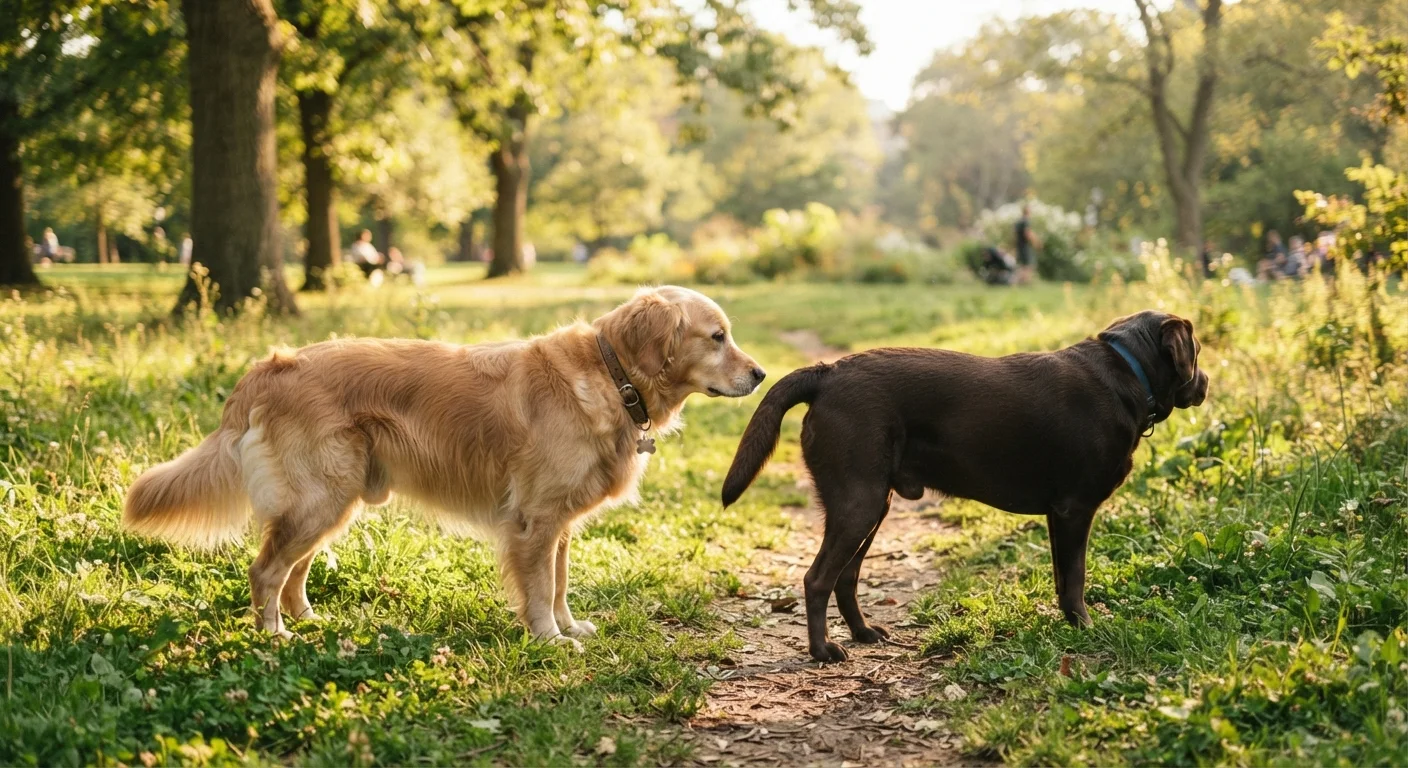
When a dog sniffs a fire hydrant or a cat rubs its cheek against a doorframe, they are both reading and depositing layered chemical messages. These messages can communicate sex, reproductive status, emotional state, and individual identity. Research in animal behavior has shown that dogs can extract surprisingly detailed information from a single urine mark — essentially a chemical business card.
At home, scent-related behaviors worth recognizing include:
- Face rubbing (cats): Depositing calming, familiar scent — typically a comfort behavior, not aggression.
- Urine marking indoors (dogs or cats): May signal anxiety, territory disputes, or a medical issue. Always rule out health causes first.
- Sniffing new objects intensely: Normal information-gathering. Allowing pets time to sniff unfamiliar items reduces stress.
Scent-driven behaviors like indoor marking are often signals of an unmet need rather than defiance.
Pheromones
Chemical compounds secreted by animals that trigger specific social or behavioral responses in members of the same species. They are a primary vehicle for scent-based communication.
Allogrooming
Mutual grooming between two members of the same species. It reinforces social bonds, reduces tension, and is a key tactile communication behavior in cats, primates, and other social animals.
Piloerection
The involuntary raising of fur or hair along the back and shoulders (hackles) in response to heightened emotional arousal, including fear, excitement, or alert states.
Affiliative signals
Behaviors that signal friendliness, trust, or social bonding between animals. Examples include slow blinking in cats, leaning in dogs, and allogrooming in both species.
Appeasement behavior
Actions an animal uses to signal that it poses no threat and is deferring to another individual. Common examples include lowering the body, averting gaze, and exposing the belly.
Posture: Reading the Body
Body posture is the most visible channel of silent communication and one owners can learn to interpret quickly. Animals use the position of their ears, tail, spine, and weight distribution to signal everything from confident threat displays to appeasement and fear.
In dogs, a few key postures include:
- Play bow (front end lowered, rear elevated): An invitation to play — one of the clearest positive signals.
- Whale eye (white of the eye visible, body tense): A sign of stress or discomfort that often precedes a bite if ignored.
- Piloerection (hackles raised): Indicates heightened arousal — not always aggression, but always worth noting.
Cats communicate posture differently. A slow blink directed at a familiar human is widely understood by animal behaviorists as a signal of relaxed trust. A puffed tail and arched back signals fear-based defensive aggression, not offensive threat.
Understanding posture is central to recognizing stress before it escalates. Subtle, early postural signals are often the first warning that an animal is uncomfortable.
~300M
Scent receptors in a dog's nose
Compared to approximately 6 million in humans, according to widely cited veterinary anatomy research, enabling extraordinarily detailed chemical reading.
2+
Species-specific pheromone gland locations on domestic cats
Cats have multiple facial gland locations including perioral, temporal, and submandibular areas, each producing distinct scent profiles used in marking.
Touch: Tactile Bonds and Social Grooming
Touch — or tactile communication — plays a vital role in maintaining social bonds. In many species, mutual grooming (called allogrooming) reinforces relationships, reduces tension, and can lower stress hormones in both the giver and recipient.
In domestic cats living together, allogrooming around the head and neck is a reliable indicator of social bonding. Dogs engage in similar body contact through leaning, pawing, and resting their head on a companion. These are genuine affiliative signals, not simply attention-seeking.
For owners, gentle, invited physical contact — petting in areas the animal initiates — can meaningfully reinforce trust. Forced or unsolicited handling, on the other hand, can communicate threat rather than affection, particularly in newly adopted animals still building security.
Touch also intersects with play: play behaviors often involve physical contact that serves as a form of social negotiation and bonding, not mere entertainment.
Taken together, scent, posture, and touch form a rich communication system. Owners who learn to observe these signals rather than reacting only to sound will find themselves far better equipped to understand what their animals are actually saying — and respond in ways that build genuine trust.
This article is for general educational purposes only and is not a substitute for advice from a qualified veterinarian or certified animal behaviorist.