

Key Takeaways
Option A
Sinking Fund
The planned, purpose-built savings tool.
Best for: Anyone who wants to budget ahead for known, irregular expenses like car registration, holiday gifts, or home repairs.
Option B
Emergency Fund
The financial safety net for the unexpected.
Best for: Anyone building a cushion against unpredictable income loss, medical crises, or urgent unplanned expenses.
If you want to stop irregular expenses from derailing your monthly budget
Sinking Fund
Sinking funds turn predictable but lumpy costs into manageable monthly contributions, preventing budget surprises.
If you have no financial cushion for a sudden job loss or medical bill
Emergency Fund
An emergency fund provides the foundational security layer that prevents one bad event from becoming a debt spiral.
If you want to build both habits simultaneously on a tight income
Emergency Fund
Prioritize a small starter emergency fund first — even one month of expenses — before splitting contributions between both fund types.
If you already have a solid emergency fund and are prone to overspending during holidays or vacations
Sinking Fund
A dedicated sinking fund for seasonal expenses keeps spending guilt-free and prevents you from raiding your emergency savings.
What Makes These Two Funds Different
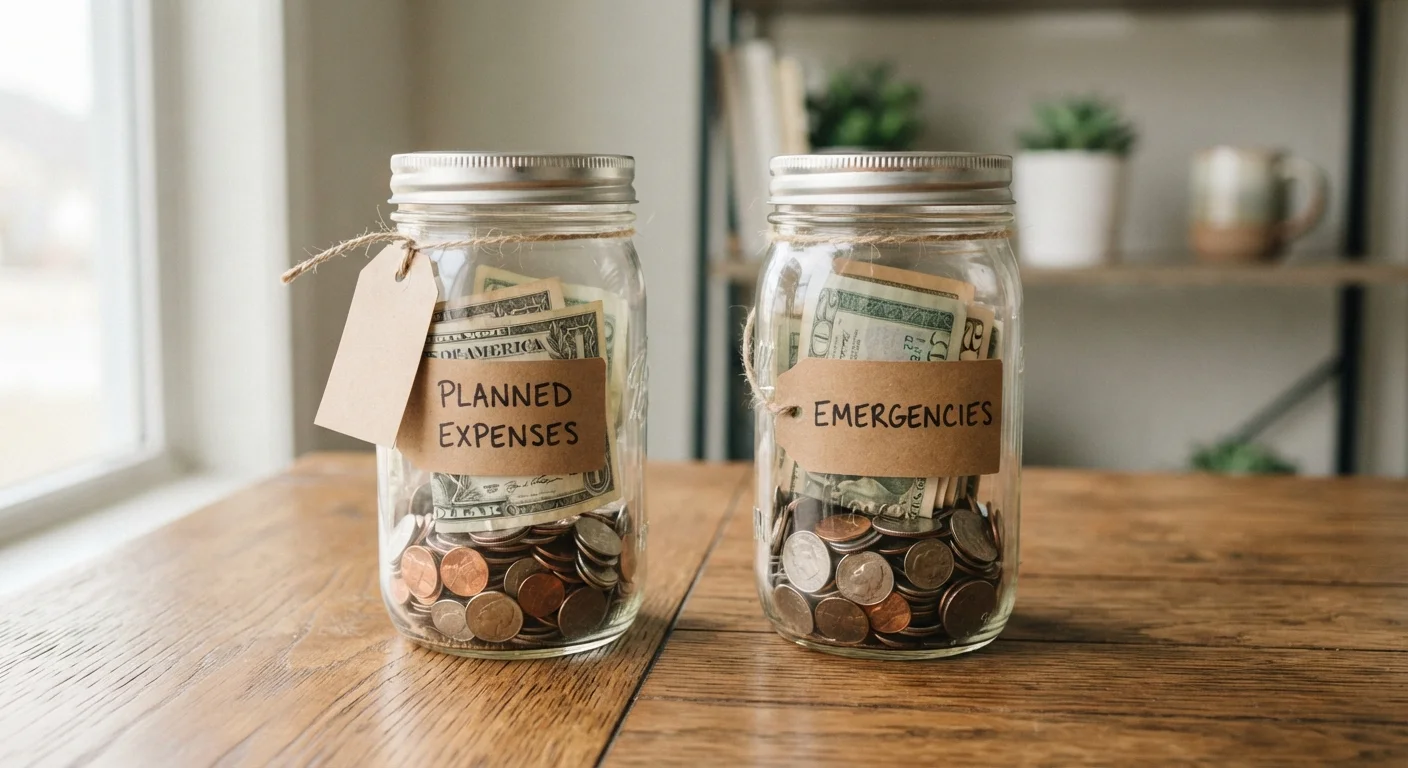
At first glance, both a sinking fund and an emergency fund look the same: you set money aside regularly and leave it untouched until you need it. But the fundamental difference lies in what you're saving for — and that distinction changes how you build, size, and spend each one.
A sinking fund is for expenses you can see coming. Car registration, a new laptop, annual insurance premiums, holiday gifts — you know these costs exist, you just don't pay them every month. A sinking fund works by dividing the total by the number of months until you need it and contributing that fixed amount regularly. There's no surprise involved; the math is predictable.
An emergency fund, by contrast, is for what you cannot predict. A sudden job loss, an unexpected medical bill, a major appliance failure — these events don't follow a schedule. The emergency fund is designed to absorb financial shocks without forcing you to go into debt or drain other savings. For a deeper look at how emergency funds differ from standard savings accounts, see how emergency funds and savings accounts differ.
| Criterion | Sinking Fund | Emergency Fund |
|---|---|---|
| Purpose | Planned, predictable expenses | Unexpected financial emergencies |
| Expense type | Known in advance (car, gifts, travel) | Unknown timing and amount |
| How it's sized | Total cost ÷ months until needed | Three to six months of living expenses |
| When it resets | After each planned expense is paid | Replenished after an emergency draw |
| Number of funds | Multiple, by category | Typically one consolidated fund |
| Risk if underfunded | Budget disruption, overspending | Debt accumulation during a crisis |
How Each Fund Is Sized and Structured
Sizing these two funds follows entirely different logic, which is one reason they should be kept separate — ideally in distinct accounts with clearly labeled purposes.
Sinking funds are sized by the specific expense. If you expect to spend $1,200 on holiday gifts in December and you start saving in June, you'd contribute $200 per month. Once the expense arrives and is paid, the fund resets — or you begin building toward the next known expense. You can run several sinking funds simultaneously for different categories. See our guide to setting up a sinking fund for a step-by-step approach.
Emergency funds are sized by your monthly living expenses. A common general guideline is three to six months of essential expenses — rent or mortgage, utilities, food, insurance, and minimum debt payments. Someone with variable income or dependents may aim for the higher end of that range. The fund is not depleted on a schedule; it sits ready and is only drawn on when a genuine, unplanned crisis occurs.
3–6 months
Recommended emergency fund size
Most mainstream personal finance guidance suggests covering three to six months of essential living expenses in an emergency fund.
~40%
US adults who couldn't cover a $400 emergency
Federal Reserve surveys have consistently found that a significant share of US adults would struggle to cover a $400 unexpected expense without borrowing.
If you're early in your savings journey, it's reasonable to build a modest emergency fund first before branching into sinking funds. The beginner's guide to starting a savings plan walks through this sequencing clearly.
Why Keeping Them Separate Matters
Combining both functions into one account creates a quiet but serious risk: when a real emergency strikes, you may discover that your "emergency fund" is already earmarked for the car registration, the vacation, and the new roof estimate. The money is technically there — but it's not available for a true crisis.
Separate accounts enforce discipline through clarity. When each dollar has a specific job, you're less likely to rationalize spending emergency savings on a predictable expense, and vice versa.
When One Account Isn't Enough
Many people keep sinking funds and emergency funds in different high-yield savings accounts at the same institution, using account nicknames to distinguish them. Some banks allow multiple savings sub-accounts under one login, making this easy to manage. The key principle is that money designated for a vacation or car repair should never sit in the same pool as your crisis cushion — even if both accounts earn the same interest rate.
If you're currently carrying debt, the question of whether to maintain both funds simultaneously gets more nuanced. The article exploring savings buffers while in debt covers both sides of that trade-off. For a broader view of how saving and debt interact, the full guide to saving and debt provides helpful context.
Both fund types fall under solid budgeting basics — and both belong in a well-rounded personal finance plan. The goal isn't to choose one over the other; it's to understand which tool serves which job, and build accordingly.
This article is for general informational and educational purposes only and does not constitute personalized financial advice. Consult a qualified financial professional for guidance suited to your individual circumstances.