

Key Takeaways
Emergency Fund vs. Savings Account
An emergency fund is money set aside exclusively for unplanned, urgent expenses — like a job loss or a medical bill. A savings account is a bank product where you store money, which may include your emergency fund but can also hold money earmarked for goals, travel, or planned purchases. The two concepts overlap but are not the same thing.
A savings account is a financial instrument; an emergency fund is a financial strategy. Your emergency fund can live inside a savings account, but the account itself does not define the fund's purpose.
Why the Distinction Matters
Many people use the phrase "emergency fund" and "savings account" interchangeably — but treating them as the same thing is one of the most common mistakes in personal finance. Understanding what separates them can mean the difference between weathering a financial crisis and making it worse.
A savings account is simply a deposit account offered by a bank or credit union. It holds your money, typically earns interest, and gives you relatively easy access to funds. What you use that account for is a separate question entirely.
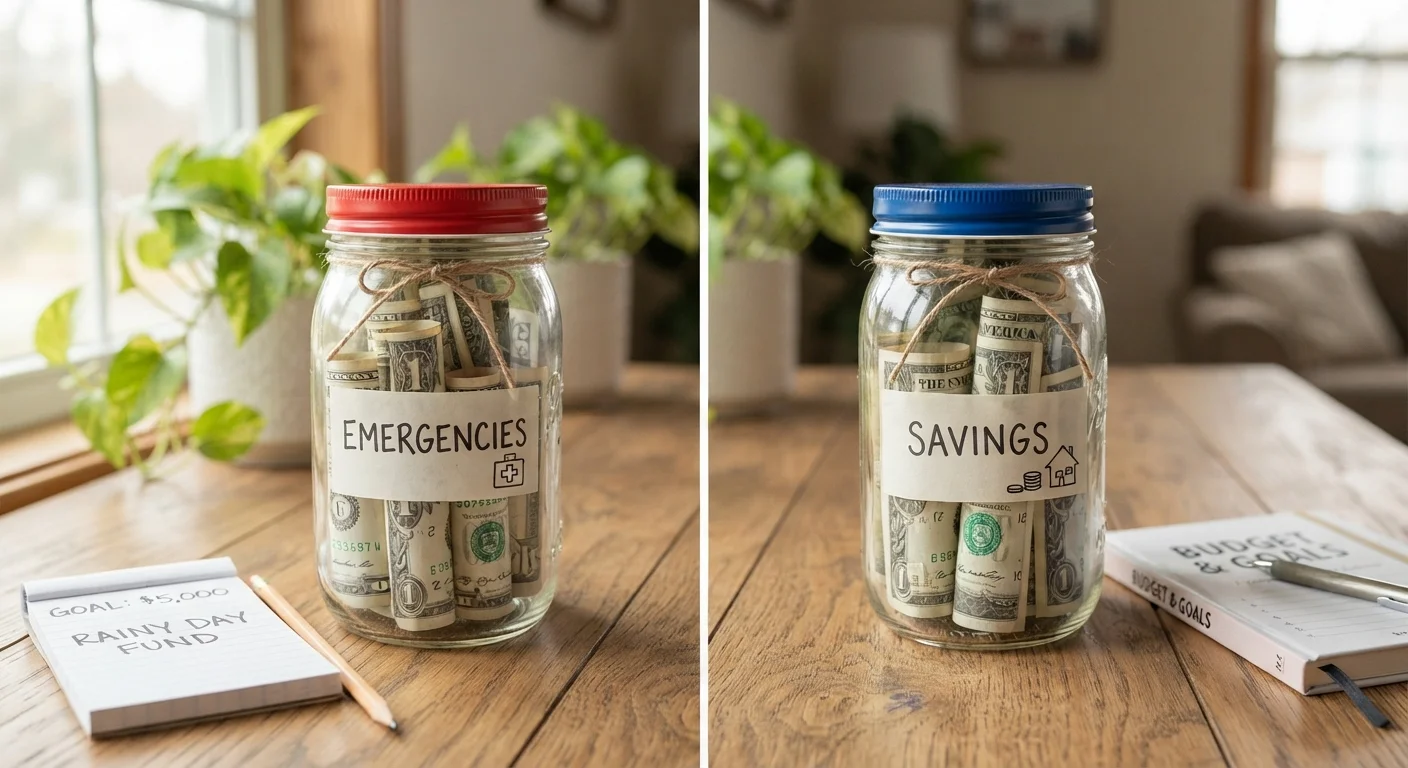
An emergency fund is a financial strategy — a specific pool of money reserved solely for genuine, unplanned emergencies. It may sit inside a savings account, but the savings account is the container, not the concept. Think of it this way: your emergency fund is the policy, and the savings account is the filing cabinet where you keep it.
For a fuller look at how saving and debt management interact, see our guide on how saving and debt work together.
What an Emergency Fund Is — and Isn't
An emergency fund exists for one purpose: to absorb financial shocks that you couldn't have predicted and can't reasonably delay addressing. That includes sudden job loss, an urgent medical expense not covered by insurance, a critical car repair that gets you to work, or an unexpected home repair like a burst pipe.
What it is not for: holiday shopping, a vacation, a new appliance upgrade, or even an irregular expense you knew was coming eventually. Those planned but infrequent costs are better handled by a different tool — a sinking fund. You can learn more about that approach in our article on how to set up a sinking fund.
Keep Your Emergency Fund Separate
Opening a dedicated account solely for your emergency fund — separate from your everyday savings — helps prevent accidental spending. Label it clearly and avoid linking it to your debit card for routine purchases. Out of sight, but not out of reach when you truly need it.
The discipline behind an emergency fund is as important as the money itself. Keeping it separate — both physically (in its own account) and mentally (off-limits for non-emergencies) — makes it far more likely to be there when you actually need it.
General guidance from consumer financial educators suggests targeting three to six months of essential living expenses. For those with variable income or single-earner households, a larger cushion may offer more stability.
Savings Accounts: The Tool, Not the Goal
A savings account is a versatile vehicle. Within a single savings account — or spread across several — you might hold your emergency reserve, money for a planned vacation, a down payment fund, or short-term cash reserves. The account format stays the same; the purpose of each dollar differs.
~57%
Americans who cannot cover a $1,000 emergency from savings
According to Bankrate's annual emergency savings survey, a majority of U.S. adults report they would need to borrow or use credit to cover an unexpected $1,000 expense.
3–6 months
Recommended emergency fund size in essential expenses
This widely cited range comes from consumer financial education sources including the Consumer Financial Protection Bureau (CFPB) and nonprofit financial counseling organizations.
This is why financial educators often recommend labeling or separating your savings by purpose. Some banks allow you to create sub-accounts or savings buckets within one institution, each named for its goal. Others prefer distinct accounts at separate banks to remove temptation.
The key takeaway: opening a savings account doesn't automatically mean you have an emergency fund. You have an emergency fund when a specific amount of money is designated, protected, and consistently off-limits for anything that isn't a genuine financial emergency.
If you're just getting started and building a savings habit from scratch, our beginner's guide to starting a savings plan walks through the foundational steps.
Balancing Both When You're Also Carrying Debt
One of the most common tensions in personal finance is whether to build savings or aggressively pay down debt. This isn't an either/or question — both have a role, and the emergency fund is usually where financial educators suggest starting.
The logic: without any emergency savings, an unexpected expense often gets charged to a credit card, which can add high-interest debt on top of what you already owe. A modest starter emergency fund — even $500 to $1,000 — can interrupt that cycle.
That said, carrying a large cash cushion while paying high-interest debt does have a real cost. Our article on the trade-offs of keeping savings while in debt explores both sides of that decision in depth.
No Universal Formula Fits Everyone
Rules of thumb like 'three to six months of expenses' are useful starting points, not prescriptions. Your ideal emergency fund size depends on factors like household income, job stability, health, and existing debt. A certified financial planner or nonprofit credit counselor can help you set a target that fits your actual situation.
For guidance on how much to save versus how aggressively to pay down debt, speaking with a licensed financial adviser or a nonprofit credit counselor is worthwhile. Every household's situation — income, interest rates, job security, dependents — is different, and general rules only go so far.
This article is for general educational purposes only and does not constitute personalized financial advice. Consult a qualified financial professional for guidance specific to your circumstances.