

Key Takeaways
Why the gym isn't the only path to fitness
For many people, traditional gyms present real barriers — cost, intimidating environments, rigid schedules, or simply a dislike of the setting. But the core goal of regular physical activity is entirely achievable outside those walls. The fundamentals of fitness are not gym-specific: they involve moving your body consistently, progressively, and in ways that challenge your cardiovascular system and muscles.
The strongest predictor of long-term exercise adherence is enjoyment. Activities that feel rewarding — rather than obligatory — are far more likely to become lasting habits. That means the best workout for you is one that fits your lifestyle, preferences, and circumstances, not a one-size-fits-all prescription.
Below are seven well-established alternatives to the gym that span a range of interests, budgets, and physical demands. Each can meaningfully contribute to health outcomes when practiced regularly.
Walking with purpose and structure
Walking is one of the most underestimated forms of physical activity. Research consistently links regular brisk walking to improvements in cardiovascular health, blood pressure, and mood. The key is adding intention — choosing routes with hills, increasing your pace, or aiming for a daily step target can meaningfully raise the intensity over time.
You don't need special gear beyond supportive footwear, and the activity translates easily into commutes, errands, or lunchtime breaks. Walking with a friend or podcast also helps the time pass without it feeling like structured exercise.
Brisk walking is one of the most accessible and evidence-supported forms of daily physical activity.
Cycling for transport and recreation
Cycling — whether outdoors or on a stationary bike at home — builds lower-body strength and aerobic capacity without the joint impact of running. Using a bike for regular commuting or errands integrates movement into your existing schedule rather than carving out separate workout time.
For those without access to outdoor routes, indoor cycling at home is a practical option. If you're new to cycling or returning after a break, starting with flat, manageable routes and gradually increasing distance supports a sustainable progression.
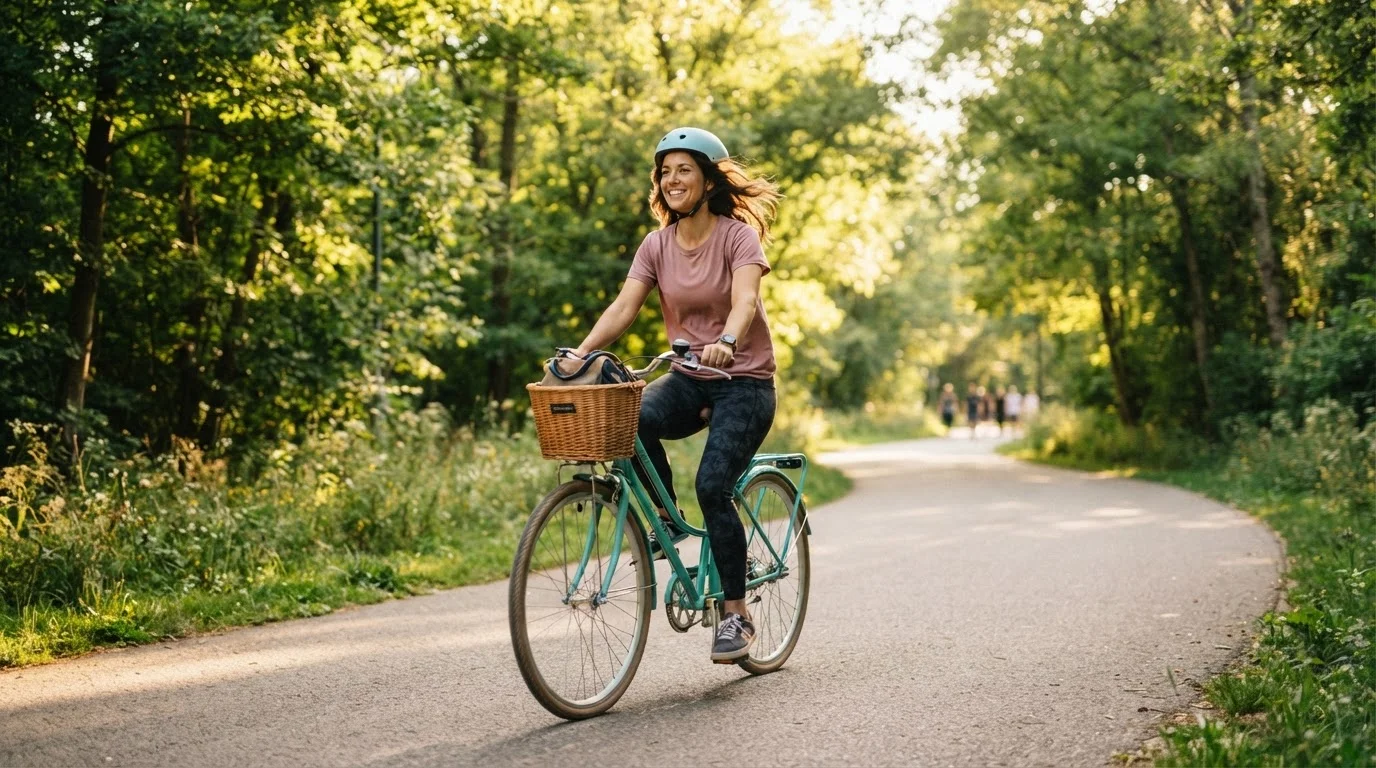
Cycling for everyday transport is an effortless way to accumulate meaningful physical activity.
Swimming and water-based movement
Swimming engages nearly every major muscle group while placing minimal stress on joints — making it particularly valuable for people managing joint discomfort or recovering from injury (always in consultation with a healthcare provider). Public pools and community recreation centers often provide affordable lap swimming and water aerobics sessions.
Even leisurely swimming builds endurance and coordination over time. The resistance of water means relatively gentle movements still require meaningful muscular effort.
Swimming offers full-body engagement with low joint impact, making it accessible across fitness levels.
Dance and movement-based classes
Dance classes — from salsa and swing to Zumba-style aerobics — combine cardiovascular exercise with rhythm, creativity, and social connection. Participants often report that the enjoyment of dancing makes it easier to stay consistent compared with more regimented exercise formats.
Many community centers, dance studios, and local organizations offer beginner-friendly sessions at accessible price points. If group settings feel daunting at first, video-based dance workouts at home are a low-pressure starting point. See our breakdown of group vs. solo exercise for help deciding what suits your temperament.
Dance turns exercise into something enjoyable, which meaningfully improves long-term consistency.
Yoga and mindful movement practices
Yoga builds flexibility, balance, and functional strength while incorporating breathwork and stress reduction. A consistent yoga practice can improve posture, support core stability, and contribute to better sleep quality — benefits that extend well beyond the mat.
Classes range from gentle restorative sessions to physically demanding styles like vinyasa or power yoga, so there's genuine variety for different fitness levels and goals. Community classes, library programs, and free online resources lower the barrier to getting started significantly.
Yoga develops physical strength and mental calm simultaneously, serving both body and mind.
Recreational sport and team activities
Joining a recreational league — soccer, basketball, pickleball, tennis, or even ultimate frisbee — wraps physical activity inside competition, camaraderie, and fun. The social accountability of showing up for teammates is one of the most effective motivational forces available, and it costs nothing extra beyond the activity itself.
Many cities and towns organize adult recreational leagues through parks and recreation departments. These are deliberately designed to be inclusive of varying skill levels, making them genuinely accessible for beginners.
Team sports add social accountability, one of the most powerful drivers of exercise consistency.
Gardening and active outdoor hobbies
Activities like gardening, hiking, kayaking, and even regular park visits accumulate real physical work — digging, carrying, climbing, and balancing all recruit muscle groups and elevate heart rate. Research has linked gardening specifically to reductions in stress and improvements in overall physical activity levels among adults.
These activities also tend to foster a positive relationship with movement by keeping the focus on the task or environment rather than on exercise as an end in itself. That psychological shift can make them easier to sustain long-term.
Outdoor hobbies like gardening or hiking build fitness without feeling like a structured workout.
Start small and build gradually
Consistency matters far more than intensity when you're establishing a new movement habit. Beginning with two or three sessions per week at a comfortable level, then slowly increasing duration or frequency, is a well-supported approach to sustainable fitness. If you find momentum stalling early on, our article on why fitness routines stall offers practical guidance.
Building a routine that actually sticks
The challenge for many people isn't finding an activity they enjoy — it's building consistency around it. Fitting activity into a busy schedule requires treating movement as a non-negotiable part of the day rather than an optional extra. Anchoring a new activity to an existing habit — a morning walk before coffee, a bike ride during your lunch break — can help bridge the gap between intention and action.
If you prefer working out at home, our guide to equipment-free home workouts provides structured options that complement the activities covered here. Variety across the week — mixing a solo walk with a dance class or a recreational sport — can also prevent the boredom that often derails routines.
This is general information, not medical advice
The activities described here are general wellness options for healthy adults. If you have a chronic health condition, recent injury, or have been inactive for an extended period, speak with a qualified healthcare provider before starting any new physical activity program. This is especially important for older adults, pregnant individuals, and those with cardiovascular or musculoskeletal concerns.
This article is for general informational purposes only and does not constitute medical advice. Always consult a qualified healthcare professional before beginning a new exercise program, particularly if you have any existing health conditions or concerns.