

Key Takeaways
Why Your Packing Strategy Matters More Than Your Bag
Even the most well-designed luggage can't compensate for a chaotic packing approach. Seasoned travelers consistently point to how they pack — not what they pack into — as the biggest factor in stress-free travel. A repeatable strategy means faster security lines, no frantic digging at the hotel, and bags that close the first time. Whether you're choosing carry-on or checked luggage or calibrating for a weekend versus a month, your packing method sets the tone for the whole trip. This article walks through the practices that experienced travelers rely on, trip after trip.
Core Packing Practices That Consistently Deliver Results
The following strategies aren't trends — they're tried-and-true methods refined by frequent flyers, backpackers, and road-trippers alike. Pick the ones that match your travel style and build them into your pre-trip routine.
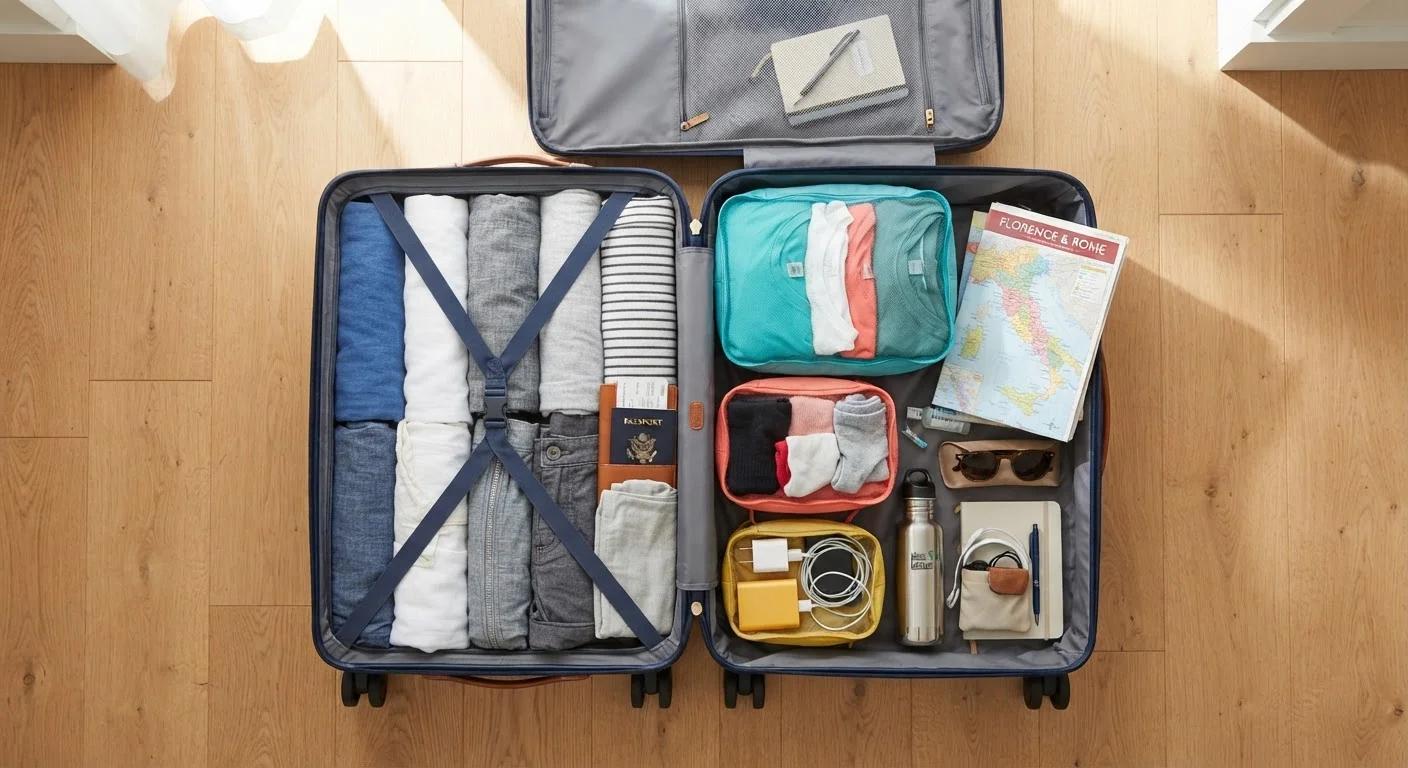
Roll soft clothing items instead of folding them flat.
Rolling compresses garments into compact cylinders that slot efficiently into corners and gaps. It also reduces the pressure-fold creases that flat stacking creates, keeping clothes more presentable when you unpack.
Divide your bag into zones using packing cubes.
Packing cubes act as labeled drawers inside your luggage, so you always know where each category of item lives. They also compress clothing slightly and make full repacking at checkout dramatically faster.
Build your wardrobe around two or three coordinating base colors.
A capsule wardrobe approach means every top works with every bottom, multiplying outfits without multiplying garments. It also eliminates the 'just in case' items that inflate bag weight without ever getting worn.
Place the heaviest items closest to the wheels or your back.
Weight distribution directly affects how comfortable a bag is to carry and how stable it stays when rolling. Heavier items near the base of a rolling suitcase or closest to your spine in a backpack reduce strain on your arms and lower back.
Pack a designated 'return space' by leaving your bag 15–20% empty at departure.
Most travelers accumulate something on a trip — a souvenir, a jacket bought for unexpected weather, a gift. Leaving intentional buffer space prevents having to check a second bag or abandon purchases at the airport.
Quick Moves You Can Make Before Your Next Trip
You don't need to overhaul your entire packing routine overnight. Start with one or two changes and build from there. These immediate actions deliver noticeable results even on your very next trip — and they feed naturally into a well-planned trip overall.
Packing Strategies Vary by Trip Length
The tactics that work brilliantly for a three-day city break may need adjustment for a three-week international journey. For longer trips, laundry access becomes a critical planning factor, and the capsule wardrobe approach becomes even more valuable. See our guide on how planning depth changes by trip duration for tailored guidance.
For destination-specific packing guidance — from climate to cultural dress norms — explore our destinations hub to research what to expect on arrival.